PCI Developers Navbar

Category: est

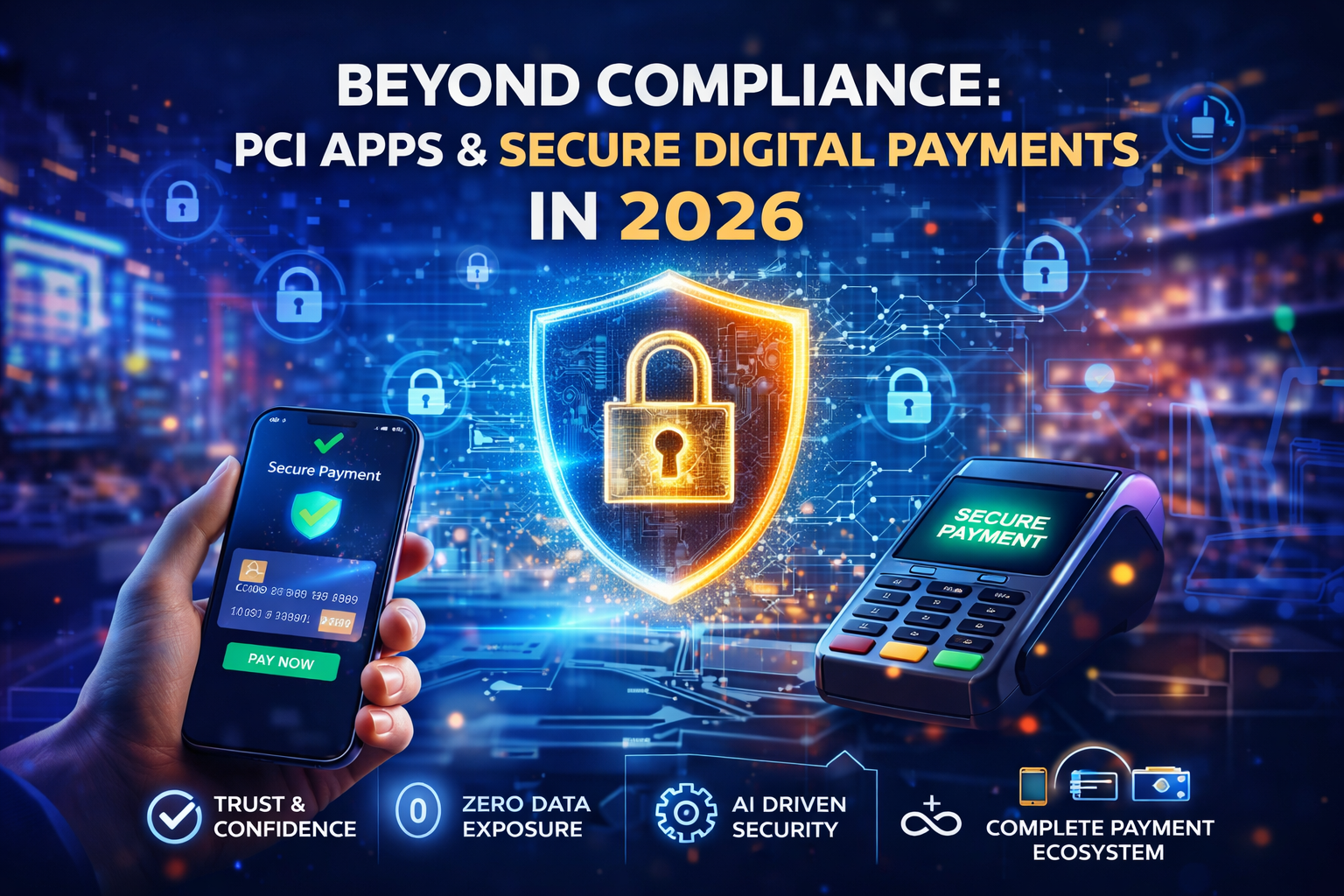
  • Beyond Compliance: How PCI Apps Are Redefining Trust in Digital Payments (2026 Guide)

    Beyond Compliance: How PCI Apps Are Redefining Trust in Digital Payments (2026 Guide)

    Every time a customer taps a card, scans a QR code, or enters payment details online, they’re doing more than just making a transaction—they’re placing trust in your system.

    But here’s the reality: in 2026, security is no longer optional—it’s your brand identity.

    This is where PCI Apps step in—not just as compliance tools, but as powerful trust engines that protect businesses, customers, and revenue.


    💡 What Makes a PCI App More Than Just “Compliant”?

    Most businesses think PCI is just a checklist.

    But modern PCI App Development goes far beyond that—it’s about creating a secure ecosystem where:

    • Data is never exposed
    • Transactions are verified in real-time
    • Threats are detected before they happen

    👉 In short: It’s proactive security, not reactive compliance.


    🚨 The Hidden Cost of Ignoring PCI Compliance

    Let’s be honest—many businesses delay PCI compliance until it’s too late.

    Here’s what’s at stake:

    • 💸 Heavy financial penalties
    • 🔓 Data breaches and customer loss
    • 📉 Brand reputation damage
    • ⚖️ Legal complications

    One breach can cost more than years of investment in secure systems.


    ⚙️ Inside a Modern PCI App (What Actually Happens Behind the Scenes)

    A powerful PCI app works silently but intelligently.

    1. 🔐 Tokenization Instead of Storage

    Your customer’s card details are never stored directly.
    They are replaced with secure tokens that hackers can’t use.


    2. ⚡ Real-Time Threat Detection

    Modern PCI apps use AI-based monitoring to detect:

    • Suspicious transactions
    • Unusual login patterns
    • Fraud attempts

    3. 🧠 Smart Access Control

    Not everyone gets access to sensitive data.

    PCI apps ensure:

    • Role-based permissions
    • Multi-factor authentication
    • Activity tracking

    4. 🔄 Continuous Compliance Monitoring

    Compliance isn’t a one-time task.

    PCI apps automatically:

    • Run security checks
    • Detect vulnerabilities
    • Generate compliance reports

    🌟 Why Businesses Are Investing in PCI Apps in 2026

    ✔️ Trust = More Sales

    Customers are more likely to pay when they feel secure.

    ✔️ Zero Data Exposure Strategy

    Modern apps don’t store sensitive data at all.

    ✔️ Faster Approvals & Integrations

    PCI-compliant apps integrate easily with banks and gateways.

    ✔️ Future-Proof Security

    Built to handle evolving cyber threats.


    📈 PCI Apps + POS + E-commerce = Complete Payment Ecosystem

    The real power of PCI apps comes when they integrate with:

    • POS systems (like retail billing machines)
    • E-commerce platforms
    • Mobile payment apps
    • Subscription-based services

    👉 This creates a fully secure payment ecosystem across all channels.


    🔮 The Future of PCI App Development

    The next generation of PCI apps will include:

    • 🤖 AI-powered fraud prevention
    • 🔗 Blockchain-based transaction validation
    • 📱 Biometric authentication (Face ID / Fingerprint)
    • ☁️ Cloud-native security infrastructure

    Security is evolving—and PCI apps are leading the transformation.


    🧠 Final Thought: Security is the New Marketing

    In today’s digital world:

    “Customers don’t just buy products—they buy trust.”

    A secure payment system is no longer a backend feature—it’s a frontline business advantage.


    📝 Conclusion

    If your business handles payments, investing in a PCI-compliant app is not a choice—it’s a necessity.

    From protecting sensitive data to building customer confidence, PCI apps play a critical role in modern digital ecosystems.

    👉 The question is no longer “Do you need PCI compliance?”
    👉 The real question is “How secure is your business today?”


    • PCI app development
    • PCI DSS compliance solutions
    • secure payment application
    • payment security software
    • PCI compliant POS system
    • tokenization payment security
    • fintech security solutions
    • secure payment gateway development
  • Top Mistakes Businesses Make During PCI Compliance Implementation

    Top Mistakes Businesses Make During PCI Compliance Implementation

    In today’s digital-first economy, payment security is not just a requirement — it’s a responsibility. Every business that handles credit or debit card transactions must follow the Payment Card Industry Data Security Standard (PCI DSS) to protect sensitive cardholder data.

    Yet, many companies still struggle to achieve full PCI compliance. The result? Data breaches, financial penalties, and — worst of all — loss of customer trust.

    At PCIAppDevelopers.com, we’ve seen how even the most well-intentioned businesses make small mistakes that can have huge consequences. Here are the top PCI compliance mistakes you should avoid in 2025.


    ❌ 1. Treating PCI Compliance as a One-Time Task

    One of the most common mistakes is thinking PCI compliance is something you achieve once and forget.
    In reality, it’s an ongoing process that requires continuous monitoring, updates, and reviews.

    Fix it:

    • Conduct regular security audits.
    • Keep up with PCI DSS version updates.
    • Train your staff periodically on compliance protocols.

    Compliance isn’t a checkbox — it’s a mindset.


    🔓 2. Storing Cardholder Data Unnecessarily

    Many businesses make the critical error of storing full credit card information without proper encryption or tokenization.
    This greatly increases your risk in case of a data breach.

    Fix it:

    • Never store full PAN (Primary Account Number) or CVV codes.
    • Use tokenization and end-to-end encryption.
    • Partner with PCI-compliant payment gateways to minimize data exposure.

    Remember, the less data you store, the safer you are.


    🧑‍💻 3. Ignoring Internal Threats

    Most companies focus on external cyberattacks but forget that internal breaches — whether accidental or malicious — can be just as damaging.

    Fix it:

    • Implement role-based access controls.
    • Use audit logs to track user activity.
    • Educate employees about phishing and data handling.

    Your people can be your greatest strength — or your weakest link.


    🛠️ 4. Using Outdated Software & Infrastructure

    Legacy systems often lack the encryption and security protocols needed for PCI DSS compliance.
    Running outdated versions of databases or payment systems is an open invitation for hackers.

    Fix it:

    • Regularly update your POS systems, databases, and servers.
    • Use automated vulnerability scanning tools.
    • Work with a certified PCI app development team to modernize your software.

    📄 5. Poor Documentation & Testing

    Even if your systems are secure, missing documentation can still get you flagged as non-compliant.
    PCI DSS requires thorough documentation of processes, controls, and incident responses.

    Fix it:

    • Keep detailed compliance records.
    • Perform regular penetration tests and risk assessments.
    • Maintain an updated incident response plan.

    Documentation isn’t paperwork — it’s proof that you’re protecting your customers.


    🚀 Final Thoughts

    Achieving PCI compliance is not about avoiding fines — it’s about building customer trust and ensuring secure transactions.
    Avoiding these common mistakes can save your business from financial losses and brand damage.

    At PCIAppDevelopers.com, we help companies design PCI-compliant applications that meet every standard — from encryption to real-time monitoring.

    Because in 2025, security isn’t optional — it’s your strongest competitive advantage.