PCI Developers Navbar

Category: Uncategorized

  • PCI App Developer: Building Secure Payment Applications for the Digital Era

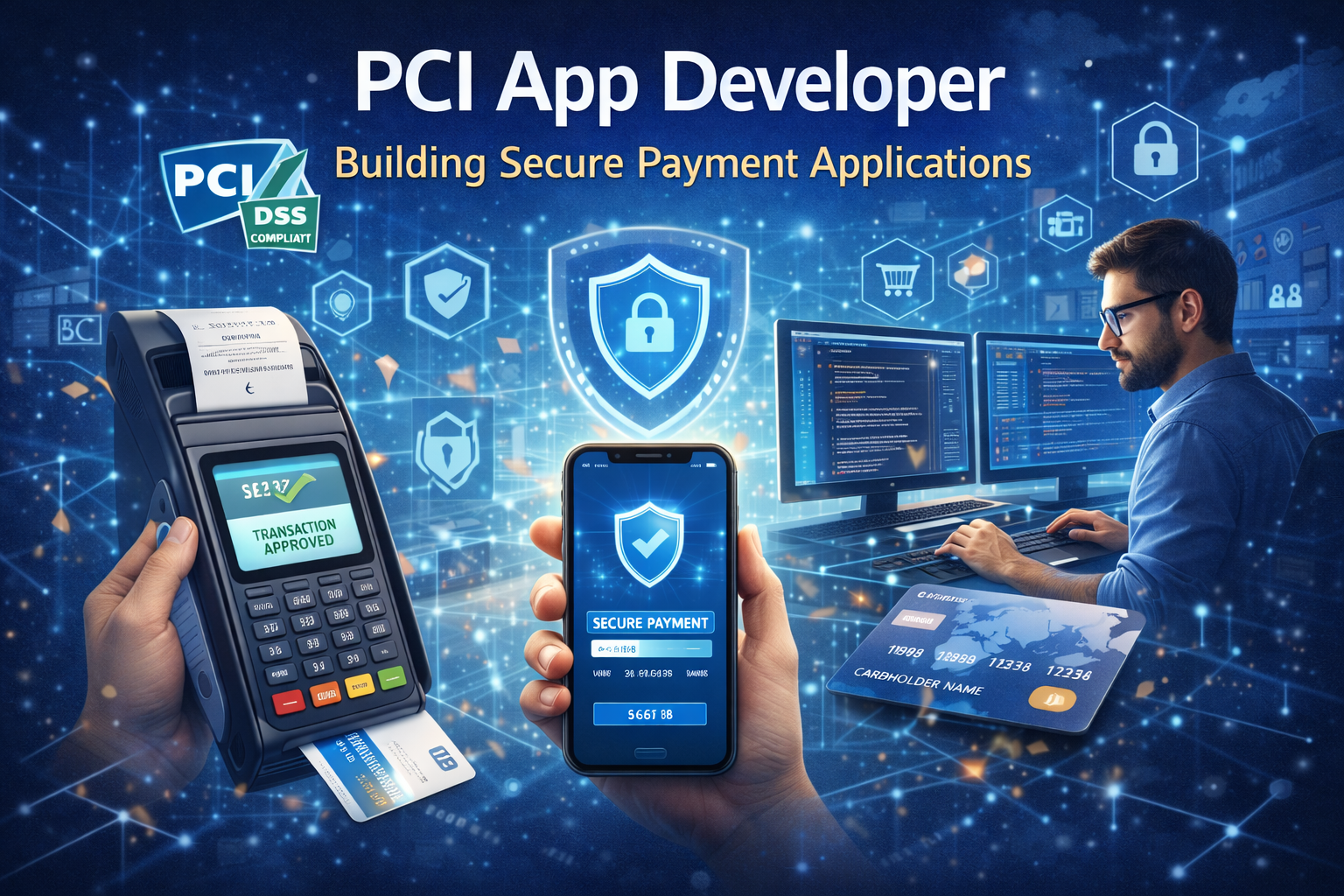
    PCI App Developer: Building Secure Payment Applications for the Digital Era

    In today’s digital-first world, handling payments securely is not optional—it’s mandatory. Businesses dealing with card transactions must comply with strict security standards to protect customer data. This is where a PCI App Developer plays a critical role.

    From retail POS systems to mobile payment apps, PCI-compliant development ensures that every transaction is secure, encrypted, and trustworthy.


    💡 What is a PCI App Developer?

    A PCI App Developer specializes in building applications that comply with PCI DSS (Payment Card Industry Data Security Standard).

    These developers design and develop secure systems that:

    • Protect cardholder data
    • Prevent fraud and breaches
    • Meet global compliance standards

    In simple terms, they ensure your payment system is safe for customers and legally compliant.


    🔒 Why PCI Compliance is Important

    Without PCI compliance, businesses risk:

    • Heavy financial penalties
    • Data breaches
    • Loss of customer trust
    • Legal complications

    A PCI App Developer helps you:
    ✔️ Secure payment data
    ✔️ Avoid compliance issues
    ✔️ Build customer trust
    ✔️ Enable global payment acceptance


    🧾 Key Features of PCI-Compliant Applications

    1. 🔐 End-to-End Encryption

    All payment data is encrypted from the moment it’s captured until processing.


    2. 🛡️ Secure Authentication

    Includes:

    • Multi-factor authentication (MFA)
    • Tokenization
    • Role-based access

    3. 📊 Data Protection & Storage

    • No sensitive data stored unnecessarily
    • Secure databases
    • Regular audits

    4. 🔄 Regular Security Updates

    PCI apps require:

    • Continuous monitoring
    • Vulnerability testing
    • Security patching

    🚀 Types of PCI Applications

    A PCI App Developer can build:

    💳 POS (Point of Sale) Systems

    Retail billing systems with secure card processing

    📱 Mobile Payment Apps

    Apps that allow users to pay securely via smartphones

    🌐 Payment Gateways

    Online payment processing platforms

    🏦 FinTech Applications

    Digital wallets, banking apps, and financial tools


    🧠 Technologies Used in PCI App Development

    Modern PCI developers use:

    • Secure APIs
    • Cloud infrastructure (AWS, Azure)
    • Encryption protocols (SSL/TLS)
    • Tokenization frameworks
    • AI-based fraud detection

    🌍 Industries That Need PCI App Developers

    • 🛒 E-commerce
    • 🏪 Retail Stores
    • 🍽️ Restaurants
    • 🏥 Healthcare Billing
    • 💼 Financial Services

    Any business handling card payments must follow PCI standards.


    ⭐ Why Choose a Professional PCI App Developer?

    Here’s what an expert brings:

    ✔️ Deep knowledge of PCI DSS compliance
    ✔️ Secure coding practices
    ✔️ Experience with audits & certifications
    ✔️ Scalable and future-proof solutions

    A professional ensures your app is not just functional—but secure and compliant from day one.


    🔮 Future of PCI App Development

    With the rise of:

    • Contactless payments
    • Digital wallets
    • AI fraud detection

    PCI App Development is evolving rapidly. Businesses must stay updated to remain secure and competitive.


    🏁 Conclusion

    Security is the backbone of digital payments. A PCI App Developer ensures your application meets global standards while delivering a seamless payment experience.

    If your business handles transactions, investing in PCI-compliant development is not just smart—it’s essential.


    ❓ FAQs

    Q1. What is PCI DSS?

    PCI DSS is a global security standard designed to protect cardholder data.

    Q2. Do all businesses need PCI compliance?

    Yes, if you accept, process, or store card payments.

    Q3. What happens if I’m not PCI compliant?

    You may face penalties, security breaches, and loss of customer trust.

    Q4. Can PCI apps be built for mobile devices?

    Yes, mobile payment apps must also follow PCI compliance standards.


    📢 Call to Action

    👉 Looking to build a secure payment app?
    Work with expert PCI App Developers to ensure your platform is safe, scalable, and compliant.
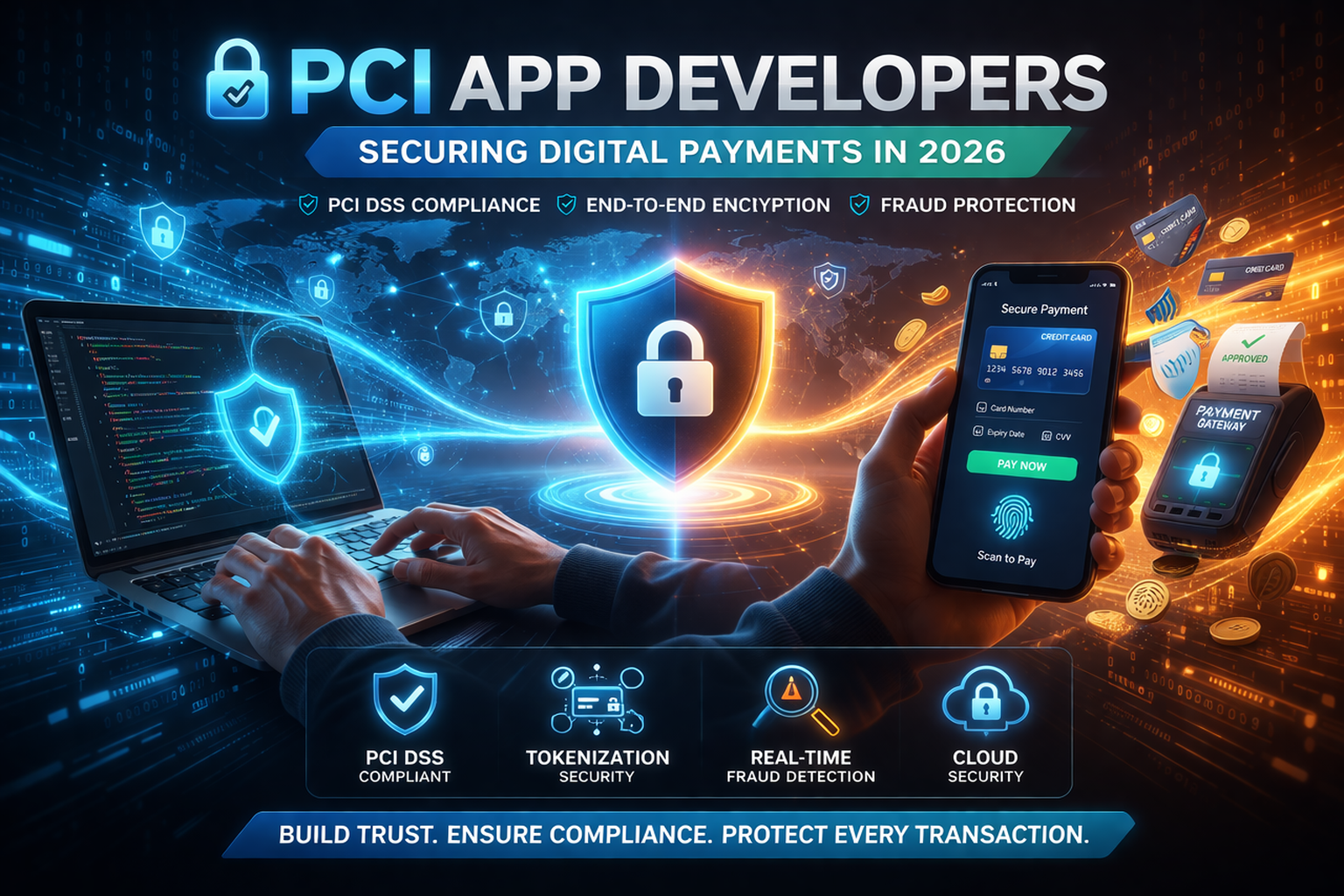
  • PCI App Developers: Securing Digital Payments in 2026

    PCI App Developers: Securing Digital Payments in 2026

    With the rapid growth of digital payments, security has become a top priority for businesses worldwide. From e-commerce platforms to mobile apps, protecting customer payment data is no longer optional—it’s essential.

    This is where PCI App Developers play a critical role.

    They ensure that payment applications comply with strict security standards, safeguarding sensitive financial data and building trust among users.


    💳 What is PCI DSS?

    PCI DSS (Payment Card Industry Data Security Standard) is a set of security standards designed to ensure that all companies that process, store, or transmit credit card information maintain a secure environment.

    Key Objectives:

    • 🔐 Protect cardholder data
    • 🛡️ Prevent data breaches
    • 📊 Maintain secure systems
    • 🔍 Regular monitoring & testing

    🚧 Risks of Non-Compliance

    Ignoring PCI compliance can lead to serious consequences:

    • ❌ Data breaches and cyberattacks
    • ❌ Heavy financial penalties
    • ❌ Loss of customer trust
    • ❌ Legal complications

    In today’s digital world, even a small vulnerability can cause massive damage.


    💼 Role of PCI App Developers

    https://images.openai.com/static-rsc-4/-fj5krkEc51RhqjZH_mwmlxvU5TmSj-5KOYolhdZ63DT_vCbN4mei2-hpAF4OcgtFA9hcDyweiefiGIP0WEatjWy6QY1D4kNIDGCUKXaZgAIkdl1Qs0dp7ZNTY4Y9eQaoO_fNJEmDosPBYMch8c_7l_GBuHMJJX08YOqkg78RW0U45psiBWO_BGMPJzmYDy0?purpose=fullsize
    https://images.openai.com/static-rsc-4/b8OQAM3MJbPlzcKOY46MUXs4ObvdLbWniT1nKEnSn96t_zxjKJ2szHPt1AUSHVMbR_tNBttdMFgyXGVh-VeIH_kXvQxiOCBCFIqprj1py3Ky_z0CTh2MJQ0NmwG5CJqbCJDR_CpP5KA0QM7G7L5xA1bd_-A9lt2hyaTUtc0e_mhG38MDpSuzHkapXwNKcNLC?purpose=fullsize
    https://images.openai.com/static-rsc-4/2pUhzdS2Tdd4Adgmiqru0V6EcS7sBOQ_O7CGAaFO35ITjU0589TBSJCEwJJOd0F5VGVMDTd5tpBWPVxPDJfPzTftr65GCCmVghrvIvgb1oYQqu_6Hr0E3u-72mnv468wPus6JlKJerNl7n8f1OjeLkb4kyYvI_VZ-AfRGxLhEvOvhxfDhrrl54t64bZIgtMT?purpose=fullsize

    🔹 Secure Payment Integration

    Developers integrate payment gateways with strong encryption and authentication.

    🔹 Data Encryption

    Sensitive card data is encrypted both in transit and at rest.

    🔹 Compliance Implementation

    Ensuring apps meet all PCI DSS requirements.

    🔹 Vulnerability Testing

    Regular security testing to identify and fix risks.

    🔹 Tokenization

    Replacing sensitive data with secure tokens to prevent misuse.


    ⚙️ Key Features of PCI-Compliant Applications

    A secure payment app must include:

    • 🔐 End-to-end encryption
    • 🔑 Multi-factor authentication (MFA)
    • 📊 Real-time fraud detection
    • 🧾 Secure transaction logs
    • ☁️ Cloud security compliance

    🏦 Industries That Need PCI App Developers

    PCI-compliant solutions are essential for:

    • 🛒 E-commerce platforms
    • 🏪 Retail businesses
    • 💳 FinTech companies
    • 📱 Mobile wallet apps
    • 🏨 Hospitality industry

    Any business handling payments must prioritize security.


    📈 Benefits of Hiring PCI App Developers

    • ✅ Strong data protection
    • ✅ Increased customer trust
    • ✅ Compliance with global standards
    • ✅ Reduced risk of cyberattacks
    • ✅ Smooth and secure transactions

    🔮 Future of Payment Security

    The future of secure payments is evolving rapidly:

    • 🤖 AI-based fraud detection
    • 🔐 Biometric authentication
    • 🌐 Blockchain-based security
    • 📊 Real-time risk monitoring

    PCI App Developers are at the forefront of these innovations.


    🏆 Why Choose Professional PCI App Developers?

    • 💡 Expertise in security standards
    • ⚡ Faster and safer development
    • 🎯 Focus on compliance and performance
    • 🌎 Global payment integration experience

    📢 Conclusion

    In a world driven by digital payments, security is everything.

    Partnering with experienced PCI App Developers ensures your applications are not only functional but also fully secure and compliant.


    🔥 Call to Action

    👉 Want to build a secure payment application?
    👉 Ensure PCI compliance and protect your customers today

  • PCI App Developer: Why Secure Payment Applications Matter in 2025

    PCI App Developer: Why Secure Payment Applications Matter in 2025

    With the rapid rise of digital payments, protecting cardholder data has become a top priority for businesses worldwide. Any application that stores, processes, or transmits card data must follow strict security standards. This is where a PCI App Developer becomes essential.

    At QuartusTech, we specialize in developing PCI-compliant payment applications that help businesses stay secure, trusted, and compliant.


    What Is a PCI App Developer?

    A PCI App Developer is a professional or development team that builds payment applications in accordance with PCI DSS (Payment Card Industry Data Security Standard) requirements.

    These applications include:

    • POS software
    • Payment gateways
    • Mobile payment apps
    • E-commerce checkout systems
    • Enterprise billing platforms

    The goal is simple: protect sensitive cardholder data and prevent fraud.


    Why PCI Compliance Is Critical

    Failure to comply with PCI standards can lead to:

    • Heavy financial penalties
    • Loss of customer trust
    • Legal consequences
    • Data breaches and fraud

    A PCI-compliant application ensures:

    • Encrypted data transmission
    • Secure storage of sensitive information
    • Controlled access and authentication
    • Continuous monitoring and logging

    Key Responsibilities of a PCI App Developer

    1. Secure Application Architecture

    Designing systems that minimize data exposure and follow secure coding practices.

    2. Encryption & Tokenization

    Ensuring card data is encrypted or replaced with secure tokens during processing.

    3. Compliance Testing & Validation

    Supporting PCI audits, documentation, and compliance reviews.

    4. Secure Integrations

    Safely integrating with banks, payment gateways, and third-party services.


    Industries That Need PCI App Developers

    PCI App Development is essential for:

    • Retail & e-commerce businesses
    • Restaurants and hospitality
    • Fintech companies
    • Healthcare billing platforms
    • Subscription-based services

    Any business handling card payments must comply—regardless of size.


    Why Choose QuartusTech as Your PCI App Developer?

    QuartusTech delivers secure, scalable, and audit-ready payment applications. Our approach includes:

    • PCI DSS–aligned development lifecycle
    • Secure APIs and backend systems
    • Cloud-ready and on-premise solutions
    • Ongoing support and security updates

    We help businesses build trust while processing payments safely.


    PCI Compliance Is Not Optional—It’s Essential

    In 2025, customers expect secure transactions by default. A professionally built, PCI-compliant application protects both your business and your customers from risk.

  • PCI App Developer: Why PCI-Compliant Applications Are Essential for Modern Businesses in 2025

    PCI App Developer: Why PCI-Compliant Applications Are Essential for Modern Businesses in 2025

    In today’s digital-first world, businesses handle thousands of card transactions every single day—whether through POS systems, mobile apps, eCommerce platforms, or cloud-based dashboards. With rising cyber-attacks and evolving compliance rules, PCI DSS (Payment Card Industry Data Security Standard) has become a non-negotiable requirement for every business that processes cardholder data.

    This is where a PCI App Developer becomes crucial.

    A skilled PCI-compliant application developer ensures your payment ecosystem is secure, smooth, fast, and aligned with global compliance standards. In 2025, no modern business—especially in retail, restaurants, hospitality, logistics, or fintech—can afford to overlook PCI security.


    What Is a PCI App Developer?

    A PCI App Developer specializes in designing, building, and maintaining applications that meet the strict guidelines of PCI DSS. These developers understand:

    • Secure payment workflows
    • Encryption standards
    • Tokenization
    • Card data storage restrictions
    • Secure API communication
    • Mobile, Web & POS payment integration
    • Compliance audits and documentation

    Their focus is on building applications where customer card data stays protected at every step.


    Why PCI-Compliant Apps Matter in 2025

    The risk landscape is higher than ever:

    • 35% increase in payment fraud globally
    • Rapid adoption of cloud POS & mobile payments
    • Stricter penalties by card networks
    • Consumer expectations for safe digital experiences

    A PCI-compliant application ensures:

    ✔️ No card data leaks
    ✔️ No unauthorized access
    ✔️ Full compliance with Visa, MasterCard, AmEx, and Discover
    ✔️ Smooth integration with payment gateways
    ✔️ Zero risk of audits and penalties


    Core Responsibilities of a PCI App Developer

    A PCI App Developer handles complex security and compliance tasks behind the scenes:

    1. Building Secure Payment Applications

    • Encrypted transactions
    • Token-based data protection
    • No exposure of sensitive cardholder information

    2. Implementing PCI DSS Controls

    Including:

    • Access control
    • Network monitoring
    • Logging & incident tracking
    • Secure code development

    3. Secure POS & Mobile App Integration

    Whether it’s iOS, Android, Web, or POS hardware, PCI developers ensure transactions remain safe across all devices.

    4. Gateway & Acquirer Integrations

    Integrations with:

    • Stripe
    • Square
    • Adyen
    • Authorize.Net
    • PayPal
    • Worldpay
    • Custom bank APIs

    5. Ongoing Audits & Reporting

    Maintaining compliance is a continuous process—regular testing and vulnerability scans are essential.


    Industries That Need PCI App Developers

    PCI-compliant development is essential for:

    • Retail & Supermarkets
    • Restaurants & Coffee Chains
    • Hospitality
    • Fintech Apps
    • Logistics & Delivery
    • Healthcare Billing
    • SaaS Subscription Platforms
    • eCommerce Stores
    • Enterprise Billing Solutions

    Any business that processes credit or debit cards MUST comply with PCI DSS.

  • Top PCI App Developer Trends in 2025 You Can’t Ignore

    Top PCI App Developer Trends in 2025 You Can’t Ignore

    1. PCI DSS v4.0 / v4.0.1 Adoption and Compliance
      • New requirements: PCI DSS 4.0 has replaced v3.2.1, and many new rules became mandatory by March 31, 2025. BSI+2Secrss+2
      • Emphasis on API security and client-side script management (6.4.3, 11.6.1). F5+1
      • More flexible / tailored compliance: “custom methods” to meet security goals instead of rigid controls. BSI
    2. Security of Web Apps and APIs / Client-Side Security
      • Web applications, microservices, and APIs are now more in focus, and PCI app developers need to secure them rigorously. F5
      • Client-side script protection: keeping an inventory of scripts, verifying integrity, monitoring changes. F5
      • Defending against “web skimming” / Magecart attacks. CSDN Blog
    3. Risk-Based / Continuous Compliance
      • PCI DSS v4 encourages continuous risk assessment rather than “one-time pass.” BSI
      • API changes need pre-deployment testing (6.2.3) & runtime protection. F5
      • Real-time monitoring / detection of anomalous behavior in payment flows.
    4. Modern Authentication & Identity Controls
      • With new PCI requirements, stronger authentication is needed. (Reddit discussion points to passkeys / phishing-resistant authentication). Reddit
      • Ensuring all access to cardholder data environments is secure and authenticated properly.
    5. Secure Payment Architecture
      • Use of tokenization, encryption, end-to-end encryption to limit cardholder data exposure.
      • Minimizing the scope of PCI by using iFrames, hosted payment fields, or vaults. (Many developers now architect apps so raw card data never touches their systems.)
    6. Developer Tooling for Compliance
      • Automated tools for script inventory, runtime script monitoring, and client-side control.
      • Using AI / ML to detect malicious script behavior or anomalous API activity.
      • Incorporating compliance checks into CI/CD (DevSecOps): scanning, vulnerability assessments, compliance as code.
    7. Industry-Specific Use Cases
      • Hospitality, retail, fintech: how PCI-compliant app architecture changes depending on business type.
      • SaaS platforms accepting payments: balancing compliance with flexibility and user experience.
    8. Emerging Payment Risks
      • Contactless payment security (EMV, mobile NFC) — threats and mitigation. arXiv+1
      • Payment channel networks, off-chain payments, blockchain-based payment systems and their security implications. arXiv
      • Use of CBDCs or tokenized payment rails. (Research-level: e.g. “SecurePay” combining CBDC with blockchain) arXiv
    9. Training & Certification
      • Need for developer training on PCI compliance (secure coding, threat modeling).
      • Importance of organizations getting staff certified / aware of new PCI DSS v4.0.

    ✍️ Sample Mini-Blog: “Top PCI App Developer Trends in 2025 You Can’t Ignore”

    Introduction
    As payment applications evolve rapidly, PCI app developers in 2025 face a shifting landscape. New PCI DSS requirements, rising client-side security risks, and more complex payment architectures mean that developers must adapt — or risk non-compliance and security breaches.

    1. Embracing PCI DSS v4.0 / v4.0.1
    The PCI Security Standards Council has officially made PCI DSS v4.0 (and its minor revision v4.0.1) the industry standard. BSI+1 These versions bring significant changes, especially for developers: script inventory (6.4.3), real-time monitoring (11.6.1), and stricter API security requirements. F5

    2. Client-Side Script Management Is Critical
    One of the biggest challenges developers now face is ensuring that all JavaScript running on payment pages is authorized, monitored, and integrity-checked. F5 This is essential to combat “web skimming” attacks like Magecart, which specifically target checkout scripts. CSDN Blog

    3. Securing APIs and Microservices
    Modern payment systems use APIs and microservices heavily. The new PCI standard pushes for pre-production testing (requirement 6.2.3) and real-time protection of APIs to prevent logic-level abuse. F5 Developers need to build secure APIs from the ground up, incorporating threat modeling, access controls, and runtime security.

    4. Risk-Based and Continuous Compliance
    Rather than treating PCI compliance as a checkbox exercise, v4 encourages a continuous, risk-based approach. BSI Developers should integrate compliance into DevSecOps: continuous scanning, risk assessment, and monitoring.

    5. Modern Auth for Card Data Access
    With increasing focus on authentication, developers are now exploring phishing-resistant methods. For example, passkeys (FIDO2) are being considered as strong options for high-risk access. Reddit Strong MFA and identity verification are becoming norms for any access to sensitive cardholder data.

    6. Architectural Strategies to Reduce Scope
    Developers are building payment flows so that card data never touches their servers — using iFrames, hosted fields, or tokenization. This not only improves security but can significantly reduce PCI scope, making audits simpler.

    7. Tooling, Automation & AI
    Tooling is evolving: AI/ML-based solutions can now monitor scripts and APIs in real time to detect anomalous behavior. Some teams are building compliance checks into CI/CD, so every build is automatically tested for PCI-related risks.

    8. Payment Innovations & New Risks
    The world of payments is innovating faster than ever. EMV contactless systems face new security analyses. arXiv Also, research into payment networks using blockchain and CBDCs (central bank digital currencies) is raising fresh compliance and security questions. arXiv

    Conclusion
    For PCI app developers in 2025, it’s no longer enough to just “be compliant.” You need to build secure systems that are future-ready, maintain continuous risk monitoring, and embed compliance into the development lifecycle. Those who do will not only meet regulatory demands — they’ll build trust, resilience, and a competitive edge.

  • PCI Compliance in Connecticut: A Practical Guide for Local Businesses

    PCI Compliance in Connecticut: A Practical Guide for Local Businesses

    If your business in Connecticut accepts credit or debit cards, PCI compliance isn’t optional — it’s essential. Beyond avoiding fines and increased processing fees, keeping cardholder data secure protects your customers and the reputation of your business. This guide explains what Connecticut businesses must know, the state reporting rules, and a practical checklist to become (or stay) PCI-compliant. PCI Security Standards Council+1


    What is PCI DSS, in plain English?

    PCI DSS (Payment Card Industry Data Security Standard) is a set of requirements created by major card brands to protect cardholder data. It applies to any business — large or small — that accepts, transmits, or stores payment card information. The standard focuses on people, processes, and technology and includes requirements such as encrypting card data, maintaining firewalls, and performing vulnerability scans. PCI Security Standards Council


    Why Connecticut businesses must pay attention (legal & practical reasons)

    1. State breach notification & reporting obligations. Connecticut law requires businesses that maintain computerized personal information to notify affected residents and the Attorney General after discovering a breach. Noncompliance can lead to enforcement actions. Justia Law+1
    2. Consumer privacy momentum in CT. Connecticut has put consumer privacy rules (CTDPA and related guidance) on the map; regulators are actively enforcing consumer privacy and security obligations. Recent enforcement and settlements show Connecticut takes data protection seriously. CT.gov+1
    3. Real-world breaches happen locally. Connecticut residents and organizations have been affected by recent breaches — a reminder that local businesses need to strengthen payment security now. CT Insider

    Quick PCI compliance checklist for Connecticut businesses

    Use this as an operational checklist — adapt to the size of your business and the way you handle payments.

    1. Determine your merchant level and validation type. (Levels and validation requirements vary based on transaction volume and how you process payments.) PCI Security Standards Council
    2. Use a PCI-compliant payment processor / gateway. If possible, avoid storing card data on your own systems — use tokenization and PCI-validated third-party services. PCI Security Standards Council
    3. Segment and minimize data storage. If you must store data, only keep what’s necessary and encrypt it at rest and in transit.
    4. Implement strong access control and MFA. Limit who can access systems that touch cardholder data and require multi-factor authentication for administrative access.
    5. Install and maintain firewalls & endpoint security. Keep software patched and endpoints protected; run regular vulnerability scans and internal testing.
    6. Perform quarterly external scans & annual validation. Use an Approved Scanning Vendor (ASV) for required external scans and complete the appropriate SAQ or ROC.
    7. Train staff and create incident response plan. Employees are the first line of defense. Maintain a breach response plan that includes CT reporting steps (notify residents and the CT Attorney General).
    8. Document everything. Keep evidence of policies, scans, patching, and risk assessments — documentation is vital for recovery and demonstrating compliance
  • AI Meets PCI: How Artificial Intelligence Is Redefining Payment Security in 2025

    AI Meets PCI: How Artificial Intelligence Is Redefining Payment Security in 2025

    Focus:
    Explore how AI is being integrated into PCI-compliant systems to detect fraud, automate audits, and strengthen data security in real time.

    Highlights:

    • AI-powered fraud prevention
    • Predictive analytics for risk management
    • Smart compliance monitoring
    • How PCIAppDevelopers uses AI to make payment apps smarter & safer

    🌐 2. “Global Transactions, Local Compliance: Navigating PCI Standards Across Borders”

    Focus:
    Discuss how businesses expanding internationally can meet PCI compliance for multi-country transactions. Perfect for global fintech startups and payment gateways.

    Highlights:

    • Regional compliance differences (USA, UK, UAE, India)
    • Cross-border payment security challenges
    • How PCIAppDevelopers builds globally compliant apps

    🔒 3. “From Tap to Trust: Securing Contactless Payments with PCI Compliance”

    Focus:
    Dive into how NFC, BLE, and QR-based payments are reshaping commerce — and how PCI standards ensure every “tap to pay” transaction is secure.

    Highlights:

    • PCI guidelines for NFC & BLE
    • Real-world examples of secure contactless apps
    • PCIAppDevelopers’ approach to next-gen payment app development
  • The Future of Payment Security: How PCI App Developers Are Powering Safer Digital Transactions in 2025

    The Future of Payment Security: How PCI App Developers Are Powering Safer Digital Transactions in 2025

    As digital payments continue to dominate the global marketplace, security has become the defining factor of trust in every online transaction. From mobile wallets and e-commerce platforms to POS systems and fintech apps — every digital payment must be secure, seamless, and compliant.

    In 2025, the role of PCI app developers has evolved from simply building secure apps to creating complete ecosystems of trust. Let’s explore how modern PCI compliance and advanced app development are shaping the future of secure digital transactions.


    1. The Rising Threat Landscape in Digital Payments

    Cyberattacks, phishing attempts, and data breaches are no longer rare — they’re daily realities. Businesses handling cardholder data are top targets for hackers who exploit outdated systems or weak encryption.

    How PCI App Developers Make a Difference:

    • Implementing end-to-end encryption (E2EE) to protect card data from the moment it’s entered.
    • Using tokenization to replace sensitive card details with unique identifiers.
    • Conducting real-time fraud detection powered by AI and machine learning.

    By building with PCI DSS standards at the core, developers help businesses stay one step ahead of evolving threats.


    2. PCI Compliance as a Competitive Advantage

    In 2025, PCI compliance isn’t just a regulatory requirement — it’s a trust badge. Consumers are more informed than ever, and they expect brands to protect their data proactively.

    Smart Businesses Are Now:

    • Promoting their PCI compliance as a trust marker.
    • Partnering with certified PCI app developers to ensure secure payment flows.
    • Using secure APIs and SDKs to keep payment gateways fully compliant.

    Working with expert PCI app developers gives businesses the confidence to operate globally, without fear of compliance breaches.


    3. AI and Automation in PCI Development

    Artificial intelligence is transforming how PCI compliance is achieved and maintained. Automated systems can now detect anomalies in real time, flagging potential vulnerabilities before they become threats.

    Innovations in 2025 Include:

    • AI-powered risk scoring for each transaction.
    • Automated compliance testing for app updates.
    • Predictive analytics to forecast security risks.

    PCI app developers are combining human expertise with AI precision — creating applications that learn, adapt, and evolve for better protection.


    4. Seamless Integration Across Payment Platforms

    From NFC-based contactless payments to mobile apps and smart POS systems, today’s users expect instant, secure payments everywhere.

    How PCI App Developers Make It Possible:

    • Building cross-platform compatibility for diverse payment gateways.
    • Ensuring multi-layer security without compromising user experience.
    • Supporting integrations for Apple Pay, Google Pay, and custom fintech wallets.

    This flexibility allows businesses to scale effortlessly while maintaining strong compliance and smooth user experiences.


    5. The Role of PCI App Developers in Global Compliance

    As countries introduce their own data protection laws (like GDPR in Europe and CCPA in California), maintaining compliance across jurisdictions has become more challenging.

    PCI app developers act as the bridge — designing systems that meet both global and regional standards, ensuring businesses remain compliant wherever they operate.


    Conclusion

    In 2025, security isn’t optional — it’s the foundation of every successful digital business.
    PCI App Developers are the invisible force keeping online payments secure, compliant, and future-ready.

    Whether you’re launching a new fintech app or upgrading your existing payment system, partnering with expert PCI developers ensures your transactions stay safe in an increasingly digital world.

    👉 Visit PCIAppDevelopers.com to discover how our experts can secure your next-generation payment applications with PCI-certified solutions.