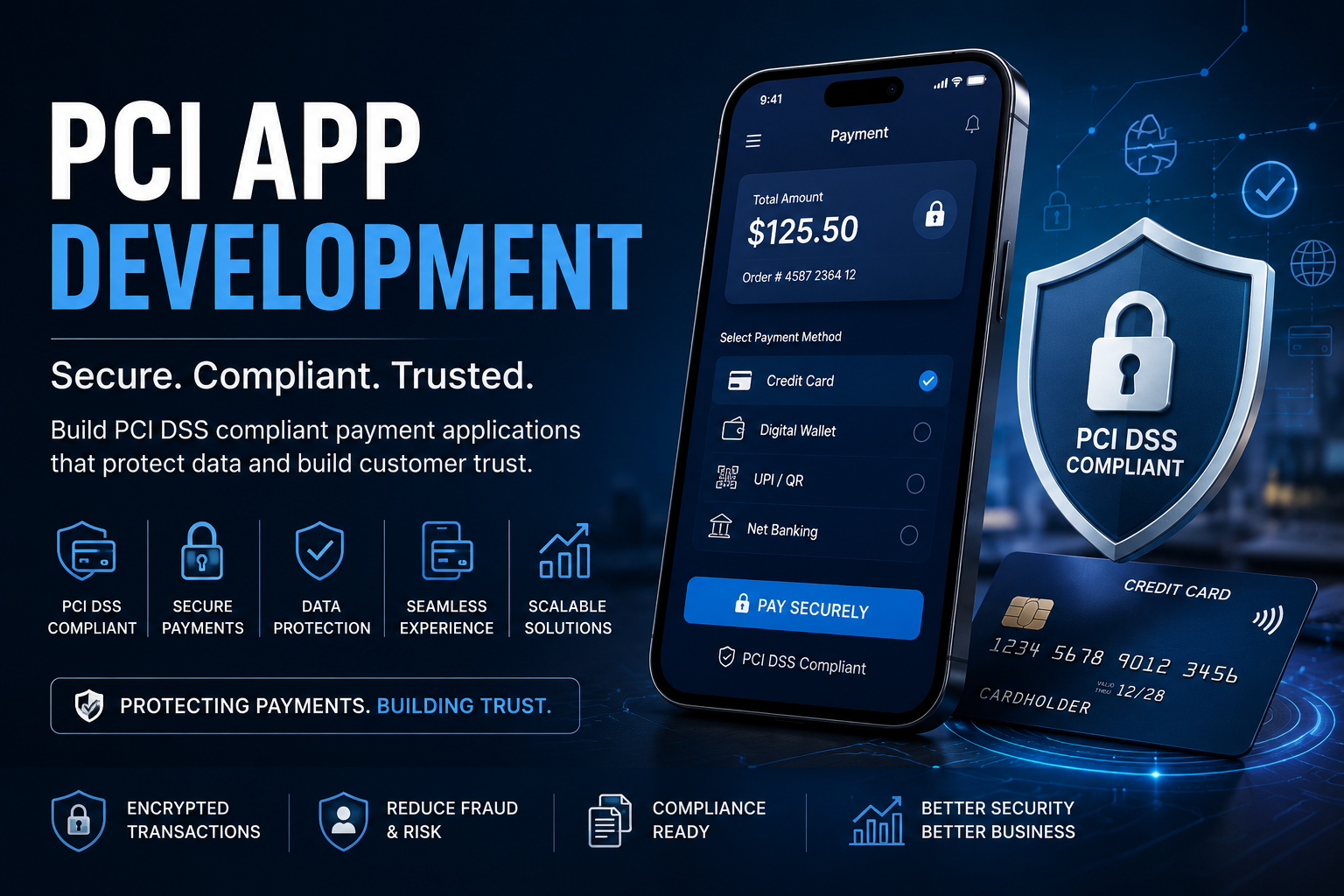
Digital payments have become the standard for businesses worldwide. Whether customers are paying in-store, online, or through mobile apps, they expect transactions to be fast, convenient, and, most importantly, secure.
However, with the rise of digital payments comes an increased risk of cyberattacks, payment fraud, and data breaches. According to industry reports, cybercriminals continue to target businesses that process payment card information, making security a top priority.
This is where PCI App Development plays a vital role. By building applications that align with Payment Card Industry Data Security Standard (PCI DSS) requirements, businesses can protect sensitive cardholder data, reduce security risks, and build customer trust.
What is PCI App Development?
PCI App Development refers to the process of designing and developing payment applications that follow PCI DSS security requirements.
These applications may include:
- Payment gateways
- Mobile payment apps
- POS software
- E-commerce checkout systems
- Self-service kiosks
- Subscription billing platforms
- Digital wallets
- SaaS payment solutions
The goal is simple:
Protect payment information while ensuring smooth, secure, and compliant transactions.
What is PCI DSS?
PCI DSS (Payment Card Industry Data Security Standard) is a globally recognized security standard established by the major payment card brands.
It provides a framework for businesses that store, process, or transmit cardholder data to:
- Prevent data breaches
- Secure payment systems
- Protect customer information
- Reduce fraud
- Maintain trust
Compliance is essential for organizations handling payment card data and is updated periodically to address evolving security threats.
Why PCI Compliance Matters in 2026
Cyber threats continue to evolve, making payment security more important than ever.
Businesses that fail to secure payment data may face:
- Financial losses
- Data breaches
- Regulatory penalties
- Customer trust issues
- Business disruption
- Reputation damage
Developing PCI-compliant applications helps businesses strengthen their security posture while meeting industry expectations.
Industries That Need PCI App Development
PCI-compliant applications are valuable across many industries:
Retail
- In-store payments
- Online shopping
- Loyalty systems
- Gift cards
Restaurants
- POS systems
- QR ordering
- Mobile payments
- Online delivery payments
Healthcare
- Patient billing
- Insurance payments
- Online payment portals
Hospitality
- Hotel bookings
- Restaurant billing
- Resort payment systems
Financial Services
- Digital banking
- Payment processing
- Merchant solutions
SaaS Platforms
- Subscription billing
- Recurring payments
- Customer invoicing
Essential Features of a PCI-Compliant Application
1. End-to-End Encryption
Payment information should remain encrypted throughout the transaction lifecycle to reduce exposure to unauthorized access.
2. Tokenization
Sensitive card data is replaced with secure tokens, minimizing the risk of exposing real card numbers.
3. Secure Authentication
Modern payment applications should support:
- Multi-factor authentication (MFA)
- Role-based access
- Secure login policies
- Strong password management
4. Secure Payment Processing
Applications should integrate with trusted payment gateways while protecting transaction data.
Supported payment methods may include:
- Credit cards
- Debit cards
- Digital wallets
- Contactless payments
- QR code payments
5. Audit Logging
Every critical action should be recorded for:
- Security investigations
- Compliance audits
- Activity monitoring
6. Real-Time Monitoring
Continuous monitoring helps identify suspicious activities before they become major security incidents.
Security Best Practices for PCI App Development
A secure payment application should incorporate:
- Secure coding practices
- Data encryption
- Network segmentation
- Access control
- Vulnerability assessments
- Regular security testing
- Secure APIs
- Patch management
- Incident response planning
Benefits of PCI App Development
Enhanced Customer Trust
Customers are more likely to complete purchases when they feel their payment information is protected.
Reduced Risk of Data Breaches
Security-focused development reduces vulnerabilities that attackers often exploit.
Improved Business Reputation
Demonstrating a commitment to payment security strengthens your brand and customer confidence.
Better Regulatory Readiness
A PCI-focused application supports compliance efforts and simplifies security audits.
Scalable Payment Infrastructure
Modern PCI applications can scale with growing transaction volumes and expanding business operations.
Modern Technologies Used in PCI App Development
Today’s secure payment applications often include:
- Cloud infrastructure
- Artificial Intelligence (AI) for fraud detection
- Machine Learning risk analysis
- API-first architecture
- Mobile payment integration
- Contactless payment support
- QR code payments
- Tokenization services
- Secure payment gateways
- Real-time analytics
PCI App Development Process
A structured development process typically includes:
Requirement Analysis
Understanding business goals, payment workflows, and compliance requirements.
Security Architecture
Designing secure infrastructure with encryption, authentication, and access controls.
UI/UX Design
Creating intuitive payment experiences while maintaining security.
Application Development
Building web, mobile, or POS applications with secure coding standards.
Payment Gateway Integration
Connecting trusted payment processors and banking APIs.
Security Testing
Conducting code reviews, penetration testing, vulnerability scanning, and performance testing.
Deployment
Launching the application in a secure production environment.
Ongoing Maintenance
Providing updates, monitoring, and security improvements to address new threats.
Trends Shaping PCI App Development in 2026
Businesses are increasingly adopting:
- AI-powered fraud detection
- Biometric authentication
- Passwordless login
- Contactless payment systems
- Cloud-native payment applications
- Embedded finance
- Real-time payment monitoring
- Zero Trust security architecture
- Advanced encryption techniques
- API-driven payment ecosystems
Why Partner with Experienced PCI App Developers?
An experienced PCI development team can help you:
- Build secure payment applications
- Integrate trusted payment gateways
- Implement PCI DSS security controls
- Develop scalable payment platforms
- Conduct security testing
- Optimize application performance
- Maintain compliance over time
Conclusion
As digital transactions continue to grow, payment security is no longer optional—it is a business requirement.
PCI App Development enables organizations to create secure, scalable, and reliable payment applications that protect customer information while supporting business growth. By integrating modern security practices, trusted payment technologies, and compliance-focused development, businesses can reduce risk, enhance customer confidence, and stay prepared for the evolving payment landscape.
Frequently Asked Questions
What is PCI App Development?
PCI App Development is the process of creating payment applications that follow PCI DSS security standards to protect cardholder data during storage, processing, and transmission.
Who needs PCI-compliant applications?
Any business that accepts, processes, or stores payment card information—including retailers, restaurants, healthcare providers, SaaS companies, hospitality businesses, and e-commerce platforms.
Is PCI DSS certification required for every payment application?
PCI DSS requirements depend on how payment data is handled. Businesses should evaluate their payment environment and work with qualified security professionals to determine applicable compliance obligations.
What technologies are commonly used in PCI App Development?
Common technologies include secure APIs, tokenization, encryption, cloud infrastructure, AI-based fraud detection, payment gateway integrations, and real-time monitoring systems.
Why invest in custom PCI App Development?
Custom PCI applications provide stronger security, better integration with existing systems, greater flexibility, scalability, and a payment experience tailored to your business needs.
Comments