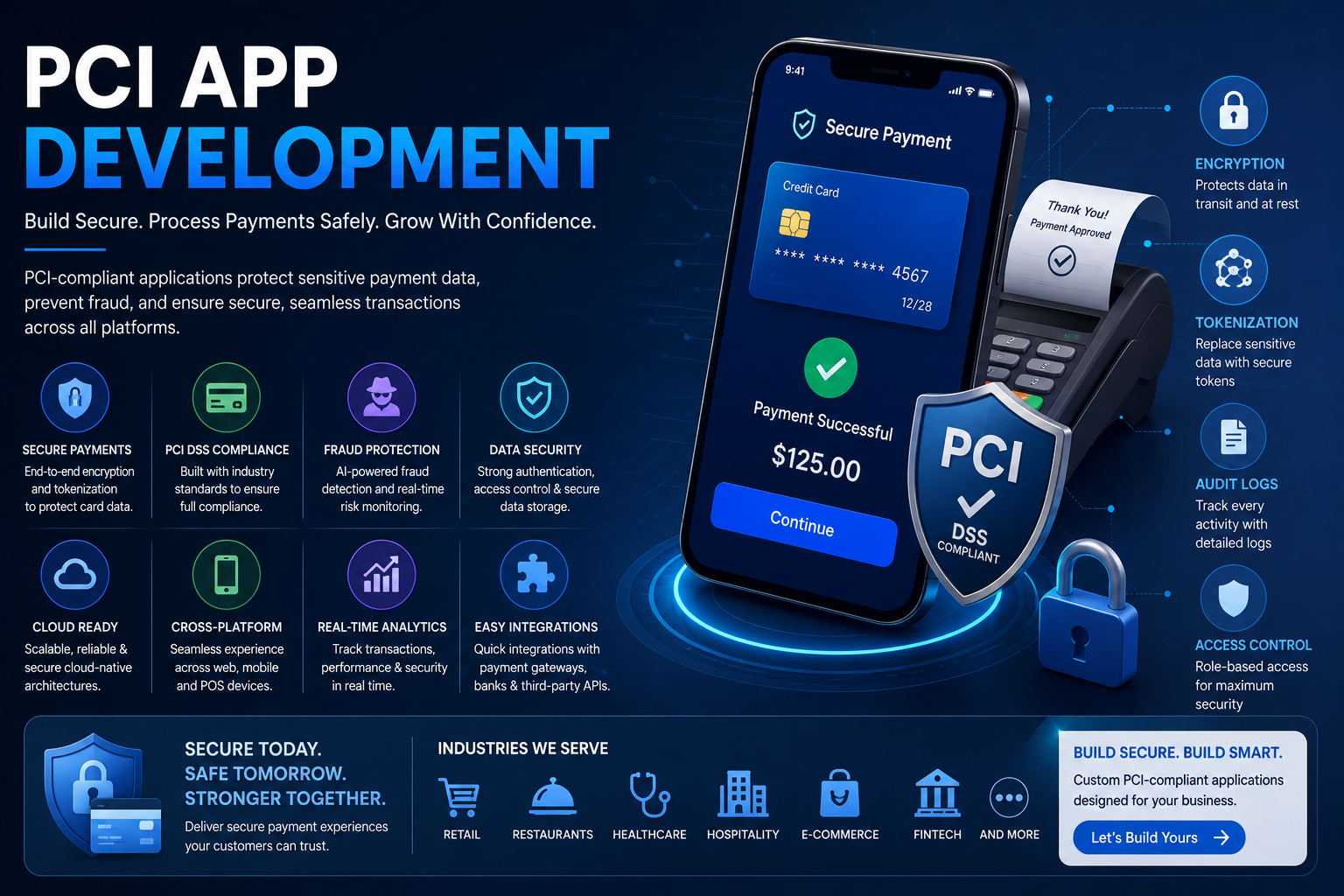
As digital payments continue to dominate global commerce, businesses must ensure that every payment transaction is processed securely. Whether you’re building a mobile payment app, POS system, eCommerce platform, fintech solution, or payment gateway, security is no longer optional—it’s essential.
This is where PCI App Development becomes critical.
PCI-compliant applications are designed to protect sensitive payment card data, reduce cybersecurity risks, and help businesses meet industry security requirements. A well-developed PCI application not only safeguards customer information but also builds trust, improves compliance, and supports long-term business growth.
In this guide, you’ll learn everything about PCI App Development, its benefits, must-have features, technologies, development process, and why investing in a secure payment application is essential in 2026.
What is PCI App Development?
PCI App Development is the process of designing and developing payment applications that follow the Payment Card Industry Data Security Standard (PCI DSS).
These applications securely process, transmit, and store payment card information while implementing strong security controls to reduce the risk of data breaches and fraud.
PCI-compliant applications are commonly used in:
- Retail POS Systems
- Mobile Payment Applications
- eCommerce Platforms
- Restaurant POS Software
- Healthcare Payment Systems
- Hotel Management Systems
- Self-Service Kiosks
- FinTech Applications
- Subscription Billing Platforms
- Enterprise Payment Solutions
Why PCI Compliance Matters
Millions of payment transactions occur every day.
Without proper security measures, businesses face risks such as:
- Credit card fraud
- Data breaches
- Identity theft
- Financial losses
- Legal liabilities
- Customer trust issues
- Operational disruptions
Developing PCI-compliant applications helps organizations strengthen security and align with industry standards for handling payment card data.
Key Benefits of PCI App Development
1. Enhanced Payment Security
Protect sensitive payment information using advanced security technologies, including:
- End-to-end encryption
- Tokenization
- Secure authentication
- Data masking
- Encrypted communication
- Secure key management
2. Customer Trust
Customers are more likely to complete transactions when they know their payment information is handled securely.
A secure payment experience improves:
- Customer confidence
- Brand reputation
- Repeat business
- Customer retention
3. Fraud Prevention
Modern PCI applications include multiple security layers such as:
- Real-time fraud detection
- Suspicious activity monitoring
- Transaction risk analysis
- Device fingerprinting
- Secure user authentication
4. Regulatory Compliance
PCI App Development helps businesses align with payment industry security requirements and establish consistent security practices.
5. Business Continuity
Secure applications reduce operational risks associated with payment fraud and cyber threats, helping businesses maintain uninterrupted services.
Essential Features of a PCI-Compliant Payment Application
Secure User Authentication
- Multi-factor authentication (MFA)
- Biometric login
- Strong password policies
- Role-based access control
- Session management
Secure Payment Processing
- Card payment support
- Contactless payments
- Digital wallets
- QR payments
- Mobile payments
- Recurring billing
Data Encryption
Protect sensitive information through:
- AES encryption
- TLS-secured communication
- End-to-end encryption
- Encrypted databases
Tokenization
Replace sensitive card information with secure tokens to minimize exposure during payment processing.
Audit Logs
Maintain detailed activity records for:
- User logins
- Payment attempts
- Administrative changes
- Security events
- System updates
Access Control
Control user permissions through:
- Role-based access
- Administrator controls
- Employee permissions
- Secure authentication policies
Fraud Detection
Monitor transactions using:
- AI-powered fraud analysis
- Behavioral monitoring
- Velocity checks
- Risk scoring
- Transaction alerts
API Security
Secure integrations with:
- Payment gateways
- Banking systems
- ERP platforms
- CRM software
- Accounting applications
Industries That Need PCI App Development
PCI-compliant payment applications are valuable across many industries, including:
- Retail
- Restaurants
- Hospitality
- Healthcare
- Financial Services
- Insurance
- Transportation
- eCommerce
- Subscription Businesses
- Education
- Telecommunications
- Government Payment Services
PCI App Development vs Standard Payment Applications
| Feature | PCI-Compliant App | Standard App |
|---|---|---|
| Payment Security | Advanced | Basic |
| Encryption | Strong | Limited |
| Tokenization | Yes | Optional |
| Fraud Protection | Advanced | Limited |
| Audit Logs | Comprehensive | Basic |
| Access Control | Role-Based | Limited |
| Risk Management | High | Moderate |
| Customer Trust | High | Moderate |
Technologies Used in PCI App Development
Frontend
- React
- Angular
- Flutter
- React Native
Backend
- Node.js
- .NET
- Java
- Python
- Laravel
Database
- PostgreSQL
- MySQL
- Microsoft SQL Server
- MongoDB
Cloud Platforms
- Amazon Web Services (AWS)
- Microsoft Azure
- Google Cloud Platform
Security Technologies
- TLS Encryption
- Tokenization
- OAuth 2.0
- OpenID Connect
- JWT Authentication
- Hardware Security Module (HSM)
PCI App Development Process
Step 1
Business Requirement Analysis
Step 2
Security Planning
Step 3
Application Architecture
Step 4
UI/UX Design
Step 5
Application Development
Step 6
Security Testing
Step 7
PCI Readiness Assessment
Step 8
Deployment
Step 9
Maintenance & Security Updates
Future Trends in PCI Payment Applications
Payment application development continues to evolve with technologies such as:
- AI-powered fraud detection
- Biometric authentication
- Contactless payment solutions
- Cloud-native payment platforms
- Blockchain-assisted payment security
- Mobile-first payment applications
- Voice-enabled payment experiences
- Real-time security monitoring
- Predictive fraud analytics
- Zero Trust security architecture
How Much Does PCI App Development Cost?
The development cost depends on several factors, including:
- Application complexity
- Security requirements
- Payment gateway integrations
- Platform support (Web, Android, iOS)
- Number of APIs
- Cloud infrastructure
- Compliance requirements
- Third-party integrations
- Testing and validation
A basic PCI-ready application may require a modest investment, while enterprise-grade payment platforms with advanced security features, analytics, and multiple integrations can cost significantly more.
Why Choose QuartusTech for PCI App Development?
At QuartusTech, we specialize in developing secure, scalable, and high-performance payment applications that prioritize security, compliance, and user experience.
Our PCI App Development services include:
- Custom Payment Applications
- Mobile Payment App Development
- POS Payment Solutions
- Secure Payment Gateway Integration
- Tokenization Implementation
- Encryption & Data Security
- Multi-Platform Development
- API Integration
- Cloud-Based Payment Solutions
- Ongoing Maintenance & Security Support
We combine modern technologies with security-first development practices to deliver reliable payment applications for businesses worldwide.
Final Thoughts
As digital payments continue to grow, secure payment applications have become essential for businesses across every industry. PCI App Development helps organizations protect payment data, reduce fraud risks, and create secure, reliable payment experiences for customers.
By investing in a PCI-focused application built with strong security controls and scalable architecture, businesses can support long-term growth while maintaining customer trust and operational resilience.
Frequently Asked Questions (FAQs)
What is PCI App Development?
PCI App Development is the process of building payment applications that follow PCI DSS security requirements to help protect payment card information.
Which businesses need PCI-compliant applications?
Any business that develops or manages applications handling payment card transactions—including retailers, restaurants, eCommerce platforms, healthcare providers, and fintech companies—should consider PCI-focused development and appropriate compliance practices.
Is PCI compliance mandatory?
Businesses that store, process, or transmit payment card data are generally expected to follow PCI DSS requirements as part of their agreements with payment brands and acquiring banks.
What security features should a PCI payment application include?
Common features include encryption, tokenization, secure authentication, role-based access control, audit logging, fraud detection, secure APIs, and continuous security monitoring.
How long does it take to develop a PCI payment application?
Development timelines vary based on the application’s complexity, integrations, security requirements, and testing scope. A simple solution may take a few months, while enterprise-grade platforms require longer development and validation cycles.
Comments