Digital payments have become an essential part of modern business.
Customers expect fast, convenient, and secure ways to pay through mobile applications, websites, payment terminals, digital wallets, and other connected platforms.
For businesses building their own payment applications, however, convenience is only one part of the challenge.
Security and compliance are equally important.
This is where PCI-compliant payment app development becomes critical.
A payment application must be designed to protect sensitive payment information while integrating securely with payment processors, gateways, banking systems, and other financial technologies.
For businesses looking for a PCI-compliant payment app development company, understanding the development process, security requirements, integrations, and compliance considerations is an important first step.
What Is PCI-Compliant Payment App Development?
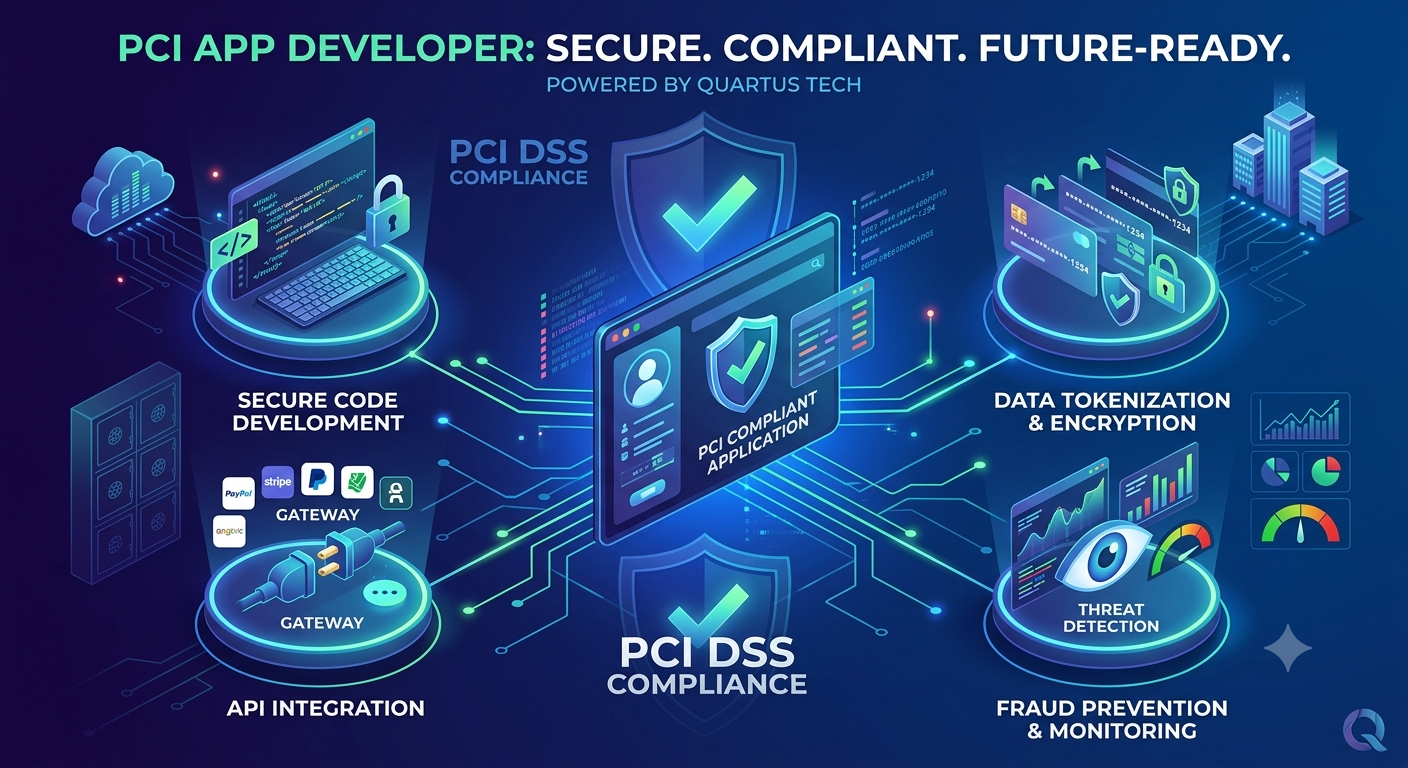
PCI-compliant payment app development involves designing and developing payment software according to applicable Payment Card Industry security requirements.
The objective is to reduce the risk of unauthorized access, payment-data exposure, fraud, and security vulnerabilities.
A secure payment application may include:
- Payment processing
- Card payment integration
- Digital wallet integration
- Payment gateway integration
- Customer authentication
- Tokenization
- Encryption
- Transaction monitoring
- Fraud detection
- Payment history
- Refund management
- Recurring payments
- Administrative dashboards
- Reporting and analytics
The exact requirements depend on how the application handles payment-card data and how its payment environment is structured.
Why Payment Security Matters in 2026
Payment applications process highly sensitive transactions.
A security vulnerability can result in financial losses, customer distrust, operational disruption, and regulatory or contractual consequences.
Businesses therefore need to consider security throughout the software development lifecycle.
Security should not be added as an afterthought.
It should be considered during:
Planning → Architecture → Development → Testing → Deployment → Monitoring
This approach helps create a stronger foundation for secure payment processing.
1. Build Security Into the Application Architecture
The architecture of a payment application can have a major impact on its security.
Developers should carefully determine:
Comments