Digital payments continue to evolve rapidly. Businesses now expect payment applications to support mobile wallets, online checkout, recurring payments, digital banking integrations, payment gateways, and multiple transaction methods.
But developing a payment application is very different from building a standard mobile or web application.
A payment application may handle sensitive payment information and interact with systems that store, process, or transmit cardholder data. That makes security, compliance, authentication, encryption, and secure software development essential from the beginning.
In 2026, businesses developing payment applications should consider PCI DSS v4.x requirements, PCI Secure Software standards, secure APIs, tokenization, encryption, fraud controls, and continuous security testing as part of the development lifecycle.
PCI SSC describes PCI DSS as a baseline of technical and operational requirements designed to protect payment account data.
What Is PCI-Compliant Payment App Development?
PCI-compliant payment app development is the process of designing and developing payment software with security controls and development practices appropriate for protecting payment account data.
A payment application may include:
- Mobile payment applications
- E-commerce payment systems
- Payment gateway integrations
- Digital wallet applications
- POS applications
- Subscription billing platforms
- Payment processing APIs
- Fintech applications
- Online checkout systems
- Merchant payment platforms
The exact PCI requirements applicable to a project depend on how the application interacts with cardholder data and the overall payment environment.
Importantly, PCI compliance is not simply a feature that can be added after development. Security needs to be considered throughout architecture, coding, testing, deployment, and maintenance.
PCI SSC’s Secure Software Lifecycle standard specifically addresses integrating security throughout the software lifecycle, including design, development, deployment, and maintenance.
PCI DSS and Payment Applications
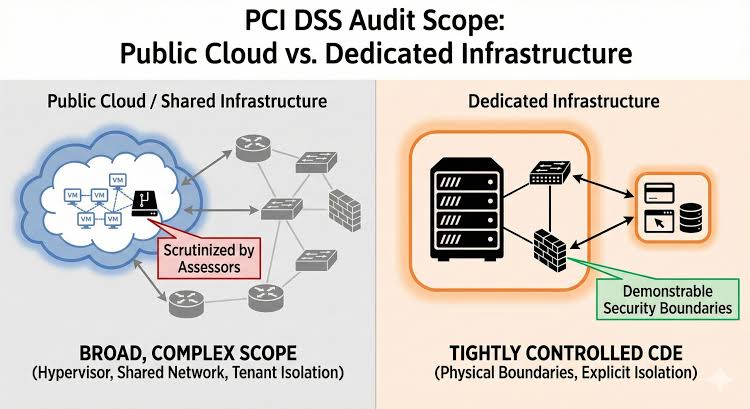
PCI DSS applies to entities that store, process, or transmit cardholder data or sensitive authentication data, as well as entities that can impact the security of the cardholder data environment.
For payment software developers, this means the architecture and responsibilities of the application need to be carefully evaluated.
A payment application might interact with:
Customer → Mobile/Web App → Payment API → Payment Gateway → Processor → Issuer
Each component can have different security responsibilities.
Developers therefore need to understand:
- Where payment data enters the system
- Whether the application stores payment information
- Where data is transmitted
- Which third-party services are involved
- Which systems are inside the relevant security scope
- How authentication is implemented
- How sensitive information is protected
- How security events are monitored
PCI DSS v4.0.1 Considerations in 2026
PCI DSS v4.0.1 is the current limited revision of PCI DSS v4.x. PCI SSC states that v4.0.1 was published to address stakeholder feedback and questions received after PCI DSS v4.0.
Developers should pay particular attention to requirements involving secure software, authentication, vulnerability management, logging, monitoring, access control, and protection of payment data.
For example, PCI SSC notes that certain PCI DSS v4.x requirements became effective on March 31, 2025, including updated requirements relating to public-facing web applications, authentication, and critical security-control failures.
This makes it important for development teams to work from the applicable current PCI documentation rather than relying on older PCI guidance.
Secure Architecture for Payment Applications
A secure architecture can help reduce unnecessary exposure of payment information.
A simplified payment application architecture may look like:
Customer App → Secure Backend → Payment Gateway → Payment Processor
Additional services may include:
- Authentication service
- Tokenization service
- Fraud detection
- Transaction database
- Audit logging
- Notification service
- Monitoring platform
- Administrative dashboard
The architecture should minimize the number of components that directly interact with sensitive payment information.
Why Data Flow Matters
Before development begins, teams should map how payment data moves through the system.
For example:
Card Entry → Secure Payment Component → Tokenization → Gateway → Transaction Response
Understanding this data flow helps development and security teams determine where controls are required.
Tokenization in Payment Applications
Tokenization can help reduce the exposure of payment card information within an application architecture.
Instead of repeatedly handling sensitive card information, a payment system may use a token representing the payment instrument.
A simplified process can look like:
Payment Details → Secure Payment Provider → Token → Application
The application can then use the token for supported payment operations without unnecessarily handling the underlying card information.
However, tokenization does not automatically make an application PCI compliant. The overall payment environment, integrations, implementation, and applicable requirements still need to be assessed.
Encryption and Payment Data Protection
Encryption is an important part of payment security.
Payment applications should use appropriate cryptographic protections for sensitive information during transmission and, where permitted and necessary, while stored.
PCI SSC identifies protection of stored account data and strong cryptography for cardholder data transmitted across open, public networks among the core PCI DSS requirements.
Developers should consider:
- TLS for network communication
- Secure key management
- Encryption at rest where appropriate
- Secure secrets management
- Certificate management
- Database access controls
- Secure API communication
Sensitive credentials and cryptographic keys should never be hard-coded into application source code.
Secure Payment APIs
Modern payment applications frequently depend on APIs.
APIs may connect the application to:
- Payment gateways
- Banks
- Payment processors
- Fraud detection services
- Customer-management systems
- Accounting platforms
- Subscription platforms
A secure payment API architecture should consider:
Authentication
APIs should verify the identity of clients and users before providing access to protected resources.
Authorization
Authentication alone is not enough. The application should determine what each authenticated user or service is allowed to access.
Input Validation
API requests should be validated to prevent unexpected or malicious input from reaching backend systems.
Rate Limiting
Rate limiting can help reduce abuse and automated attacks.
Logging
Security-relevant events should be appropriately logged and monitored.
Secure Error Handling
Payment APIs should avoid exposing sensitive implementation details through error messages.
Mobile Payment App Security
Mobile payment applications require additional security considerations.
A secure mobile payment application may use:
- Secure authentication
- Biometric authentication where appropriate
- Secure local storage
- Certificate validation
- Encrypted communication
- Session management
- Secure API authentication
- Application integrity controls
- Device security controls
Developers should also carefully consider what payment information is stored locally on the device.
PCI SSC notes that software developed for payment acceptance can be within the developer’s relevant security considerations even when the consumer’s own device environment is outside the organization’s PCI DSS assessment scope.
Web Payment Application Security
E-commerce payment applications have their own security challenges.
A payment page can involve:
Customer Browser → Merchant Website → Payment Interface → Payment Provider
Developers need to carefully evaluate:
- Third-party scripts
- JavaScript security
- API requests
- Session management
- Authentication
- Content Security Policy
- Payment-page integrity
- Vulnerability management
- Logging and monitoring
PCI SSC’s guidance includes specific requirements concerning public-facing web applications and automated technical solutions for detecting and preventing web-based attacks.
Authentication and Access Control
Payment systems should use strong authentication and carefully controlled access.
Administrative users, developers, support staff, and customers may have different permissions.
A role-based access model can separate permissions such as:
- Customer
- Merchant
- Finance administrator
- Support employee
- Security administrator
- System administrator
The principle of least privilege should be applied so users and services receive only the access required for their responsibilities.
Logging and Monitoring
Payment systems need visibility into important security and transaction events.
Monitoring can include:
- Login attempts
- Authentication failures
- API requests
- Administrative activity
- Payment events
- Configuration changes
- Security alerts
- System failures
PCI DSS includes requirements relating to logging, monitoring, and testing of systems and networks.
Effective monitoring can also help development and security teams investigate suspicious activity.
Secure Software Development Lifecycle
Security should be incorporated throughout the development process rather than addressed immediately before launch.
A payment application development lifecycle can include:
1. Requirements
Identify:
- Payment methods
- Users
- Transaction flows
- Data types
- Third-party services
- Compliance considerations
2. Threat Modeling
Identify potential attack paths and determine how they can be mitigated.
3. Architecture
Design secure application, API, database, authentication, and payment flows.
4. Development
Use secure coding practices and appropriate development controls.
5. Security Testing
Test the application for vulnerabilities and implementation weaknesses.
6. Deployment
Use controlled deployment procedures and secure infrastructure configurations.
7. Monitoring
Monitor applications, infrastructure, APIs, and security events.
8. Maintenance
Continue patching, testing, monitoring, and improving the application after launch.
PCI SSC’s Secure Software Lifecycle standard specifically promotes security throughout the software lifecycle rather than treating security as a one-time activity.
Security Testing for Payment Applications
Security testing should be integrated into the development process.
Testing may include:
- Vulnerability assessments
- Penetration testing
- API security testing
- Authentication testing
- Authorization testing
- Dependency analysis
- Secure code review
- Configuration testing
- Infrastructure security testing
Testing should be performed according to the application’s architecture, risk profile, and applicable compliance requirements.
Common Payment Application Development Mistakes
Several mistakes can increase security risk.
Storing Unnecessary Card Data
Applications should avoid storing sensitive payment information unless there is a legitimate requirement and appropriate controls.
Hard-Coding Secrets
API keys, passwords, private keys, and other secrets should not be embedded directly into application source code.
Ignoring Third-Party Components
Open-source libraries and third-party services can introduce security risks if they are not properly maintained and monitored.
Treating PCI as a Final Audit
Security and compliance should not be postponed until the application is ready for launch.
Weak Access Controls
Excessive administrative privileges can increase the impact of compromised accounts.
Poor Logging
Without appropriate monitoring, suspicious activity can be difficult to identify and investigate.
What Is the Difference Between PCI DSS and PCI Secure Software Standards?
PCI DSS focuses on protecting payment account data and the environments that store, process, or transmit it.
The PCI Secure Software Standard focuses specifically on security requirements for payment software vendors and developers. PCI SSC describes it as a standard intended to help ensure the secure design and management of payment software and protect the integrity and confidentiality of payment transactions and associated payment data.
The Secure Software Lifecycle Standard focuses on integrating security throughout the software lifecycle.
It is also important to note that PA-DSS is retired. PCI SSC states that PA-DSS was retired on October 28, 2022, and was superseded by the Secure Software Standard and Secure Software Lifecycle Standard.
How to Build a PCI-Focused Payment Application
A practical development roadmap can look like this:
Business Requirements
↓
Payment & Data-Flow Analysis
↓
Secure Architecture
↓
API & Gateway Integration
↓
Secure Application Development
↓
Security Testing
↓
Compliance Assessment
↓
Production Deployment
↓
Continuous Monitoring & Maintenance
This approach helps teams address security requirements throughout development rather than attempting to retrofit security after the application has already been built.
Choosing a Payment App Development Company
Businesses evaluating a payment application development partner should consider several areas.
Payment Technology Experience
Look for experience with payment gateways, transaction processing, APIs, and financial technology.
Security Knowledge
The development team should understand secure coding, authentication, encryption, API security, and vulnerability management.
PCI Knowledge
Ask how the team approaches PCI DSS and applicable PCI Secure Software requirements.
Mobile and Web Development
The team should be capable of building the required customer-facing applications and dashboards.
Backend and API Development
Payment applications frequently depend on secure backend services and third-party integrations.
Testing
Ask about security testing, code review, vulnerability assessment, and ongoing monitoring.
Post-Launch Support
Payment applications require ongoing updates, security patches, monitoring, and maintenance.
Future of Payment Application Development
Payment applications are increasingly becoming connected platforms rather than simple transaction interfaces.
Emerging technologies can influence payment development in areas such as:
- Digital wallets
- Contactless payments
- Mobile payment acceptance
- Tokenization
- AI-powered fraud detection
- Real-time transaction monitoring
- Biometric authentication
- Cloud-native payment infrastructure
- API-based financial services
- Embedded payments
As payment ecosystems become more connected, security needs to remain part of the architecture rather than an afterthought.
Conclusion
Developing a secure payment application requires much more than integrating a payment gateway.
Businesses need to consider application architecture, payment data flows, authentication, encryption, API security, tokenization, secure development, testing, monitoring, and applicable PCI requirements.
PCI DSS provides a baseline of technical and operational requirements for protecting payment account data, while PCI SSC’s Secure Software and Secure Software Lifecycle standards provide security-focused frameworks for payment software developers and vendors.
A well-designed payment application should therefore be built with security throughout its entire lifecycle—from initial architecture and development through deployment, monitoring, updates, and maintenance.
Build Your Payment Application With PCIAppDeveloper
PCIAppDeveloper focuses on payment application development, payment gateway integration, secure APIs, mobile and web payment solutions, and security-focused payment software architecture.
Whether you are planning a new payment platform, upgrading an existing application, or integrating payment functionality into a mobile or web product, a security-first development approach can provide a stronger foundation for your payment ecosystem.
Comments