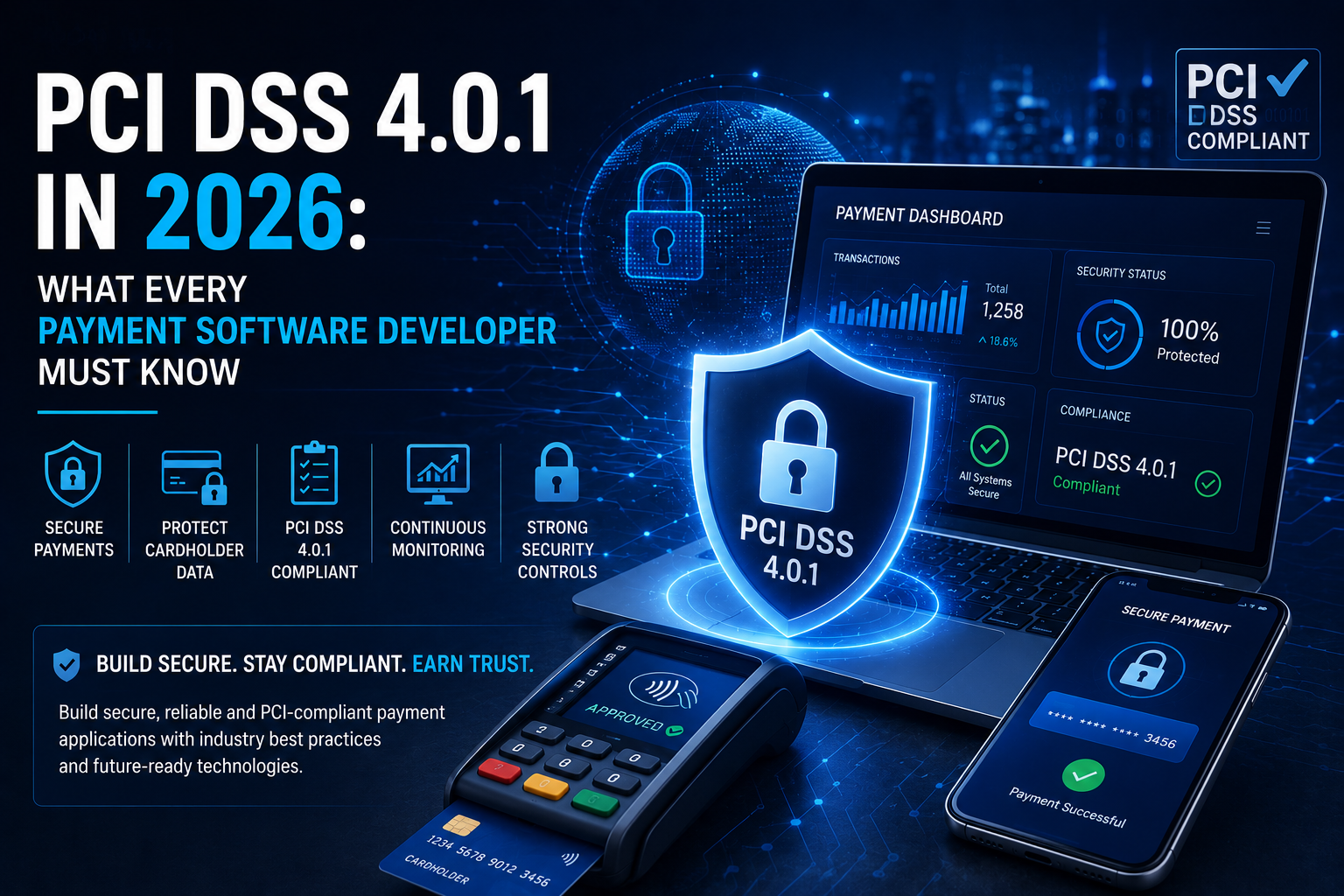
As cyberattacks continue to evolve, businesses that process, store, or transmit payment card data face increasing security challenges. Data breaches not only result in financial losses but also damage customer trust and brand reputation.
To strengthen payment security, organizations must comply with PCI DSS 4.0 (Payment Card Industry Data Security Standard)—the latest version of the global security framework designed to protect cardholder data.
At PCI App Developer, we help businesses build secure, PCI-compliant payment applications that meet modern compliance requirements while delivering exceptional user experiences.
What Is PCI DSS 4.0?
PCI DSS (Payment Card Industry Data Security Standard) is a global security standard created by the PCI Security Standards Council.
It applies to any organization that:
- Accepts credit card payments
- Processes payment transactions
- Stores cardholder information
- Transmits payment data
PCI DSS 4.0 introduces enhanced security controls, continuous risk assessment, and greater flexibility for organizations to protect payment environments.
Why PCI DSS 4.0 Matters
Payment fraud continues to rise across industries, making compliance more important than ever.
Benefits include:
- Stronger payment security
- Reduced risk of data breaches
- Increased customer trust
- Regulatory readiness
- Better cyber resilience
- Improved operational security
Compliance is no longer just a regulatory requirement—it’s a competitive advantage.
Who Needs PCI DSS Compliance?
PCI DSS applies to businesses of all sizes, including:
- Retail stores
- Restaurants
- E-commerce businesses
- SaaS platforms
- Mobile payment providers
- Healthcare organizations
- Financial institutions
- Hospitality businesses
- Subscription-based services
- Payment gateway providers
If your business accepts payment cards, PCI DSS compliance is essential.
Key PCI DSS 4.0 Requirements
1. Build and Maintain Secure Networks
Protect payment environments by:
- Configuring firewalls
- Securing network devices
- Segmenting sensitive systems
- Monitoring network traffic
2. Protect Cardholder Data
Organizations must:
- Encrypt stored payment data
- Secure data during transmission
- Minimize stored card information
- Apply strong encryption standards
3. Maintain a Vulnerability Management Program
Regular security maintenance includes:
- Software updates
- Security patches
- Malware protection
- Vulnerability scanning
4. Implement Strong Access Controls
Access should follow the principle of least privilege.
Security measures include:
- Multi-factor authentication (MFA)
- Role-based permissions
- Unique user IDs
- Password policies
5. Monitor and Test Networks
Continuous monitoring helps identify threats early.
Recommended practices include:
- Log monitoring
- Intrusion detection
- Penetration testing
- Security audits
- File integrity monitoring
6. Maintain an Information Security Policy
Businesses should establish:
- Security awareness training
- Incident response plans
- Risk management procedures
- Vendor security policies
New Features in PCI DSS 4.0
Compared to previous versions, PCI DSS 4.0 introduces:
- Expanded multi-factor authentication
- Customized security approaches
- Continuous risk assessments
- Stronger password requirements
- Improved authentication controls
- Enhanced documentation requirements
- Better cloud security guidance
These updates help organizations adapt to modern cybersecurity threats.
Common Compliance Challenges
Businesses often struggle with:
- Legacy systems
- Cloud security
- Third-party integrations
- Inadequate documentation
- Employee awareness
- Vulnerability management
- Application security testing
Partnering with experienced PCI professionals can simplify the compliance journey.
Best Practices for PCI Compliance
To maintain compliance:
- Perform regular security assessments
- Keep software up to date
- Encrypt sensitive payment data
- Implement zero-trust security principles
- Conduct employee security training
- Monitor networks continuously
- Perform penetration testing regularly
- Review access permissions frequently
Compliance should be viewed as an ongoing process rather than a one-time project.
Why Choose PCI App Developer?
PCI App Developer specializes in secure payment application development and PCI compliance solutions for businesses worldwide.
Our services include:
- PCI-Compliant Payment App Development
- Secure Payment Gateway Integration
- POS Application Development
- Mobile Payment Solutions
- E-commerce Payment Security
- Tokenization & Encryption
- Payment API Development
- PCI Security Consulting
- Compliance Readiness Assessments
- Ongoing Security Maintenance
We build scalable, secure, and future-ready payment applications designed to meet evolving compliance standards.
The Future of Payment Security
As digital payments continue to grow, cybersecurity threats are becoming more sophisticated. Businesses that invest in secure payment technologies and maintain PCI DSS compliance will be better positioned to protect customer data and build long-term trust.
Emerging technologies such as AI-driven fraud detection, biometric authentication, tokenization, and real-time transaction monitoring will continue shaping the future of payment security.
Conclusion
PCI DSS 4.0 is more than a compliance checklist—it is a framework for protecting sensitive payment information and strengthening your organization’s cybersecurity posture.
Whether you’re launching a new payment application, modernizing an existing platform, or preparing for a compliance audit, implementing PCI DSS 4.0 best practices is essential for long-term success.
Ready to build secure, PCI-compliant payment solutions? Partner with PCI App Developer to create payment applications that meet the highest security standards while delivering seamless customer experiences.
FAQs
Q1. What is PCI DSS 4.0?
PCI DSS 4.0 is the latest global security standard for protecting payment card data.
Q2. Who must comply with PCI DSS?
Any business that stores, processes, or transmits payment card information.
Q3. Is PCI DSS compliance mandatory?
Yes. Organizations handling payment card data are expected to comply with PCI DSS requirements.
Q4. How often should PCI compliance be reviewed?
Compliance should be maintained continuously with regular assessments, updates, and security monitoring.
Comments