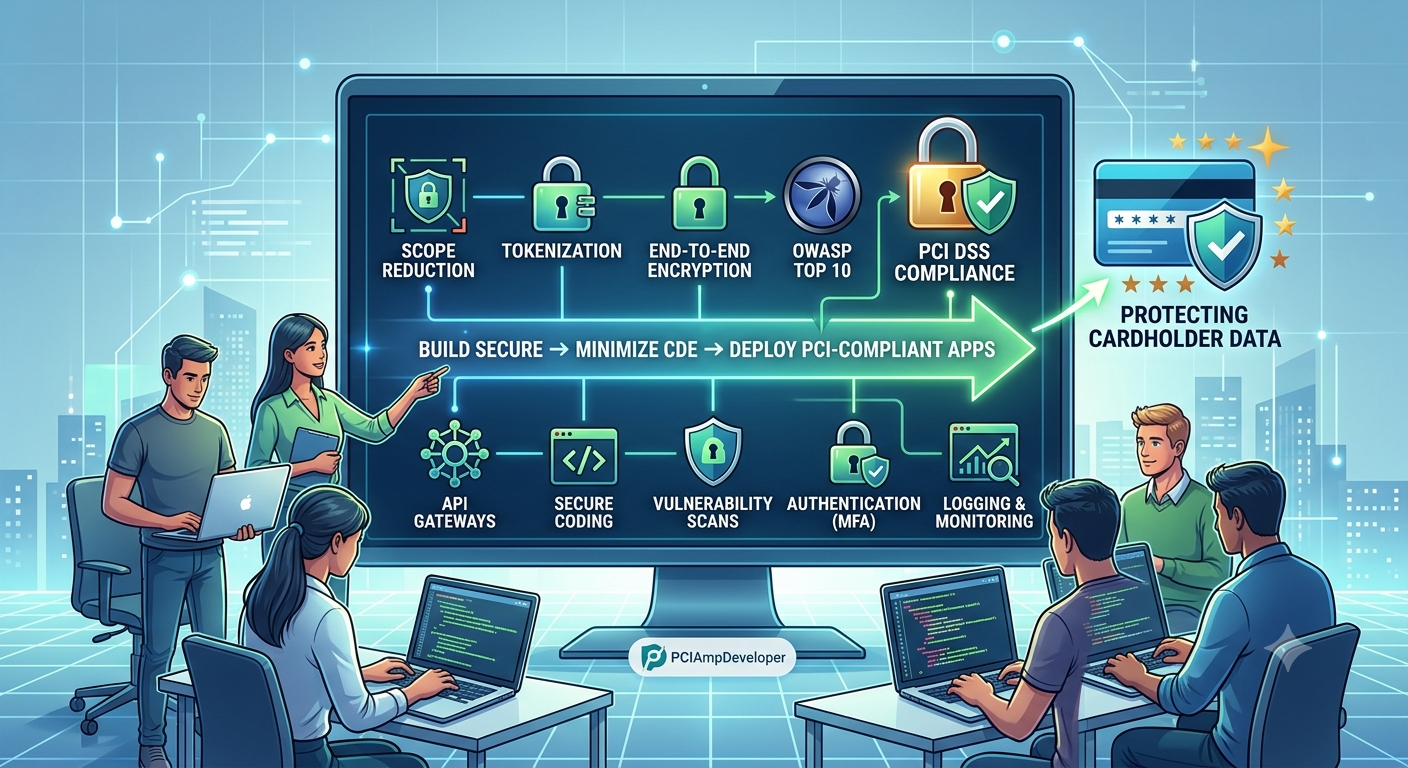
In today’s digital economy, processing payments seamlessly is essential for mobile and web applications. However, with digital transactions comes the immense responsibility of protecting cardholder data. Financial losses, severe regulatory penalties, and reputational damage from data breaches make payment security a top priority for businesses and developers alike.
This guide explores what PCI DSS compliance means for software development, the core pillars of building a compliant application, and a step-by-step framework to secure your payment ecosystem.
What Is PCI DSS Compliance in App Development?
The Payment Card Industry Data Security Standard (PCI DSS) is a set of security requirements established by major card brands (Visa, Mastercard, American Express, Discover, and JCB).
In application development, PCI compliance means designing, writing, testing, and deploying software such that credit card numbers, expiration dates, and sensitive authentication codes are kept safe from unauthorized access or interception.
Core Pillars of PCI App Security
To build a secure payment architecture, developers must implement key technical and operational controls:
1. Scope Reduction via Tokenization & Hosted Fields
The best way to comply with PCI DSS is to reduce your Cardholder Data Environment (CDE) scope:
- Use hosted payment fields or client-side SDKs (e.g., Stripe Elements, Braintree, PayPal) where payment data is captured directly by the payment processor.
- Implement tokenization, replacing raw Primary Account Numbers (PANs) with secure tokens. Your app servers only store tokens, meaning raw card numbers never touch your database.
2. End-to-End Encryption
- In Transit: Enforce strong cryptographic protocols (TLS 1.2 or higher, ideally TLS 1.3) for all web and API traffic carrying payment information.
- At Rest: If your system must store allowed payment metadata (such as the cardholder’s name or the last 4 digits of the card), ensure it is encrypted using robust algorithms like AES-256 with strict key management practices.
3. Strict Access Control & Authentication
- Implement Multi-Factor Authentication (MFA) for administrative access to payment systems and backend infrastructure.
- Enforce Role-Based Access Control (RBAC) following the Principle of Least Privilege—grant access only to systems and personnel that strictly require it.
4. Secure Coding Practices
Follow the OWASP Top 10 guidelines to guard against prevalent vulnerabilities:
- Prevent SQL Injection (SQLi) by using parameterized queries and ORMs.
- Mitigate Cross-Site Scripting (XSS) with input validation and output encoding.
- Use secure session handling and avoid storing sensitive data in client-side local storage or cookies without proper encryption.
5. Continuous Logging and Monitoring
Maintain detailed, audit-ready logs for all user access to cardholder data, administrative privileges, and payment-related API calls. Automated alerting systems should flag suspicious activities, repeated failed login attempts, or anomalous transaction rates in real time.
Step-by-Step PCI-Compliant Development Lifecycle
[1. Map Data Flows] ➔ [2. Secure Architecture] ➔ [3. Vulnerability Testing] ➔ [4. Compliance Validation]
Step 1: Map Data Flows & Define Scope
Before writing code, map out every data pathway:
- Where does card data enter the app?
- Where is it processed or routed?
- Which third-party services interact with the transaction?
Minimizing data exposure early saves significantly on audit costs later.
2. Implement Secure Gateway Integrations
Integrate trusted, PCI-certified payment processors using modern APIs and client SDKs. Ensure API keys, client secrets, and environment passwords are statefully managed using secure secret managers (e.g., AWS Secrets Manager, HashiCorp Vault) and never hardcoded in source code.
3. Perform Regular Vulnerability Assessments
- Conduct automated Static Application Security Testing (SAST) and Dynamic Application Security Testing (DAST) within your CI/CD pipeline.
- Perform regular dependency scans to detect vulnerable third-party packages or SDKs.
- Conduct annual penetration testing and quarterly vulnerability scans using certified ASVs (Approved Scanning Vendors).
4. Complete Compliance Certification
Depending on your transaction volume and architecture, complete the appropriate PCI DSS Self-Assessment Questionnaire (SAQ)—such as SAQ A for fully outsourced payment fields—or work with a certified Qualified Security Assessor (QSA).
3 Critical PCI Mistakes to Avoid
- Storing Sensitive Authentication Data (SAD): Never store CVV/CVC verification codes, PIN blocks, or full magnetic stripe data after transaction authorization, under any circumstances.
- Hardcoding Secret Keys: Exposing payment provider secret keys inside front-end client code or repository history is a major security flaw.
- Ignoring Dependency Updates: A PCI-compliant app can easily become vulnerable if third-party libraries or SDKs remain unpatched and outdated.
Final Thoughts
PCI DSS compliance should not be an afterthought retrofitted at launch; it should be built into the architectural DNA of your application. By leveraging tokenization, hosted payment fields, and secure coding standards, you can minimize compliance overhead, prevent costly data breaches, and foster long-term customer trust.
Comments