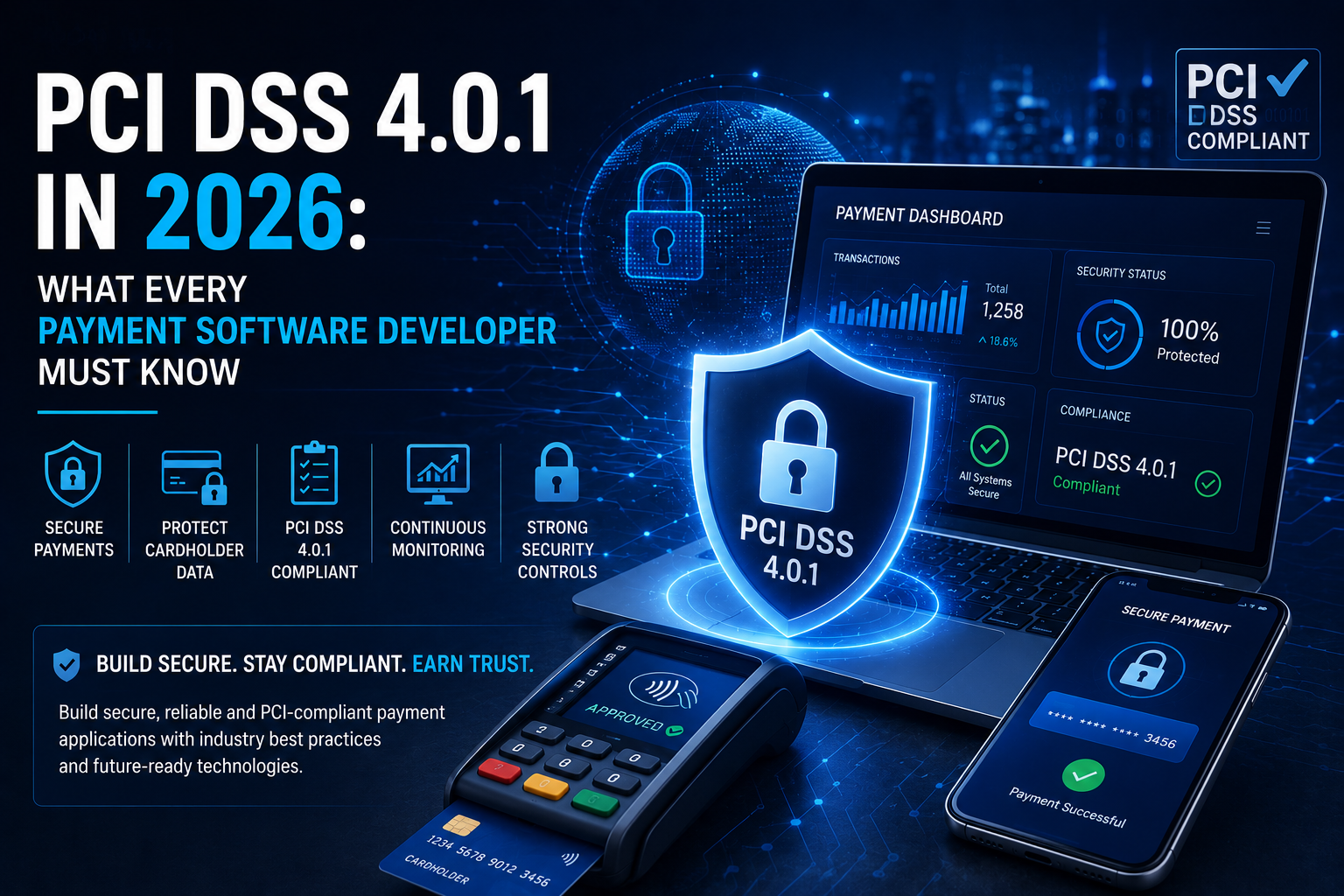
The digital payments industry continues to evolve rapidly, bringing faster transactions, new payment methods, and increasingly sophisticated cyber threats. As businesses adopt cloud-based payment platforms, mobile wallets, and contactless transactions, protecting cardholder data has never been more important.
That’s why PCI DSS 4.0.1 remains the global benchmark for securing payment environments. Whether you’re building a POS system, an eCommerce platform, a mobile payment application, or a custom payment gateway, compliance is no longer optional—it’s a business necessity.
This guide explains what developers need to know about PCI DSS 4.0.1 and how to build secure, compliant payment software for 2026 and beyond.
What Is PCI DSS 4.0.1?
The Payment Card Industry Data Security Standard (PCI DSS) is a globally recognized security framework created to protect cardholder data and reduce payment fraud.
PCI DSS 4.0.1 strengthens security by emphasizing:
- Continuous security monitoring
- Stronger authentication
- Secure software development
- Risk-based security controls
- Regular vulnerability assessments
- Improved encryption practices
- Better access management
Rather than treating compliance as a one-time project, organizations are encouraged to make security an ongoing process.
Why Payment Software Developers Must Care
Developers play a critical role in protecting payment systems.
A single vulnerability can expose customer payment information, leading to:
- Financial losses
- Regulatory penalties
- Data breaches
- Brand reputation damage
- Customer trust issues
Building secure applications from the beginning is far more effective than fixing security problems after deployment.
Key PCI DSS 4.0.1 Requirements for Developers
Secure Software Development Lifecycle (SSDLC)
Security should be integrated throughout every development stage:
- Requirements analysis
- Architecture design
- Coding
- Testing
- Deployment
- Maintenance
Embedding security early reduces vulnerabilities and development costs.
Strong Authentication
Applications should implement:
- Multi-Factor Authentication (MFA)
- Secure password policies
- Session management
- Role-based access control
- Account lockout protection
These controls help prevent unauthorized access.
Data Encryption
Sensitive payment information should always be encrypted:
- During transmission
- At rest
- During backups
- Between integrated services
Modern encryption standards significantly reduce data exposure.
Secure API Development
Payment applications rely heavily on APIs.
Best practices include:
- OAuth authentication
- API rate limiting
- Token validation
- Input validation
- Secure logging
- HTTPS enforcement
Poorly secured APIs are one of the most common attack vectors.
Vulnerability Management
Continuous monitoring includes:
- Code reviews
- Penetration testing
- Dependency scanning
- Patch management
- Vulnerability remediation
Regular testing helps identify weaknesses before attackers do.
Common PCI Compliance Mistakes
Many organizations unknowingly increase risk by:
- Storing unnecessary cardholder data
- Using outdated encryption methods
- Hardcoding credentials
- Ignoring software updates
- Missing security logging
- Failing to review third-party integrations
Avoiding these mistakes can significantly improve both compliance and security.
Building Modern PCI-Compliant Payment Applications
Today’s payment software must support:
- Contactless payments
- Mobile wallets
- EMV chip transactions
- QR code payments
- Tokenization
- Cloud payment processing
- Omnichannel commerce
Security must remain seamless without compromising the user experience.
Emerging Trends in Secure Payment Development
The future of payment software includes:
- AI-powered fraud detection
- Behavioral analytics
- Zero Trust Architecture
- Passwordless authentication
- Cloud-native payment platforms
- Real-time risk scoring
- Biometric verification
- Intelligent transaction monitoring
Organizations that embrace these technologies will be better prepared for future security challenges.
Why Choose PCIAppDeveloper?
At PCIAppDeveloper, we build secure payment applications designed with compliance from day one.
Our services include:
- PCI-Compliant Payment Application Development
- POS Software Development
- Payment Gateway Integration
- Secure Mobile Payment Apps
- FinTech Software Development
- Tokenization Solutions
- EMV Payment Integration
- Secure API Development
- Payment Platform Modernization
- Security Testing & Code Review
- PCI Compliance Consulting
- Ongoing Application Support
Our development approach combines secure architecture, modern technologies, and industry best practices to help businesses launch reliable payment solutions with confidence.
Conclusion
As cyber threats continue to evolve, secure payment software is no longer just a competitive advantage—it is essential for protecting customers and maintaining trust.
PCI DSS 4.0.1 provides a strong framework for building resilient payment applications, but successful compliance requires more than meeting minimum requirements. It demands a security-first mindset throughout the software development lifecycle.
Whether you’re creating a payment gateway, upgrading a POS platform, or launching a FinTech product, investing in secure development today helps safeguard your business for the future.
PCIAppDeveloper is committed to delivering secure, scalable, and PCI-ready payment solutions that empower businesses to innovate without compromising security.
Comments