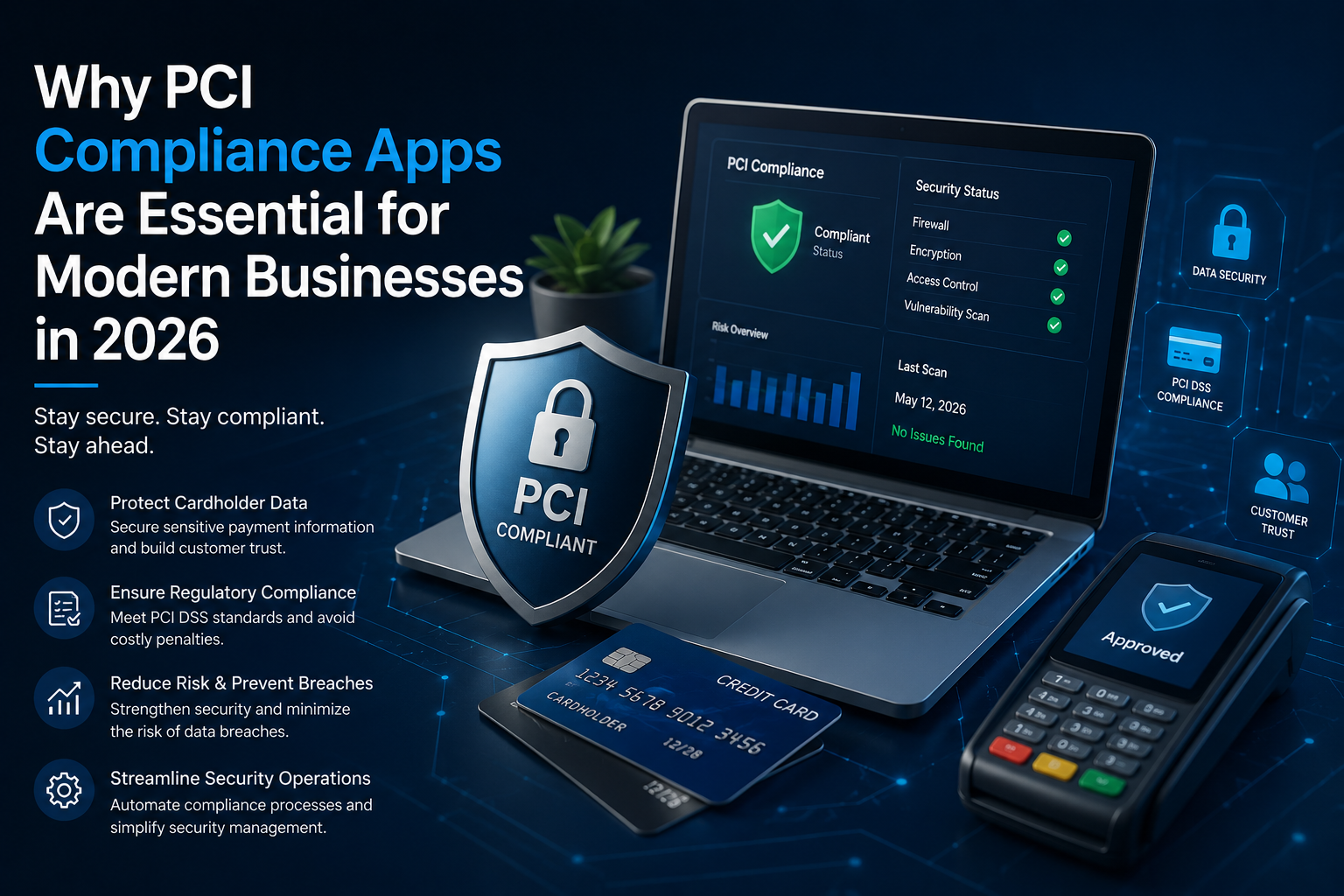
In today’s digital economy, businesses process thousands of online and in-store transactions every day. Whether it’s eCommerce, mobile payments, POS systems, SaaS platforms, or subscription billing, protecting customer payment data has become more critical than ever.
This is where PCI compliance applications play a major role.
As cyber threats continue to evolve, businesses must comply with the Payment Card Industry Data Security Standard (PCI DSS) to securely handle credit card information and prevent data breaches.
Companies like QuartusTech are helping businesses build secure PCI-compliant applications using advanced technologies like AI, cloud security, enterprise software development, mobile applications, and secure payment integrations.
What Is PCI DSS?
PCI Security Standards Council developed PCI DSS (Payment Card Industry Data Security Standard) to ensure businesses securely process, store, and transmit cardholder data.
PCI DSS applies to:
- eCommerce websites
- Mobile payment apps
- POS systems
- SaaS billing platforms
- Payment gateways
- Retail businesses
- Hospitality industries
- Healthcare payment systems
The primary goal is to:
- Protect customer payment data
- Prevent fraud
- Reduce cyberattacks
- Ensure secure transactions
What Is a PCI Compliance App?


6
A PCI compliance app is a secure software solution designed to help businesses manage payment security requirements and maintain PCI DSS compliance.
These applications include features such as:
- Encrypted payment processing
- Secure user authentication
- Tokenization
- Fraud detection
- Security monitoring
- Audit logging
- Risk management
- Secure cloud infrastructure
Modern PCI applications also integrate:
- AI-driven fraud prevention
- Real-time threat detection
- Multi-factor authentication
- Cloud security frameworks
- Compliance automation
Why PCI Compliance Matters
1. Protection Against Data Breaches
Cybercriminals constantly target businesses handling payment information. PCI-compliant applications help protect:
- Credit card numbers
- CVV information
- Billing data
- Transaction history
- Customer identities
Data breaches can lead to:
- Financial losses
- Legal penalties
- Customer trust issues
- Brand reputation damage
2. Secure Payment Processing
PCI-compliant systems ensure secure transaction handling through:
- End-to-end encryption
- Secure APIs
- Tokenized payments
- Protected payment gateways
Businesses using secure applications significantly reduce fraud risks.
3. Customer Trust & Brand Reputation
Customers expect secure digital payment experiences.
PCI-compliant applications help businesses:
- Build trust
- Improve credibility
- Increase customer confidence
- Strengthen online reputation
Secure platforms often experience better customer retention and higher transaction completion rates.
Key Features of a Modern PCI Compliance App


6
End-to-End Encryption
Sensitive cardholder data is encrypted during transmission and storage to prevent unauthorized access.
Tokenization
Tokenization replaces actual card data with secure digital tokens, reducing exposure to payment information.
Multi-Factor Authentication (MFA)
Modern PCI apps use MFA for:
- User login security
- Admin access control
- Transaction verification
AI-Powered Fraud Detection
Artificial Intelligence helps detect:
- Suspicious transactions
- Unusual login behavior
- Payment anomalies
- Potential fraud attempts
AI-based monitoring improves real-time security responses.
Cloud Security Integration
Modern PCI apps leverage cloud security frameworks for:
- Secure storage
- Backup protection
- Disaster recovery
- Scalability
Audit Logs & Compliance Reporting
PCI applications maintain detailed logs for:
- Compliance audits
- Security analysis
- Regulatory reporting
- Threat investigations
Industries That Need PCI Compliance Apps
PCI compliance is essential across multiple industries:
Retail & eCommerce
Online stores and retailers process millions of card transactions daily.
Hospitality
Hotels, restaurants, and travel businesses manage secure guest payments.
Healthcare
Medical billing systems must protect patient payment data.
SaaS Platforms
Subscription-based platforms require secure recurring billing systems.
Financial Services
Banks and fintech companies depend heavily on PCI-compliant infrastructure.
Role of AI & Automation in PCI Security


4
AI and automation are transforming payment security through:
- Real-time fraud detection
- Behavioral analytics
- Automated compliance checks
- Smart threat monitoring
- Predictive cybersecurity
Machine learning systems continuously analyze transaction patterns to identify suspicious activity before major damage occurs.
This significantly improves:
- Fraud prevention
- Security response time
- Compliance management
- Risk reduction
How QuartusTech Can Build PCI-Compliant Applications
QuartusTech specializes in developing secure enterprise applications that align with PCI DSS requirements.
QuartusTech can help businesses build:
- PCI-compliant mobile apps
- Secure POS systems
- Payment gateway integrations
- AI-powered fraud detection systems
- Cloud-based billing platforms
- Secure enterprise applications
- IoT payment infrastructure
- eCommerce security solutions
Their expertise includes:
- Artificial Intelligence
- Mobile App Development
- Enterprise Software
- BLE & IoT Integration
- Cloud Security
- Secure Payment Systems
Challenges in PCI Compliance
While PCI compliance provides strong security benefits, businesses must address challenges such as:
- Complex compliance requirements
- Ongoing security updates
- Cybersecurity threats
- Infrastructure costs
- Secure cloud management
- Employee access control
Regular security audits and continuous monitoring are critical for maintaining compliance.
Future of PCI Compliance Applications


6
The future of PCI compliance will include:
- AI-driven cybersecurity
- Biometric authentication
- Blockchain payment security
- Zero-trust security architecture
- Automated compliance management
- Real-time threat intelligence
As digital payments continue growing globally, businesses will increasingly rely on intelligent PCI compliance applications to protect customer data and maintain secure payment ecosystems.
Conclusion
PCI compliance applications are no longer optional for businesses handling digital payments — they are essential for security, trust, and operational success.
By combining:
- AI-powered security
- Secure cloud infrastructure
- Advanced encryption
- Fraud prevention systems
- Enterprise-grade compliance
businesses can safely manage modern digital transactions while protecting sensitive customer information.
Technology companies like QuartusTech are helping organizations build secure, scalable, and future-ready PCI-compliant solutions for the rapidly evolving digital payment landscape.
Comments