PCI Developers Navbar

Tag: appdevelopement

  • PCI DSS 4.0 Compliance in 2026: What Every Business Accepting Card Payments Must Know

    PCI DSS 4.0 Compliance in 2026: What Every Business Accepting Card Payments Must Know

    As cyberattacks continue to evolve, businesses that process, store, or transmit payment card data face increasing security challenges. Data breaches not only result in financial losses but also damage customer trust and brand reputation.

    To strengthen payment security, organizations must comply with PCI DSS 4.0 (Payment Card Industry Data Security Standard)—the latest version of the global security framework designed to protect cardholder data.

    At PCI App Developer, we help businesses build secure, PCI-compliant payment applications that meet modern compliance requirements while delivering exceptional user experiences.


    What Is PCI DSS 4.0?

    PCI DSS (Payment Card Industry Data Security Standard) is a global security standard created by the PCI Security Standards Council.

    It applies to any organization that:

    • Accepts credit card payments
    • Processes payment transactions
    • Stores cardholder information
    • Transmits payment data

    PCI DSS 4.0 introduces enhanced security controls, continuous risk assessment, and greater flexibility for organizations to protect payment environments.


    Why PCI DSS 4.0 Matters

    Payment fraud continues to rise across industries, making compliance more important than ever.

    Benefits include:

    • Stronger payment security
    • Reduced risk of data breaches
    • Increased customer trust
    • Regulatory readiness
    • Better cyber resilience
    • Improved operational security

    Compliance is no longer just a regulatory requirement—it’s a competitive advantage.


    Who Needs PCI DSS Compliance?

    PCI DSS applies to businesses of all sizes, including:

    • Retail stores
    • Restaurants
    • E-commerce businesses
    • SaaS platforms
    • Mobile payment providers
    • Healthcare organizations
    • Financial institutions
    • Hospitality businesses
    • Subscription-based services
    • Payment gateway providers

    If your business accepts payment cards, PCI DSS compliance is essential.


    Key PCI DSS 4.0 Requirements

    1. Build and Maintain Secure Networks

    Protect payment environments by:

    • Configuring firewalls
    • Securing network devices
    • Segmenting sensitive systems
    • Monitoring network traffic

    2. Protect Cardholder Data

    Organizations must:

    • Encrypt stored payment data
    • Secure data during transmission
    • Minimize stored card information
    • Apply strong encryption standards

    3. Maintain a Vulnerability Management Program

    Regular security maintenance includes:

    • Software updates
    • Security patches
    • Malware protection
    • Vulnerability scanning

    4. Implement Strong Access Controls

    Access should follow the principle of least privilege.

    Security measures include:

    • Multi-factor authentication (MFA)
    • Role-based permissions
    • Unique user IDs
    • Password policies

    5. Monitor and Test Networks

    Continuous monitoring helps identify threats early.

    Recommended practices include:

    • Log monitoring
    • Intrusion detection
    • Penetration testing
    • Security audits
    • File integrity monitoring

    6. Maintain an Information Security Policy

    Businesses should establish:

    • Security awareness training
    • Incident response plans
    • Risk management procedures
    • Vendor security policies

    New Features in PCI DSS 4.0

    Compared to previous versions, PCI DSS 4.0 introduces:

    • Expanded multi-factor authentication
    • Customized security approaches
    • Continuous risk assessments
    • Stronger password requirements
    • Improved authentication controls
    • Enhanced documentation requirements
    • Better cloud security guidance

    These updates help organizations adapt to modern cybersecurity threats.


    Common Compliance Challenges

    Businesses often struggle with:

    • Legacy systems
    • Cloud security
    • Third-party integrations
    • Inadequate documentation
    • Employee awareness
    • Vulnerability management
    • Application security testing

    Partnering with experienced PCI professionals can simplify the compliance journey.


    Best Practices for PCI Compliance

    To maintain compliance:

    • Perform regular security assessments
    • Keep software up to date
    • Encrypt sensitive payment data
    • Implement zero-trust security principles
    • Conduct employee security training
    • Monitor networks continuously
    • Perform penetration testing regularly
    • Review access permissions frequently

    Compliance should be viewed as an ongoing process rather than a one-time project.


    Why Choose PCI App Developer?

    PCI App Developer specializes in secure payment application development and PCI compliance solutions for businesses worldwide.

    Our services include:

    • PCI-Compliant Payment App Development
    • Secure Payment Gateway Integration
    • POS Application Development
    • Mobile Payment Solutions
    • E-commerce Payment Security
    • Tokenization & Encryption
    • Payment API Development
    • PCI Security Consulting
    • Compliance Readiness Assessments
    • Ongoing Security Maintenance

    We build scalable, secure, and future-ready payment applications designed to meet evolving compliance standards.


    The Future of Payment Security

    As digital payments continue to grow, cybersecurity threats are becoming more sophisticated. Businesses that invest in secure payment technologies and maintain PCI DSS compliance will be better positioned to protect customer data and build long-term trust.

    Emerging technologies such as AI-driven fraud detection, biometric authentication, tokenization, and real-time transaction monitoring will continue shaping the future of payment security.


    Conclusion

    PCI DSS 4.0 is more than a compliance checklist—it is a framework for protecting sensitive payment information and strengthening your organization’s cybersecurity posture.

    Whether you’re launching a new payment application, modernizing an existing platform, or preparing for a compliance audit, implementing PCI DSS 4.0 best practices is essential for long-term success.

    Ready to build secure, PCI-compliant payment solutions? Partner with PCI App Developer to create payment applications that meet the highest security standards while delivering seamless customer experiences.


    FAQs

    Q1. What is PCI DSS 4.0?
    PCI DSS 4.0 is the latest global security standard for protecting payment card data.

    Q2. Who must comply with PCI DSS?
    Any business that stores, processes, or transmits payment card information.

    Q3. Is PCI DSS compliance mandatory?
    Yes. Organizations handling payment card data are expected to comply with PCI DSS requirements.

    Q4. How often should PCI compliance be reviewed?
    Compliance should be maintained continuously with regular assessments, updates, and security monitoring.
  • Secure Payment Gateway Development: How Businesses Can Protect Payments and Build Customer Trust in 2026

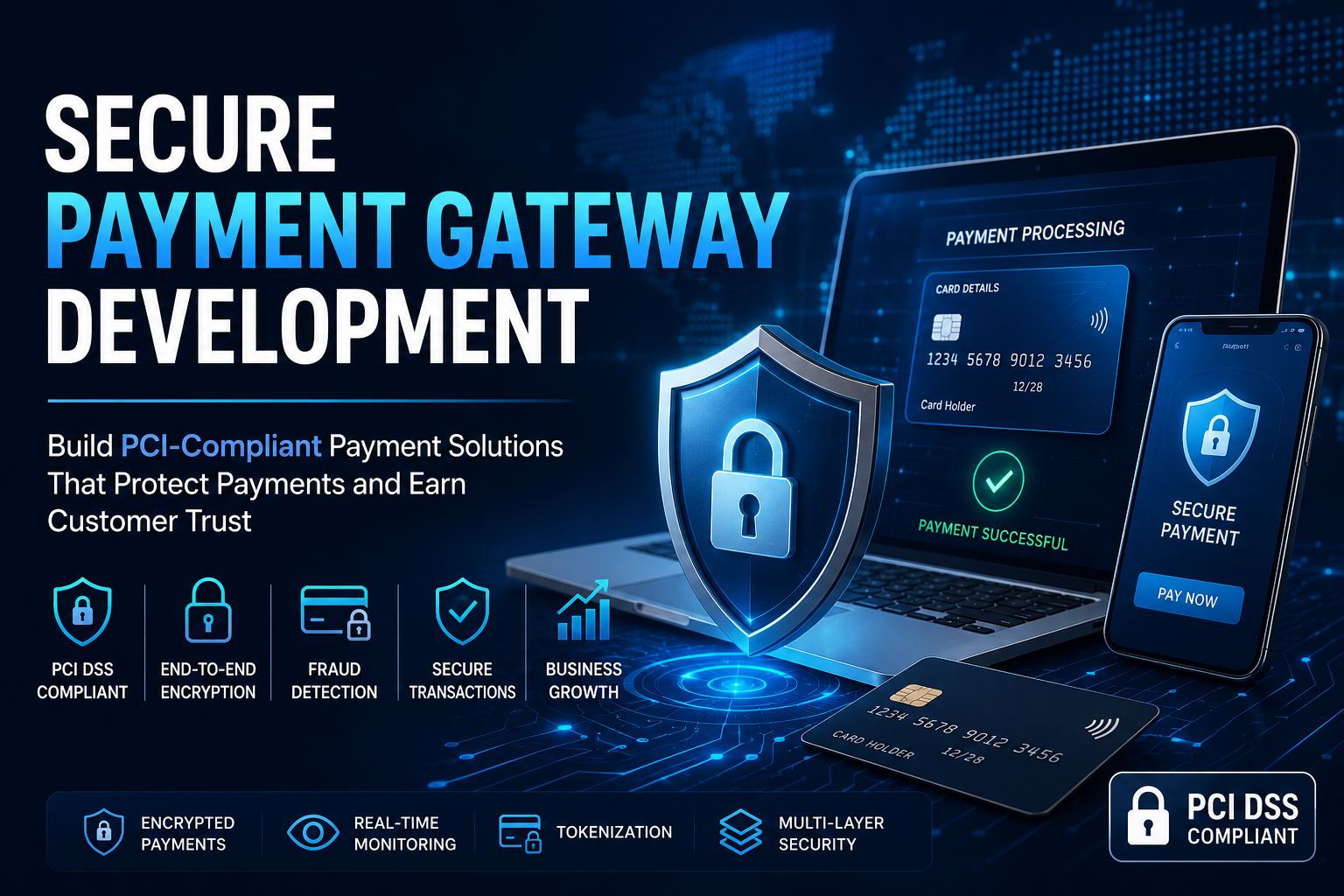
    Secure Payment Gateway Development: How Businesses Can Protect Payments and Build Customer Trust in 2026

    In today’s digital economy, every online transaction carries valuable customer information. From eCommerce platforms and SaaS applications to healthcare, hospitality, and fintech solutions, businesses process thousands of payment transactions every day. Unfortunately, cybercriminals continue to target payment systems, making security more important than ever.

    A secure payment gateway is no longer just a payment processor—it is the foundation of customer trust, regulatory compliance, and business growth.

    At PCI App Developers, we specialize in developing secure, PCI DSS-compliant payment gateway solutions that help businesses accept payments safely while protecting sensitive cardholder data.


    What Is a Secure Payment Gateway?

    A secure payment gateway is a technology that encrypts, validates, and authorizes online payment transactions between customers, merchants, banks, and payment processors.

    Its primary purpose is to:

    • Encrypt payment information
    • Prevent unauthorized access
    • Authenticate transactions
    • Detect fraudulent activity
    • Ensure PCI DSS compliance
    • Deliver fast and reliable payment processing

    Without proper gateway security, businesses risk fraud, chargebacks, financial losses, and damage to their reputation.


    Why Payment Security Matters More Than Ever

    Cyber threats continue to evolve. Attackers now use AI-powered techniques, credential theft, malware, phishing campaigns, and automated fraud tools to target payment systems.

    A compromised payment environment can result in:

    • Customer data breaches
    • Financial penalties
    • PCI compliance violations
    • Business downtime
    • Loss of customer confidence
    • Increased chargebacks

    Modern businesses require intelligent payment infrastructure that protects every transaction.


    Key Features of a Secure Payment Gateway

    End-to-End Encryption

    Sensitive payment information is encrypted before transmission, ensuring customer card data remains protected throughout the transaction.


    PCI DSS Compliance

    A professionally developed payment gateway follows PCI DSS security standards to protect payment card information and reduce compliance risks.


    Tokenization

    Instead of storing actual card numbers, tokenization replaces payment data with secure tokens, significantly reducing exposure to cyber threats.


    Multi-Factor Authentication

    Modern payment gateways support additional authentication methods to verify customer identity before approving transactions.


    Fraud Detection

    AI-powered fraud monitoring identifies suspicious transactions in real time using:

    • Behavioral analysis
    • Device fingerprinting
    • Risk scoring
    • Velocity checks
    • Geographic validation

    Real-Time Monitoring

    Continuous transaction monitoring helps identify unusual payment activity before fraud occurs.


    Secure APIs

    Secure API integration allows businesses to connect payment functionality into:

    • Mobile applications
    • Web applications
    • SaaS platforms
    • Marketplace solutions
    • Enterprise software

    without compromising security.


    Benefits of Custom Secure Payment Gateway Development

    Many businesses rely on third-party payment providers, but custom payment gateway development provides greater flexibility and security.

    Benefits include:

    Better Security Control

    Businesses maintain greater control over payment workflows and security policies.

    Faster Payment Processing

    Optimized transaction routing improves payment speed and customer experience.

    Lower Transaction Costs

    Custom integrations can reduce dependency on expensive third-party platforms.

    Better Customer Experience

    A seamless checkout process increases customer satisfaction and reduces cart abandonment.

    Scalability

    Custom payment gateways grow with your business and support increasing transaction volumes.


    Industries That Need Secure Payment Gateway Solutions

    Secure payment gateway development benefits almost every industry, including:

    • FinTech
    • eCommerce
    • Healthcare
    • Hospitality
    • Retail
    • SaaS Platforms
    • Subscription Businesses
    • Travel & Tourism
    • Online Education
    • Insurance
    • Telecommunications
    • Government Services

    Technologies Used in Modern Payment Gateway Development

    Modern payment systems combine multiple security technologies:

    • PCI DSS 4.0 Compliance
    • Tokenization
    • AES-256 Encryption
    • TLS 1.3
    • OAuth Authentication
    • AI Fraud Detection
    • Machine Learning Risk Analysis
    • Cloud Infrastructure
    • API Security
    • Zero Trust Architecture

    Together, these technologies provide multiple layers of payment protection.


    Why PCI Compliance Is Critical

    PCI DSS compliance is not just a regulatory requirement—it demonstrates your commitment to protecting customer data.

    Benefits include:

    • Reduced security risks
    • Stronger customer confidence
    • Easier audits
    • Lower breach costs
    • Improved business reputation
    • Safer payment processing

    Businesses handling cardholder data should prioritize PCI-compliant development from the start.


    Why Choose PCI App Developers?

    At PCI App Developers, we build enterprise-grade payment solutions designed for security, compliance, and long-term scalability.

    Our services include:

    • Custom Payment Gateway Development
    • PCI DSS Compliance Consulting
    • Payment API Integration
    • Mobile Payment Solutions
    • Secure Payment Processing Systems
    • Tokenization Solutions
    • Fraud Detection Systems
    • Payment Security Audits
    • Cloud Payment Infrastructure
    • Ongoing Security Maintenance

    Our experienced development team delivers secure, reliable, and future-ready payment solutions tailored to your business requirements.


    Future of Secure Payment Gateways

    The future of digital payments will be driven by:

    • AI-powered fraud prevention
    • Biometric authentication
    • Passwordless payments
    • Embedded finance
    • Real-time payment processing
    • Blockchain-enhanced payment security
    • Predictive fraud intelligence
    • Intelligent compliance automation

    Businesses investing in secure payment infrastructure today will be better positioned to compete in tomorrow’s digital economy.


    Conclusion

    Payment security is no longer optional. Customers expect every transaction to be fast, secure, and reliable. Businesses that invest in secure payment gateway development protect sensitive data, strengthen customer trust, reduce compliance risks, and create a strong foundation for sustainable growth.

    Whether you’re launching a new payment platform or modernizing an existing system, implementing a PCI DSS-compliant payment gateway is one of the smartest investments your business can make.

    Ready to build a secure payment gateway for your business?
    PCI App Developers provides secure, scalable, and PCI-compliant payment gateway development services that help businesses process payments with confidence.


    FAQ

    What is a secure payment gateway?

    A secure payment gateway encrypts and processes online payment transactions while protecting sensitive customer payment information.

    Why is PCI DSS compliance important?

    PCI DSS compliance helps businesses protect cardholder data, reduce fraud risks, and meet industry security requirements.

    Can you build a custom payment gateway?

    Yes. PCI App Developers develops custom payment gateways tailored to your business workflows, security requirements, and compliance needs.

    Which industries benefit from secure payment gateways?

    eCommerce, fintech, healthcare, hospitality, SaaS, retail, education, insurance, and many other industries that process digital payments.

    How does tokenization improve payment security?

    Tokenization replaces sensitive card data with secure tokens, minimizing the risk of exposing customer payment information during storage or processing.

  • PCI DSS 4.0 Is No Longer Optional: How Businesses Can Build Secure Payment Applications in 2026

    PCI DSS 4.0 Is No Longer Optional: How Businesses Can Build Secure Payment Applications in 2026

    Digital payments have become the foundation of modern commerce. Whether customers pay through mobile apps, self-service kiosks, POS systems, e-commerce stores, or SaaS platforms, every transaction carries sensitive payment data that must be protected.

    Cybercriminals are targeting payment ecosystems more aggressively than ever. As a result, businesses are expected to go beyond basic compliance and implement security throughout the software development lifecycle.

    With PCI DSS 4.0 now fully in effect, organizations that process, transmit, or store cardholder data need to rethink how they design and maintain payment applications.


    What Is PCI DSS 4.0?

    The Payment Card Industry Data Security Standard (PCI DSS) is a global security framework created by the Payment Card Industry Security Standards Council (PCI SSC).

    Its goal is simple:

    Protect payment card data from theft, fraud, and unauthorized access.

    PCI DSS 4.0 introduces stronger requirements that emphasize:

    • Continuous security monitoring
    • Multi-factor authentication (MFA)
    • Secure software development
    • Risk-based security controls
    • Better access management
    • Stronger encryption
    • Improved vulnerability management
    • Regular security testing

    Rather than treating compliance as a yearly checklist, PCI DSS 4.0 encourages businesses to make security an ongoing process.


    Why PCI DSS 4.0 Matters in 2026

    Today’s payment systems are far more complex than they were a decade ago.

    Modern businesses operate across:

    • Mobile applications
    • Cloud platforms
    • Restaurant POS systems
    • Retail payment terminals
    • Digital wallets
    • Online marketplaces
    • Subscription platforms
    • Embedded payment solutions

    Every new integration increases the attack surface.

    Without proper security controls, businesses face:

    • Payment fraud
    • Data breaches
    • Regulatory penalties
    • Brand reputation damage
    • Customer trust loss
    • Operational downtime

    PCI DSS 4.0 helps reduce these risks by enforcing security-first development practices.


    Key Security Requirements Every Payment Application Should Meet

    1. Secure Authentication

    Applications should enforce:

    • Multi-factor authentication
    • Strong password policies
    • Session timeout controls
    • Account lockout protection

    Only authorized users should access sensitive payment systems.


    2. End-to-End Encryption

    Cardholder information should remain encrypted:

    • During transmission
    • During processing
    • During storage (where applicable)

    Encryption significantly reduces the risk of intercepted payment data.


    3. Tokenization

    Instead of storing actual card numbers, modern payment applications should use payment tokens.

    Benefits include:

    • Lower compliance scope
    • Reduced breach impact
    • Improved customer confidence

    4. Secure API Integration

    Payment applications rely heavily on APIs.

    Every API should include:

    • Authentication
    • Authorization
    • Rate limiting
    • Input validation
    • Encrypted communication
    • Audit logging

    Poorly secured APIs remain one of the leading causes of payment security incidents.


    5. Continuous Vulnerability Management

    Security cannot stop after deployment.

    Organizations should perform:

    • Regular penetration testing
    • Vulnerability scanning
    • Patch management
    • Dependency monitoring
    • Secure code reviews

    Continuous monitoring helps identify threats before attackers exploit them.


    Industries That Require PCI-Compliant Applications

    PCI-compliant payment software is essential for:

    Retail

    • POS systems
    • Self-checkout kiosks
    • Omnichannel commerce

    Restaurants

    • Table-side payments
    • Mobile ordering
    • Kitchen integrations

    Healthcare

    • Patient billing systems
    • Pharmacy payments
    • Insurance transactions

    Hospitality

    • Hotel booking platforms
    • Contactless guest payments

    Transportation

    • Ticketing applications
    • Fleet payment systems

    Financial Services

    • Digital banking
    • Wallet applications
    • Payment gateways

    Common PCI Compliance Mistakes

    Many businesses believe using a payment gateway alone makes them compliant.

    In reality, common mistakes include:

    • Storing cardholder data unnecessarily
    • Hardcoded credentials
    • Weak access controls
    • Missing audit logs
    • Outdated encryption
    • Unsecured third-party integrations
    • Delayed software updates
    • Incomplete security documentation

    These gaps can expose businesses to compliance failures and costly breaches.


    Building PCI-Compliant Applications from Day One

    The most effective approach is to integrate security into every stage of development.

    A secure development lifecycle includes:

    1. Security-focused architecture planning
    2. Threat modeling
    3. Secure coding standards
    4. Code reviews
    5. Automated security testing
    6. Penetration testing
    7. Compliance validation
    8. Continuous monitoring after deployment

    Security should never be an afterthought.


    Why Businesses Choose PCI App, Developers

    At PCI App Developers, we specialize in building secure, scalable, and PCI-ready payment solutions for modern businesses.

    Our expertise includes:

    • PCI Payment Application Development
    • Secure POS Software
    • Payment Gateway Integration
    • Mobile Payment Applications
    • Cloud Payment Platforms
    • Restaurant Payment Systems
    • Retail POS Development
    • Tokenization Solutions
    • Payment API Development
    • Security Assessments
    • Compliance Consulting
    • Payment Software Modernization

    Our development approach focuses on compliance, performance, scalability, and long-term security.


    The Future of Payment Security

    Payment technology continues to evolve rapidly.

    Emerging trends include:

    • AI-powered fraud detection
    • Behavioral authentication
    • Passwordless login
    • Biometric verification
    • Zero Trust security architecture
    • Cloud-native payment platforms
    • Embedded finance
    • Real-time risk analysis

    Businesses that invest in secure payment infrastructure today will be better prepared for tomorrow’s compliance requirements and customer expectations.


    Conclusion

    PCI DSS 4.0 represents a major shift toward continuous security and proactive risk management.

    Organizations developing payment applications can no longer rely on periodic compliance checks. They need secure architectures, encrypted data flows, robust authentication, ongoing monitoring, and compliance integrated into every phase of development.

    Whether you’re building a payment gateway, POS system, FinTech platform, or enterprise payment application, security should be the foundation—not an add-on.

    PCI App Developers helps organizations build secure, compliant, and future-ready payment software that protects both businesses and their customers.


    Frequently Asked Questions (FAQ)

    What is PCI DSS 4.0?

    PCI DSS 4.0 is the latest version of the Payment Card Industry Data Security Standard, designed to improve the protection of payment card data through stronger security controls and continuous compliance.

    Who needs PCI DSS compliance?

    Any organization that stores, processes, or transmits payment card information must comply with PCI DSS requirements.

    What are the biggest changes in PCI DSS 4.0?

    Key updates include stronger authentication, continuous security monitoring, customized security approaches, improved access control, and enhanced software development practices.

    Why is secure payment application development important?

    Secure payment applications reduce the risk of data breaches, fraud, financial losses, regulatory penalties, and reputational damage while helping organizations meet PCI compliance requirements.

    How can PCI App Developers help?

    PCI App Developers provides end-to-end PCI-compliant payment application development, payment gateway integration, secure POS solutions, security consulting, and ongoing compliance support.

  • PCI DSS 4.0.1 in 2026: What Every Payment Software Developer Must Know

    PCI DSS 4.0.1 in 2026: What Every Payment Software Developer Must Know

    The digital payments industry continues to evolve rapidly, bringing faster transactions, new payment methods, and increasingly sophisticated cyber threats. As businesses adopt cloud-based payment platforms, mobile wallets, and contactless transactions, protecting cardholder data has never been more important.

    That’s why PCI DSS 4.0.1 remains the global benchmark for securing payment environments. Whether you’re building a POS system, an eCommerce platform, a mobile payment application, or a custom payment gateway, compliance is no longer optional—it’s a business necessity.

    This guide explains what developers need to know about PCI DSS 4.0.1 and how to build secure, compliant payment software for 2026 and beyond.


    What Is PCI DSS 4.0.1?

    The Payment Card Industry Data Security Standard (PCI DSS) is a globally recognized security framework created to protect cardholder data and reduce payment fraud.

    PCI DSS 4.0.1 strengthens security by emphasizing:

    • Continuous security monitoring
    • Stronger authentication
    • Secure software development
    • Risk-based security controls
    • Regular vulnerability assessments
    • Improved encryption practices
    • Better access management

    Rather than treating compliance as a one-time project, organizations are encouraged to make security an ongoing process.


    Why Payment Software Developers Must Care

    Developers play a critical role in protecting payment systems.

    A single vulnerability can expose customer payment information, leading to:

    • Financial losses
    • Regulatory penalties
    • Data breaches
    • Brand reputation damage
    • Customer trust issues

    Building secure applications from the beginning is far more effective than fixing security problems after deployment.


    Key PCI DSS 4.0.1 Requirements for Developers

    Secure Software Development Lifecycle (SSDLC)

    Security should be integrated throughout every development stage:

    • Requirements analysis
    • Architecture design
    • Coding
    • Testing
    • Deployment
    • Maintenance

    Embedding security early reduces vulnerabilities and development costs.


    Strong Authentication

    Applications should implement:

    • Multi-Factor Authentication (MFA)
    • Secure password policies
    • Session management
    • Role-based access control
    • Account lockout protection

    These controls help prevent unauthorized access.


    Data Encryption

    Sensitive payment information should always be encrypted:

    • During transmission
    • At rest
    • During backups
    • Between integrated services

    Modern encryption standards significantly reduce data exposure.


    Secure API Development

    Payment applications rely heavily on APIs.

    Best practices include:

    • OAuth authentication
    • API rate limiting
    • Token validation
    • Input validation
    • Secure logging
    • HTTPS enforcement

    Poorly secured APIs are one of the most common attack vectors.


    Vulnerability Management

    Continuous monitoring includes:

    • Code reviews
    • Penetration testing
    • Dependency scanning
    • Patch management
    • Vulnerability remediation

    Regular testing helps identify weaknesses before attackers do.


    Common PCI Compliance Mistakes

    Many organizations unknowingly increase risk by:

    • Storing unnecessary cardholder data
    • Using outdated encryption methods
    • Hardcoding credentials
    • Ignoring software updates
    • Missing security logging
    • Failing to review third-party integrations

    Avoiding these mistakes can significantly improve both compliance and security.


    Building Modern PCI-Compliant Payment Applications

    Today’s payment software must support:

    • Contactless payments
    • Mobile wallets
    • EMV chip transactions
    • QR code payments
    • Tokenization
    • Cloud payment processing
    • Omnichannel commerce

    Security must remain seamless without compromising the user experience.


    Emerging Trends in Secure Payment Development

    The future of payment software includes:

    • AI-powered fraud detection
    • Behavioral analytics
    • Zero Trust Architecture
    • Passwordless authentication
    • Cloud-native payment platforms
    • Real-time risk scoring
    • Biometric verification
    • Intelligent transaction monitoring

    Organizations that embrace these technologies will be better prepared for future security challenges.


    Why Choose PCIAppDeveloper?

    At PCIAppDeveloper, we build secure payment applications designed with compliance from day one.

    Our services include:

    • PCI-Compliant Payment Application Development
    • POS Software Development
    • Payment Gateway Integration
    • Secure Mobile Payment Apps
    • FinTech Software Development
    • Tokenization Solutions
    • EMV Payment Integration
    • Secure API Development
    • Payment Platform Modernization
    • Security Testing & Code Review
    • PCI Compliance Consulting
    • Ongoing Application Support

    Our development approach combines secure architecture, modern technologies, and industry best practices to help businesses launch reliable payment solutions with confidence.


    Conclusion

    As cyber threats continue to evolve, secure payment software is no longer just a competitive advantage—it is essential for protecting customers and maintaining trust.

    PCI DSS 4.0.1 provides a strong framework for building resilient payment applications, but successful compliance requires more than meeting minimum requirements. It demands a security-first mindset throughout the software development lifecycle.

    Whether you’re creating a payment gateway, upgrading a POS platform, or launching a FinTech product, investing in secure development today helps safeguard your business for the future.

    PCIAppDeveloper is committed to delivering secure, scalable, and PCI-ready payment solutions that empower businesses to innovate without compromising security.

  • PCI Compliance in 2026: Why Secure Payment Apps Are Now a Business Growth Strategy

    PCI Compliance in 2026: Why Secure Payment Apps Are Now a Business Growth Strategy

    The payment industry is evolving faster than ever. Customers expect seamless transactions, regulators demand stronger security, and cybercriminals continue to develop sophisticated attack methods. In 2026, building a payment application isn’t just about processing transactions—it’s about earning customer trust through security and compliance.

    For businesses developing payment solutions, PCI compliance is no longer just a regulatory requirement. It has become a competitive advantage that improves customer confidence, reduces financial risk, and enables long-term business growth.

    In this blog, we’ll explore why PCI-compliant payment application development has become essential and how businesses can stay ahead in the rapidly changing payment ecosystem.


    What Is PCI Compliance?

    PCI (Payment Card Industry) Compliance refers to the security standards established to protect cardholder data during payment processing.

    Organizations that develop payment applications or process credit and debit card transactions must follow strict security guidelines designed to:

    • Protect customer payment information
    • Prevent data breaches
    • Reduce payment fraud
    • Ensure secure payment processing
    • Maintain customer trust

    For software developers, PCI compliance means building secure applications from the ground up rather than adding security after development.


    Why Payment Security Matters More Than Ever

    The global digital payment market continues to expand rapidly. Along with this growth comes increased cyber threats targeting payment applications.

    Businesses now face challenges such as:

    • Card data theft
    • API attacks
    • Payment gateway vulnerabilities
    • Malware targeting POS systems
    • Identity theft
    • Ransomware attacks

    Even a single security incident can result in:

    • Heavy financial penalties
    • Loss of customer trust
    • Legal consequences
    • Business downtime
    • Brand reputation damage

    This is why organizations are investing in secure payment application development from day one.


    The Evolution of PCI Compliance in 2026

    Modern PCI development extends far beyond password protection.

    Today’s secure payment applications include:

    End-to-End Encryption

    Sensitive payment information remains encrypted throughout the transaction lifecycle.


    Tokenization

    Real card numbers are replaced with secure tokens, significantly reducing the risk of data exposure.


    Multi-Factor Authentication

    Developers now integrate advanced authentication mechanisms to protect administrative access.


    Secure APIs

    Payment APIs are secured using:

    • OAuth
    • JWT Authentication
    • API Rate Limiting
    • Request Validation
    • Encryption

    Continuous Security Monitoring

    Modern applications monitor suspicious activities in real time using intelligent threat detection systems.


    Why Businesses Need PCI-Compliant Applications

    1. Customer Trust

    Customers are more likely to complete transactions when they know their payment information is protected.


    2. Reduced Financial Risk

    PCI-compliant applications minimize the likelihood of costly security breaches.


    3. Easier Business Partnerships

    Banks, payment processors, and enterprise clients prefer working with compliant software providers.


    4. Better Brand Reputation

    Security has become a major differentiator in today’s competitive software market.


    5. Regulatory Readiness

    Compliance helps businesses meet industry requirements while simplifying audits.


    Essential Features of a Modern PCI-Compliant Payment App

    A secure payment application should include:

    • Secure User Authentication
    • Encrypted Payment Processing
    • Role-Based Access Control
    • Audit Logs
    • Fraud Detection
    • Secure Payment Gateway Integration
    • Tokenization
    • Real-Time Monitoring
    • Secure Cloud Infrastructure
    • Automated Security Updates

    These features collectively reduce vulnerabilities while enhancing user confidence.


    Common Mistakes Businesses Make

    Many organizations unintentionally increase security risks by:

    • Storing cardholder data unnecessarily
    • Using outdated encryption methods
    • Ignoring API security
    • Delaying security testing
    • Missing regular vulnerability scans
    • Using insecure third-party integrations

    Addressing these issues early significantly lowers compliance costs.


    PCI Compliance Is Not a One-Time Process

    One of the biggest misconceptions is that compliance is achieved once and forgotten.

    In reality, PCI security requires:

    • Regular software updates
    • Continuous penetration testing
    • Security monitoring
    • Code reviews
    • Infrastructure assessments
    • Compliance audits

    Security must evolve alongside the application.


    Industries That Benefit Most

    PCI-compliant applications are critical across many sectors:

    • Retail
    • Restaurants
    • Healthcare
    • Hospitality
    • Transportation
    • E-commerce
    • FinTech
    • SaaS Platforms
    • Subscription Businesses
    • Mobile Payment Apps

    As digital payments become the standard, secure application development becomes essential across industries.


    Future Trends in PCI Application Development

    The next generation of payment applications is embracing advanced technologies:

    AI-Based Fraud Detection

    Artificial intelligence identifies suspicious transaction patterns before fraud occurs.

    Biometric Authentication

    Fingerprint and facial recognition continue replacing traditional passwords.

    Contactless Payments

    NFC-enabled payment solutions are becoming standard across industries.

    Cloud-Native Security

    Cloud infrastructure now offers scalable and resilient payment environments.

    Zero Trust Architecture

    Every user and device is continuously verified before gaining access to sensitive resources.


    How PCI App Developer Helps Businesses Build Secure Payment Solutions

    At PCI App Developer, we specialize in developing payment applications that prioritize both innovation and security.

    Our services include:

    • PCI-Compliant Payment Application Development
    • Secure POS Application Development
    • Payment Gateway Integration
    • Tokenization Implementation
    • Mobile Payment Applications
    • Secure API Development
    • Cloud Payment Solutions
    • Compliance Consulting
    • Payment Software Modernization
    • Security Assessments

    Our development approach focuses on building scalable, secure, and future-ready payment systems that support business growth while protecting customer data.


    Final Thoughts

    As digital payments continue to dominate global commerce, security is becoming a defining factor for business success. PCI compliance is no longer just about meeting industry standards—it’s about creating reliable payment experiences that customers trust.

    Organizations investing in secure payment application development today will be better positioned to reduce cyber risks, strengthen customer confidence, and scale their businesses in the years ahead.

    Whether you’re launching a new payment platform, modernizing an existing application, or integrating secure payment features into your software, adopting PCI best practices from the start is the smartest long-term investment.

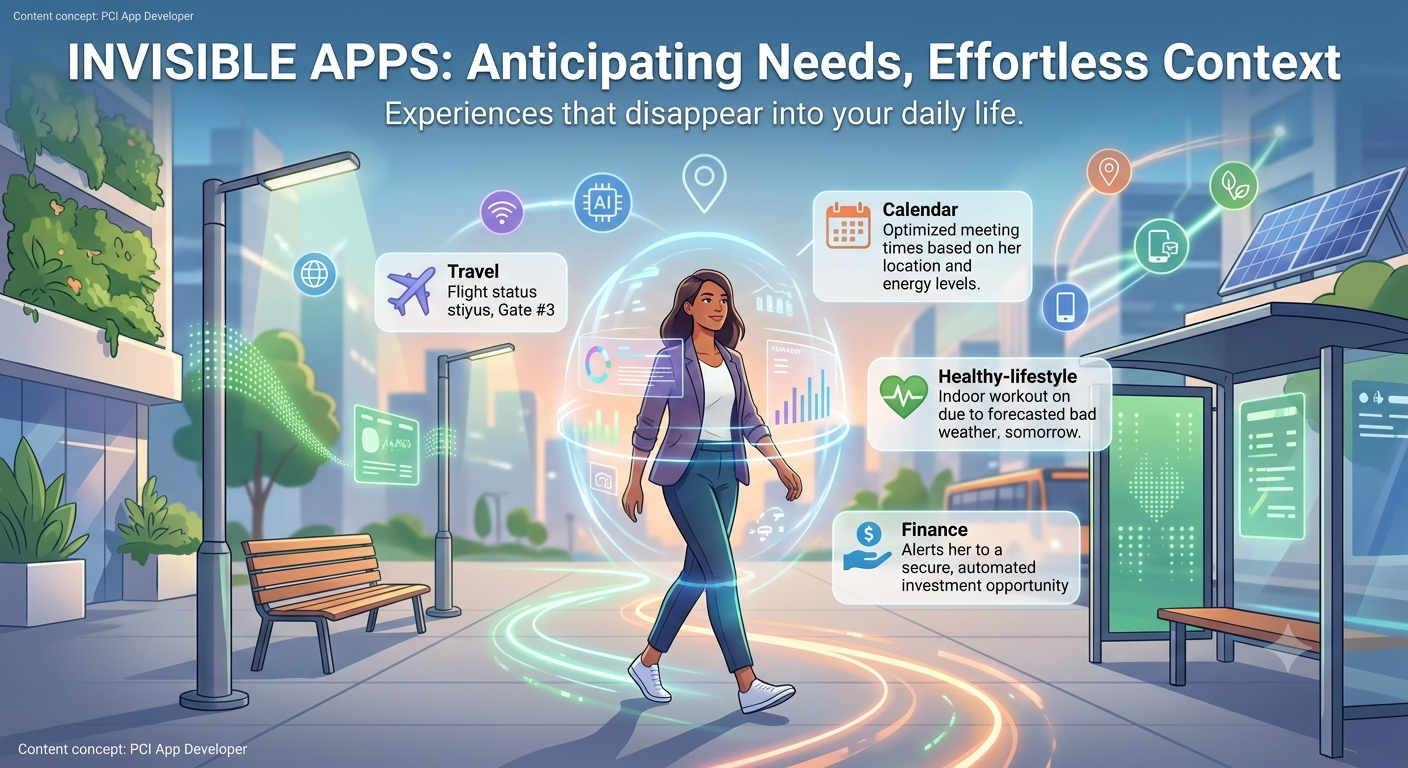
  • The Invisible App Revolution: Why the Best Mobile Apps in 2030 Won’t Feel Like Apps

    The Invisible App Revolution: Why the Best Mobile Apps in 2030 Won’t Feel Like Apps

    For over a decade, mobile applications have followed the same formula:

    Download an app.
    Create an account.
    Log in.
    Tap through menus.
    Search for what you need.
    Complete a task.

    This approach has worked well—but it also creates friction. Every extra tap, form, or screen increases the chance that users abandon the experience.

    The next generation of mobile innovation is moving toward something entirely different: Invisible Apps.

    These aren’t apps that disappear from your phone—they’re experiences that disappear into your daily life. Instead of asking users to adapt to technology, they adapt to the user.

    By 2030, the most successful mobile applications won’t compete on the number of features they have. They’ll compete on how effortlessly they anticipate user needs.


    What Is an Invisible App?

    An Invisible App is a digital experience that works in the background, using intelligence, context, and automation to minimize user effort.

    Instead of requiring users to manually perform every action, the app understands:

    • Where you are
    • What you’re doing
    • Your preferences
    • Your schedule
    • Your habits
    • Connected devices
    • Environmental conditions
    • Previous interactions

    The goal isn’t to remove user control—it’s to remove unnecessary work.


    From User Interface to User Intent

    Traditional mobile apps are built around interfaces.

    Future apps will be built around intent.

    Rather than asking users to navigate multiple screens, an app will recognize what they want to accomplish and offer it proactively.

    Imagine opening a travel app. Instead of searching for your booking, it automatically displays today’s itinerary, boarding pass, weather forecast, airport traffic, and transportation options because it already understands your journey.

    The app doesn’t wait for instructions—it understands the context.


    Context-Aware Experiences

    Context awareness is becoming one of the defining features of modern mobile applications.

    Future apps will consider information such as:

    • Time of day
    • Device usage
    • Location
    • Calendar events
    • Battery level
    • Internet connectivity
    • Nearby smart devices
    • User behavior patterns

    For example, a fitness app may suggest a short indoor workout if it detects bad weather outside, while a productivity app could automatically switch to “focus mode” during scheduled meetings.

    These small adjustments create experiences that feel personalized without requiring constant user input.


    AI Becomes Your Personal Digital Assistant

    Artificial intelligence is evolving from a feature into the foundation of mobile applications.

    Instead of simply responding to commands, AI-powered apps can:

    • Draft emails
    • Summarize documents
    • Schedule appointments
    • Recommend purchases
    • Translate conversations
    • Organize tasks
    • Predict user preferences
    • Automate repetitive workflows

    The app becomes less of a tool and more of a digital assistant that helps users accomplish goals faster.


    Voice, Gesture, and Conversation Replace Traditional Navigation

    The future of mobile interaction extends beyond touchscreens.

    Users will increasingly interact through:

    • Natural voice conversations
    • Smart gestures
    • Wearable devices
    • Augmented reality
    • Eye tracking
    • Context-sensitive notifications

    Instead of tapping through multiple menus, users may simply say:

    “Book my usual taxi for tomorrow morning.”

    Or:

    “Show me last month’s business expenses.”

    The application understands the request and completes the task with minimal effort.


    Apps That Learn and Improve Over Time

    One-size-fits-all experiences are becoming outdated.

    Future mobile applications continuously learn from user interactions.

    They recognize:

    • Frequently used features
    • Preferred payment methods
    • Navigation habits
    • Communication style
    • Shopping behavior
    • Productivity patterns

    As the app gathers insights, it reorganizes itself to match individual usage rather than forcing everyone into the same interface.


    Multi-Device Experiences Without Interruptions

    Today’s users switch between phones, tablets, laptops, smartwatches, TVs, and connected vehicles throughout the day.

    The next generation of apps will provide seamless continuity across devices.

    Start reading an article on your phone.

    Continue on your tablet.

    Reply to a notification from your smartwatch.

    Complete a purchase from your laptop.

    The experience remains consistent, with no manual synchronization required.


    Privacy-First Personalization

    As applications become smarter, user trust becomes even more important.

    Modern mobile apps must balance personalization with privacy by:

    • Minimizing unnecessary data collection
    • Providing transparent permissions
    • Encrypting sensitive information
    • Supporting secure authentication
    • Giving users control over their data

    The future of app development isn’t about collecting more information—it’s about using data responsibly to create better experiences.


    Edge AI: Intelligence Without Constant Internet

    Many AI-powered features currently depend on cloud processing.

    Edge AI changes this by performing intelligent tasks directly on the device.

    Benefits include:

    • Faster response times
    • Reduced latency
    • Improved privacy
    • Lower bandwidth usage
    • Offline functionality

    Applications can deliver advanced capabilities even in environments with limited connectivity.


    Designing for Human Attention

    The average smartphone user receives dozens of notifications every day.

    The best future apps won’t compete for attention—they’ll respect it.

    Instead of sending constant alerts, intelligent apps will:

    • Group notifications
    • Prioritize important updates
    • Delay non-essential messages
    • Deliver information at the right moment

    Reducing digital noise leads to a more satisfying user experience.


    Industry Applications of Invisible Apps

    The Invisible App concept extends across multiple industries:

    Healthcare

    Apps monitor health metrics in the background, remind patients about medications, and alert caregivers when necessary.

    Retail

    Shopping experiences become personalized with real-time recommendations, smart loyalty programs, and frictionless checkout.

    Finance

    Banking apps detect unusual spending, automate savings, and provide proactive financial insights.

    Logistics

    Delivery applications optimize routes, monitor vehicle performance, and update customers automatically.

    Enterprise

    Business apps automate approvals, summarize meetings, and simplify collaboration across distributed teams.


    Why Businesses Should Invest Now

    Customer expectations are changing rapidly.

    Users increasingly expect applications that are:

    • Fast
    • Intelligent
    • Personalized
    • Secure
    • Available across devices
    • Easy to use
    • Integrated with AI

    Businesses that embrace these principles today will be better positioned to deliver competitive digital products tomorrow.

    Future-ready applications are not built overnight—they require thoughtful architecture, scalable technology, and user-centered design from the beginning.


    How PCI App Developer Builds Future-Ready Mobile Applications

    At PCI App Developer, we believe mobile applications should do more than complete tasks—they should simplify lives.

    Our development approach combines:

    • Native and cross-platform app development
    • AI-powered features
    • Cloud integration
    • Secure architecture
    • API development
    • IoT connectivity
    • Real-time analytics
    • Scalable backend systems
    • Modern UI/UX design
    • Enterprise-grade performance

    We create applications designed for today’s users while preparing businesses for tomorrow’s digital landscape.


    Conclusion

    The future of mobile apps isn’t about adding more buttons, menus, or features.

    It’s about creating experiences that understand people, adapt to changing contexts, and reduce complexity.

    The most successful applications of the next decade will become almost invisible—working quietly in the background while helping users achieve more with less effort.

    Businesses that begin building these intelligent, context-aware experiences today will lead the next era of mobile innovation.

  • PCI Compliance in Mobile App Development: Why Secure Apps Are Essential for Modern Businesses

    PCI Compliance in Mobile App Development: Why Secure Apps Are Essential for Modern Businesses

    As digital payments continue to dominate the global economy, businesses are processing millions of online transactions every day. Whether customers are shopping through an eCommerce app, ordering food, booking travel, or paying utility bills, they expect every payment to be fast, seamless, and—most importantly—secure.

    Unfortunately, cyberattacks targeting payment applications are becoming increasingly sophisticated. A single security breach can expose sensitive cardholder information, damage customer trust, lead to regulatory penalties, and result in significant financial losses.

    This is why PCI DSS (Payment Card Industry Data Security Standard) compliance has become one of the most important requirements for businesses developing payment-enabled mobile applications.

    At PCIAppDevelopers, we specialize in building secure, scalable, and PCI-compliant mobile applications that protect sensitive payment data while delivering exceptional user experiences.


    What is PCI DSS?

    PCI DSS (Payment Card Industry Data Security Standard) is a globally recognized set of security requirements designed to protect payment card information.

    The standard applies to any organization that:

    • Stores payment card data
    • Processes card payments
    • Transmits cardholder information
    • Develops payment applications
    • Provides payment-related services

    PCI DSS helps organizations reduce the risk of:

    • Data breaches
    • Payment fraud
    • Identity theft
    • Unauthorized access
    • Financial loss

    Compliance demonstrates that a business follows industry-recognized security practices for handling payment information responsibly.


    Why PCI Compliance Matters in Mobile Apps

    Today’s consumers expect secure digital payment experiences. A vulnerable mobile application can expose payment credentials and personally identifiable information (PII), potentially leading to fraud and reputational damage.

    A PCI-compliant application provides:

    • Secure payment processing
    • Customer confidence
    • Fraud prevention
    • Reduced legal risks
    • Better brand reputation
    • Compliance with payment ecosystem requirements

    Businesses that prioritize payment security often see improved customer trust and higher transaction completion rates.


    Key PCI DSS Requirements for Mobile Applications

    Developers should incorporate PCI security principles throughout the application lifecycle.

    1. Protect Cardholder Data

    Sensitive payment information should never be stored unnecessarily.

    If data must be retained, it should be:

    • Encrypted
    • Tokenized
    • Securely managed
    • Access-controlled

    2. Secure Data Transmission

    All payment information transmitted between the mobile application and backend systems must use strong encryption protocols such as TLS.

    This helps prevent:

    • Man-in-the-middle attacks
    • Data interception
    • Unauthorized access

    3. Strong Authentication

    Applications should implement robust authentication mechanisms, including:

    • Multi-Factor Authentication (MFA)
    • Secure password policies
    • Biometric authentication
    • Session management

    4. Secure Coding Practices

    Developers should minimize common vulnerabilities by following secure coding standards.

    Examples include protection against:

    • SQL Injection
    • Cross-Site Scripting (XSS)
    • Insecure APIs
    • Broken Authentication
    • Sensitive Data Exposure

    5. Regular Security Testing

    PCI-compliant applications should undergo routine:

    • Vulnerability assessments
    • Penetration testing
    • Code reviews
    • Security audits

    Continuous testing helps identify and remediate issues before deployment.


    6. Access Control

    Only authorized users and administrators should have access to sensitive payment systems.

    Role-based access control (RBAC) and the principle of least privilege help reduce insider risks.


    7. Continuous Monitoring

    Security is not a one-time activity.

    Organizations should continuously monitor:

    • Application logs
    • User activity
    • Payment transactions
    • Security alerts
    • System performance

    Early detection enables faster response to suspicious activities.


    Common Security Features in PCI-Compliant Mobile Apps

    Modern payment applications typically include:

    • End-to-end encryption
    • Tokenization
    • Biometric login
    • Secure payment gateways
    • Device authentication
    • Fraud detection
    • Real-time alerts
    • API security
    • Secure cloud infrastructure
    • Data masking

    These features create multiple layers of defense against cyber threats.


    Industries That Need PCI-Compliant Mobile Apps

    Retail & eCommerce

    Secure online shopping and mobile checkout experiences.


    Restaurants

    Contactless payments, digital ordering, and POS integrations.


    Healthcare

    Protected patient billing and secure payment processing.


    Banking & Finance

    Mobile banking, digital wallets, and secure financial transactions.


    Hospitality

    Hotel bookings, reservations, and in-app payments.


    Transportation

    Ride-sharing, ticket booking, parking payments, and travel applications.


    Subscription Platforms

    Recurring billing with secure payment processing.


    Benefits of PCI-Compliant Mobile App Development

    Improved Customer Trust

    Customers are more likely to complete purchases when they know their payment information is protected.


    Reduced Fraud

    Strong security controls help prevent unauthorized transactions and payment fraud.


    Regulatory Readiness

    Following PCI DSS best practices supports broader security and compliance initiatives.


    Business Reputation

    Security-conscious businesses build stronger relationships with customers and partners.


    Lower Financial Risk

    Preventing security incidents reduces the likelihood of fines, remediation costs, and revenue loss.


    Our PCI-Compliant Development Process

    At PCIAppDevelopers, security is integrated into every phase of development.

    Discovery

    • Business requirements
    • Payment workflows
    • Risk assessment

    Architecture

    • Secure application design
    • PCI-focused infrastructure planning

    Development

    • Secure coding
    • Payment gateway integration
    • Tokenization
    • Encryption

    Testing

    • Security testing
    • Functional testing
    • Penetration testing
    • Compliance validation

    Deployment

    • Secure cloud deployment
    • Monitoring configuration

    Ongoing Support

    • Security updates
    • Compliance improvements
    • Performance optimization
    • Vulnerability management

    Why Choose PCIAppDevelopers?

    Businesses choose PCIAppDevelopers because we combine deep payment expertise with secure software engineering.

    Our capabilities include:

    • PCI-Compliant Mobile App Development
    • Payment Gateway Integration
    • Secure API Development
    • Tokenization Solutions
    • Digital Wallet Integration
    • Enterprise Mobile Applications
    • Android & iOS Development
    • Cloud Security
    • Payment Security Consulting
    • Ongoing Maintenance & Support

    Our goal is to help organizations build secure payment applications that deliver exceptional user experiences while protecting sensitive financial data.


    Best Practices for PCI-Compliant Mobile Apps

    To strengthen payment security, businesses should:

    • Never store sensitive card data unless absolutely necessary.
    • Use trusted payment gateways and processors.
    • Encrypt all payment-related communications.
    • Implement tokenization wherever possible.
    • Keep mobile applications updated.
    • Conduct regular security audits.
    • Train development teams on secure coding practices.
    • Monitor systems continuously for suspicious activity.
    • Apply the principle of least privilege for access control.
    • Maintain incident response and disaster recovery plans.

    The Future of Secure Payment Applications

    As digital payments evolve, mobile applications will increasingly integrate technologies such as:

    • AI-powered fraud detection
    • Behavioral analytics
    • Biometric authentication
    • Contactless payments
    • Digital wallets
    • Real-time risk scoring
    • Cloud-native payment platforms
    • Embedded finance
    • Tokenized payment ecosystems

    Businesses that invest in secure, PCI-compliant applications today will be better positioned to meet future customer expectations and regulatory demands.


    Conclusion

    Payment security is no longer optional—it’s a fundamental requirement for any business handling card transactions. PCI-compliant mobile applications help organizations protect sensitive payment data, reduce fraud, maintain customer trust, and support long-term business growth.

    At PCIAppDevelopers, we develop secure, scalable, and high-performance payment applications that align with PCI DSS best practices and modern security standards. Whether you’re launching a new payment-enabled app or enhancing an existing platform, our team can help you build with confidence.


    Frequently Asked Questions (FAQs)

    What is PCI compliance?

    PCI compliance refers to following the Payment Card Industry Data Security Standard (PCI DSS), a set of security requirements designed to protect cardholder data.

    Does every mobile app need PCI compliance?

    Only applications that store, process, or transmit payment card information—or are directly involved in payment processing—need to meet PCI DSS requirements.

    Is PCI compliance mandatory?

    For organizations that handle payment card data, PCI DSS compliance is generally required by payment brands and acquiring banks as part of the payment ecosystem.

    Can PCI-compliant apps still be hacked?

    No system is completely immune to attacks, but PCI-compliant applications implement strong security controls that significantly reduce the risk of successful breaches.

    Why choose PCIAppDevelopers?

    PCIAppDevelopers specializes in secure payment application development, PCI-focused architecture

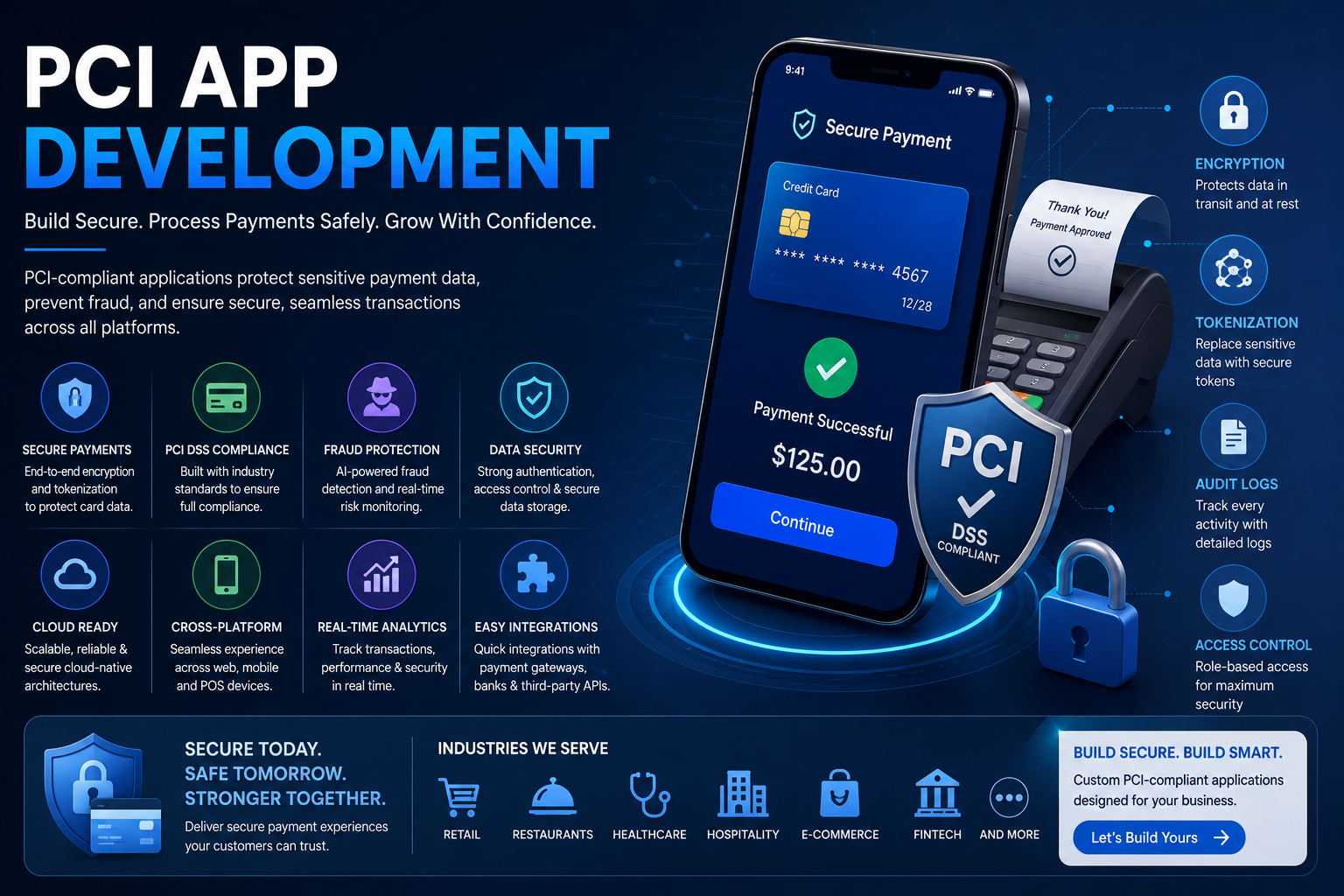
  • PCI App Development: The Complete Guide to Secure Payment Application Development in 2026

    PCI App Development: The Complete Guide to Secure Payment Application Development in 2026

    As digital payments continue to dominate global commerce, businesses must ensure that every payment transaction is processed securely. Whether you’re building a mobile payment app, POS system, eCommerce platform, fintech solution, or payment gateway, security is no longer optional—it’s essential.

    This is where PCI App Development becomes critical.

    PCI-compliant applications are designed to protect sensitive payment card data, reduce cybersecurity risks, and help businesses meet industry security requirements. A well-developed PCI application not only safeguards customer information but also builds trust, improves compliance, and supports long-term business growth.

    In this guide, you’ll learn everything about PCI App Development, its benefits, must-have features, technologies, development process, and why investing in a secure payment application is essential in 2026.


    What is PCI App Development?

    PCI App Development is the process of designing and developing payment applications that follow the Payment Card Industry Data Security Standard (PCI DSS).

    These applications securely process, transmit, and store payment card information while implementing strong security controls to reduce the risk of data breaches and fraud.

    PCI-compliant applications are commonly used in:

    • Retail POS Systems
    • Mobile Payment Applications
    • eCommerce Platforms
    • Restaurant POS Software
    • Healthcare Payment Systems
    • Hotel Management Systems
    • Self-Service Kiosks
    • FinTech Applications
    • Subscription Billing Platforms
    • Enterprise Payment Solutions

    Why PCI Compliance Matters

    Millions of payment transactions occur every day.

    Without proper security measures, businesses face risks such as:

    • Credit card fraud
    • Data breaches
    • Identity theft
    • Financial losses
    • Legal liabilities
    • Customer trust issues
    • Operational disruptions

    Developing PCI-compliant applications helps organizations strengthen security and align with industry standards for handling payment card data.


    Key Benefits of PCI App Development

    1. Enhanced Payment Security

    Protect sensitive payment information using advanced security technologies, including:

    • End-to-end encryption
    • Tokenization
    • Secure authentication
    • Data masking
    • Encrypted communication
    • Secure key management

    2. Customer Trust

    Customers are more likely to complete transactions when they know their payment information is handled securely.

    A secure payment experience improves:

    • Customer confidence
    • Brand reputation
    • Repeat business
    • Customer retention

    3. Fraud Prevention

    Modern PCI applications include multiple security layers such as:

    • Real-time fraud detection
    • Suspicious activity monitoring
    • Transaction risk analysis
    • Device fingerprinting
    • Secure user authentication

    4. Regulatory Compliance

    PCI App Development helps businesses align with payment industry security requirements and establish consistent security practices.


    5. Business Continuity

    Secure applications reduce operational risks associated with payment fraud and cyber threats, helping businesses maintain uninterrupted services.


    Essential Features of a PCI-Compliant Payment Application

    Secure User Authentication

    • Multi-factor authentication (MFA)
    • Biometric login
    • Strong password policies
    • Role-based access control
    • Session management

    Secure Payment Processing

    • Card payment support
    • Contactless payments
    • Digital wallets
    • QR payments
    • Mobile payments
    • Recurring billing

    Data Encryption

    Protect sensitive information through:

    • AES encryption
    • TLS-secured communication
    • End-to-end encryption
    • Encrypted databases

    Tokenization

    Replace sensitive card information with secure tokens to minimize exposure during payment processing.


    Audit Logs

    Maintain detailed activity records for:

    • User logins
    • Payment attempts
    • Administrative changes
    • Security events
    • System updates

    Access Control

    Control user permissions through:

    • Role-based access
    • Administrator controls
    • Employee permissions
    • Secure authentication policies

    Fraud Detection

    Monitor transactions using:

    • AI-powered fraud analysis
    • Behavioral monitoring
    • Velocity checks
    • Risk scoring
    • Transaction alerts

    API Security

    Secure integrations with:

    • Payment gateways
    • Banking systems
    • ERP platforms
    • CRM software
    • Accounting applications

    Industries That Need PCI App Development

    PCI-compliant payment applications are valuable across many industries, including:

    • Retail
    • Restaurants
    • Hospitality
    • Healthcare
    • Financial Services
    • Insurance
    • Transportation
    • eCommerce
    • Subscription Businesses
    • Education
    • Telecommunications
    • Government Payment Services

    PCI App Development vs Standard Payment Applications

    FeaturePCI-Compliant AppStandard App
    Payment SecurityAdvancedBasic
    EncryptionStrongLimited
    TokenizationYesOptional
    Fraud ProtectionAdvancedLimited
    Audit LogsComprehensiveBasic
    Access ControlRole-BasedLimited
    Risk ManagementHighModerate
    Customer TrustHighModerate

    Technologies Used in PCI App Development

    Frontend

    • React
    • Angular
    • Flutter
    • React Native

    Backend

    • Node.js
    • .NET
    • Java
    • Python
    • Laravel

    Database

    • PostgreSQL
    • MySQL
    • Microsoft SQL Server
    • MongoDB

    Cloud Platforms

    • Amazon Web Services (AWS)
    • Microsoft Azure
    • Google Cloud Platform

    Security Technologies

    • TLS Encryption
    • Tokenization
    • OAuth 2.0
    • OpenID Connect
    • JWT Authentication
    • Hardware Security Module (HSM)

    PCI App Development Process

    Step 1

    Business Requirement Analysis

    Step 2

    Security Planning

    Step 3

    Application Architecture

    Step 4

    UI/UX Design

    Step 5

    Application Development

    Step 6

    Security Testing

    Step 7

    PCI Readiness Assessment

    Step 8

    Deployment

    Step 9

    Maintenance & Security Updates


    Future Trends in PCI Payment Applications

    Payment application development continues to evolve with technologies such as:

    • AI-powered fraud detection
    • Biometric authentication
    • Contactless payment solutions
    • Cloud-native payment platforms
    • Blockchain-assisted payment security
    • Mobile-first payment applications
    • Voice-enabled payment experiences
    • Real-time security monitoring
    • Predictive fraud analytics
    • Zero Trust security architecture

    How Much Does PCI App Development Cost?

    The development cost depends on several factors, including:

    • Application complexity
    • Security requirements
    • Payment gateway integrations
    • Platform support (Web, Android, iOS)
    • Number of APIs
    • Cloud infrastructure
    • Compliance requirements
    • Third-party integrations
    • Testing and validation

    A basic PCI-ready application may require a modest investment, while enterprise-grade payment platforms with advanced security features, analytics, and multiple integrations can cost significantly more.


    Why Choose QuartusTech for PCI App Development?

    At QuartusTech, we specialize in developing secure, scalable, and high-performance payment applications that prioritize security, compliance, and user experience.

    Our PCI App Development services include:

    • Custom Payment Applications
    • Mobile Payment App Development
    • POS Payment Solutions
    • Secure Payment Gateway Integration
    • Tokenization Implementation
    • Encryption & Data Security
    • Multi-Platform Development
    • API Integration
    • Cloud-Based Payment Solutions
    • Ongoing Maintenance & Security Support

    We combine modern technologies with security-first development practices to deliver reliable payment applications for businesses worldwide.


    Final Thoughts

    As digital payments continue to grow, secure payment applications have become essential for businesses across every industry. PCI App Development helps organizations protect payment data, reduce fraud risks, and create secure, reliable payment experiences for customers.

    By investing in a PCI-focused application built with strong security controls and scalable architecture, businesses can support long-term growth while maintaining customer trust and operational resilience.


    Frequently Asked Questions (FAQs)

    What is PCI App Development?

    PCI App Development is the process of building payment applications that follow PCI DSS security requirements to help protect payment card information.

    Which businesses need PCI-compliant applications?

    Any business that develops or manages applications handling payment card transactions—including retailers, restaurants, eCommerce platforms, healthcare providers, and fintech companies—should consider PCI-focused development and appropriate compliance practices.

    Is PCI compliance mandatory?

    Businesses that store, process, or transmit payment card data are generally expected to follow PCI DSS requirements as part of their agreements with payment brands and acquiring banks.

    What security features should a PCI payment application include?

    Common features include encryption, tokenization, secure authentication, role-based access control, audit logging, fraud detection, secure APIs, and continuous security monitoring.

    How long does it take to develop a PCI payment application?

    Development timelines vary based on the application’s complexity, integrations, security requirements, and testing scope. A simple solution may take a few months, while enterprise-grade platforms require longer development and validation cycles.

  • PCI App Development: Secure, Compliant, and Scalable Payment Applications

    PCI App Development: Secure, Compliant, and Scalable Payment Applications

    As digital payments continue to dominate global commerce, businesses must ensure that every transaction is secure. Customers expect fast, seamless, and protected payment experiences, while organizations must comply with strict industry regulations to safeguard sensitive cardholder data.

    This is where PCI App Development plays a critical role.

    Whether you’re building a mobile wallet, payment gateway, POS application, eCommerce platform, banking app, or FinTech solution, developing applications that align with PCI DSS (Payment Card Industry Data Security Standard) is essential for protecting customer information, reducing fraud, and maintaining trust.

    In this comprehensive guide, we’ll explore what PCI app development is, why PCI compliance matters, key features, technologies, and how businesses can build secure payment applications that scale with confidence.


    What Is PCI App Development?

    PCI App Development refers to the design and development of software applications that securely process, transmit, or store payment card information while following PCI DSS security standards.

    These applications are commonly used in:

    • Mobile Payment Apps
    • Digital Wallets
    • eCommerce Platforms
    • POS Systems
    • Banking Applications
    • FinTech Platforms
    • Subscription Billing Systems
    • Online Marketplaces
    • Payment Gateways
    • Enterprise Payment Solutions

    The primary objective is to ensure that sensitive payment data remains protected throughout every transaction.


    Why PCI Compliance Matters

    Every business that accepts credit or debit card payments is responsible for protecting customer payment information.

    Failure to follow PCI DSS standards can lead to:

    • Data breaches
    • Financial fraud
    • Regulatory penalties
    • Legal liabilities
    • Loss of customer trust
    • Brand reputation damage

    A PCI-compliant application minimizes these risks while ensuring secure payment processing across all platforms.


    Benefits of PCI App Development

    1. Enhanced Data Security

    PCI-compliant applications use advanced security measures such as:

    • End-to-end encryption
    • Tokenization
    • Secure APIs
    • Data masking
    • Strong authentication

    These features significantly reduce the risk of unauthorized access.


    2. Customer Trust

    Customers are more likely to complete transactions when they know their payment information is secure.

    A secure payment experience improves:

    • Customer confidence
    • Brand loyalty
    • Conversion rates
    • User retention

    3. Regulatory Compliance

    PCI-compliant applications help organizations meet industry requirements, reducing the risk of penalties and audit failures.


    4. Reduced Fraud

    Advanced fraud detection mechanisms include:

    • AI-powered risk analysis
    • Device fingerprinting
    • Transaction monitoring
    • Behavioral analytics
    • Suspicious activity alerts

    5. Scalable Payment Infrastructure

    PCI applications are designed to support:

    • High transaction volumes
    • Global payment processing
    • Multiple currencies
    • Multi-region deployments
    • Cloud scalability

    Essential Features of PCI-Compliant Applications

    A modern PCI payment application should include:

    Secure Authentication

    • Multi-factor authentication (MFA)
    • Biometric login
    • Face ID
    • Fingerprint authentication
    • Secure password policies

    Payment Processing

    • Credit Card Payments
    • Debit Card Payments
    • Contactless Payments
    • NFC Transactions
    • QR Code Payments
    • Mobile Wallet Integration

    Encryption & Tokenization

    Instead of storing raw card data, PCI applications:

    • Encrypt sensitive information
    • Replace card numbers with secure tokens
    • Protect payment information during transmission

    User Management

    • Customer Profiles
    • Transaction History
    • Payment Methods
    • Saved Cards
    • Account Settings

    Fraud Prevention

    Security mechanisms include:

    • AI fraud detection
    • Velocity checks
    • Risk scoring
    • Geo-location monitoring
    • IP analysis
    • Suspicious login detection

    Industries That Require PCI App Development

    Banking

    Banks use PCI-compliant applications for:

    • Digital banking
    • Card management
    • Online payments
    • Fund transfers

    FinTech

    FinTech companies develop:

    • Mobile wallets
    • Buy Now Pay Later (BNPL)
    • Peer-to-peer payments
    • Merchant payment platforms

    Retail

    Retail businesses require secure payment systems for:

    • Online shopping
    • In-store POS
    • Subscription payments
    • Loyalty programs

    Healthcare

    Healthcare providers process secure patient payments while protecting financial and personal information.


    Hospitality

    Hotels and travel businesses use PCI applications for:

    • Reservations
    • Online bookings
    • Contactless check-ins
    • Payment processing

    PCI App Development Process

    A successful PCI application typically follows these stages:

    Requirement Analysis

    Understand:

    • Business goals
    • Payment workflows
    • Compliance requirements
    • Security risks

    UI/UX Design

    Create intuitive interfaces for:

    • Customers
    • Merchants
    • Administrators

    Secure Development

    Develop features using secure coding standards and industry best practices.


    Payment Gateway Integration

    Integrate trusted payment providers such as:

    • Stripe
    • PayPal
    • Square
    • Authorize.Net
    • Adyen
    • Braintree

    Security Testing

    Perform:

    • Penetration testing
    • Vulnerability assessments
    • API security testing
    • Performance testing
    • Compliance validation

    Deployment & Monitoring

    Deploy the application using secure cloud infrastructure with continuous monitoring and updates.


    Technologies Used in PCI App Development

    Mobile

    • Android
    • iOS
    • Flutter
    • React Native

    Frontend

    • React.js
    • Angular
    • Vue.js

    Backend

    • .NET
    • Java
    • Node.js
    • Python
    • Spring Boot

    Databases

    • PostgreSQL
    • MySQL
    • SQL Server
    • MongoDB

    Cloud Platforms

    • AWS
    • Microsoft Azure
    • Google Cloud Platform

    Security Technologies

    • TLS Encryption
    • OAuth 2.0
    • JWT Authentication
    • Tokenization
    • AES-256 Encryption
    • HSM (Hardware Security Modules)

    AI in PCI Payment Applications

    Artificial Intelligence enhances payment security by enabling:

    • Real-time fraud detection
    • Intelligent transaction monitoring
    • Customer behavior analysis
    • Risk-based authentication
    • Automated compliance reporting
    • Predictive fraud prevention

    These capabilities help businesses respond to threats proactively.


    Why Choose QuartusTech for PCI App Development?

    At QuartusTech, we build secure, scalable, and PCI-focused payment applications for businesses worldwide.

    Our expertise includes:

    • PCI DSS–aligned application development
    • Payment gateway integration
    • Mobile payment applications
    • POS software development
    • Digital wallet solutions
    • FinTech platforms
    • NFC payment integration
    • QR payment applications
    • AI-powered fraud detection
    • Cloud-native payment systems

    Our experienced developers follow secure coding practices and modern architectures to deliver reliable payment applications that support business growth while prioritizing customer trust.


    Future Trends in PCI App Development

    The future of payment applications includes:

    • AI-driven fraud prevention
    • Contactless payments
    • Biometric authentication
    • Embedded finance
    • Blockchain-based payments
    • Open Banking APIs
    • IoT payment devices
    • Wearable payment technology
    • Voice-enabled payments
    • Real-time payment networks

    Businesses adopting these technologies today will be better positioned for the next generation of digital commerce.


    Conclusion

    PCI app development is no longer optional for organizations handling payment card information. Building secure, compliant, and scalable payment applications helps businesses protect customer data, reduce fraud, meet regulatory requirements, and deliver exceptional payment experiences.

    Whether you’re launching a FinTech platform, upgrading an existing payment solution, or developing a next-generation POS system, investing in PCI-focused application development is essential for long-term success.

    Partner with QuartusTech to build secure payment applications that combine compliance, innovation, and performance.

  • PCI Compliant App Development: Building Secure Payment Applications for Modern Businesses

    PCI Compliant App Development: Building Secure Payment Applications for Modern Businesses

    In today’s digital economy, payment applications have become a critical part of business operations. From mobile wallets and POS systems to eCommerce platforms and financial applications, customers expect fast, simple, and secure payment experiences.

    However, handling payment data comes with major security responsibilities. Businesses must ensure that their applications follow strict security standards to protect sensitive cardholder information.

    This is where PCI compliant app development plays an important role.

    PCIAppDeveloper helps businesses build secure, scalable, and reliable payment applications designed around PCI DSS compliance standards, ensuring safer transactions and improved customer trust.


    What is PCI-compliant app development?

    PCI compliant app development refers to creating payment applications that follow the security requirements established by the Payment Card Industry Security Standards Council.

    These applications are designed to securely manage:

    • Card payments
    • Digital transactions
    • Customer payment information
    • Payment gateway connections
    • Transaction processing systems

    A PCI-compliant application focuses on protecting sensitive payment data through encryption, secure authentication, access controls, and continuous monitoring.


    Why PCI Compliance Is Important for Payment Applications

    1. Protects Customer Payment Data

    Payment applications process highly sensitive information. A security breach can result in:

    • Financial losses
    • Customer trust issues
    • Regulatory penalties
    • Brand reputation damage

    PCI-compliant development helps businesses implement strong security practices from the beginning.


    2. Builds Customer Trust

    Customers want confidence when entering their payment details online.

    A secure payment application provides:

    • Safe transactions
    • Better user confidence
    • Reduced security concerns
    • Improved customer loyalty

    Security is no longer just a technical requirement — it is a competitive advantage.


    3. Reduces Risk of Data Breaches

    Cybercriminals continuously target payment systems. Modern PCI payment applications use advanced security technologies such as:

    • Data encryption
    • Tokenization
    • Multi-factor authentication
    • Secure API communication
    • Fraud detection systems

    These security measures help minimize vulnerabilities.


    Key Features of PCI Compliant Payment Applications

    Secure Payment Gateway Integration

    A professional payment application should support secure integration with trusted payment gateways.

    Features include:

    • Real-time transaction processing
    • Multiple payment methods
    • Secure API connections
    • Automated payment verification

    Data Encryption and Tokenization

    Encryption protects sensitive information by converting data into a secure format.

    Tokenization replaces actual card details with unique tokens, reducing exposure of payment information.


    User Authentication and Access Control

    Strong authentication ensures only authorized users can access payment systems.

    Common security features include:

    • Two-factor authentication
    • Role-based access control
    • Biometric authentication
    • Secure login systems

    Real-Time Fraud Detection

    AI-powered fraud detection helps businesses identify suspicious activities by analyzing:

    • Transaction patterns
    • User behavior
    • Location information
    • Payment history

    This allows businesses to prevent fraudulent transactions quickly.


    Industries That Need PCI Compliant Applications

    Retail & eCommerce

    Online stores require secure payment solutions to handle customer transactions safely.

    Applications include:

    • Shopping apps
    • Digital wallets
    • Subscription platforms

    Restaurants & Hospitality

    Modern restaurants use payment applications for:

    • POS transactions
    • Online ordering
    • Contactless payments
    • Customer loyalty programs

    Financial Services

    Banks and financial companies rely on secure applications for:

    • Digital banking
    • Money transfers
    • Payment processing

    Healthcare

    Healthcare businesses require secure payment solutions for:

    • Medical billing
    • Insurance payments
    • Patient transactions

    Benefits of Choosing Professional PCI App Development Services

    Working with experienced PCI application developers helps businesses achieve:

    Custom Payment Solutions

    Develop applications designed specifically for business requirements.

    Enhanced Security

    Implement industry-standard security practices.

    Seamless Integrations

    Connect payment applications with:

    • Payment gateways
    • POS systems
    • Banking platforms
    • Enterprise software

    Scalable Architecture

    Build applications that can handle growing transaction volumes.


    Why Choose PCIAppDeveloper?

    PCIAppDeveloper specializes in creating secure payment applications for businesses that need reliable and compliant digital payment solutions.

    Our expertise includes:

    ✅ PCI DSS-focused application development
    ✅ Payment gateway integration
    ✅ Mobile payment applications
    ✅ POS payment solutions
    ✅ Secure API development
    ✅ Enterprise payment platforms

    We help businesses create payment experiences that are secure, fast, and user-friendly.


    Future of PCI-Compliant Payment Applications

    The future of payment technology will focus on:

    • AI-powered fraud prevention
    • Contactless payment experiences
    • Blockchain-based security
    • Biometric authentication
    • Embedded payment solutions

    Businesses that invest in secure payment applications today will be better prepared for the future of digital commerce.


    Conclusion

    PCI compliant app development is essential for businesses that process digital payments. A secure payment application protects customer information, improves trust, and helps organizations meet industry security requirements.

    With the right development partner, businesses can create powerful payment solutions that deliver both security and convenience.

    PCIAppDeveloper helps companies build secure, scalable, and future-ready payment applications designed for the modern digital economy.