PCI Developers Navbar

Tag: appdevelopement

  • Building a Secure, PCI DSS-Compliant Payment App: A Developer’s Guide

    Building a Secure, PCI DSS-Compliant Payment App: A Developer’s Guide

    Developing an application that handles cardholder data requires balancing seamless user experience with strict security controls. Non-compliance with the Payment Card Industry Data Security Standard (PCI DSS) can lead to severe financial penalties, data breaches, and loss of merchant processing privileges.

    Here is a practical breakdown of how to architect and build a secure, compliant payment application.

    1. Minimize Scope with Tokenization and Hosted Fields

    The most effective way to simplify PCI compliance is to ensure your servers never touch raw Credit Card Numbers (PANs).

    • Use Tokenization: Rely on payment gateways (e.g., Stripe, Braintree) to intercept card details on the client side. The gateway converts sensitive data into a unique token that your backend can safely store and process.
    • Implement Hosted iFrames/Fields: Use gateway-provided UI elements to collect card numbers. This isolates sensitive input fields from your DOM, drastically reducing your PCI DSS assessment scope (often down to SAQ A or SAQ A-EP).

    2. Enforce End-to-End Encryption (E2EE)

    Protect sensitive data both in transit and at rest using modern cryptographic standards.

    • In Transit: Force TLS 1.3 (or minimum TLS 1.2) for all network communication. Disable outdated protocols (SSL v3, TLS 1.0, TLS 1.1) and weak cipher suites.
    • At Rest: If your system must store cardholder data or sensitive tokens, encrypt it using strong algorithms such as AES-256. Never store Sensitive Authentication Data (SAD)—such as CVV/CVC codes or PINs—after transaction authorization, even if encrypted.

    3. Implement Robust Authentication and Access Controls

    Unauthorized access to administrative tools or APIs is a primary vector for payment data breaches.

    • Multi-Factor Authentication (MFA): Require MFA for all administrative access into the cardholder data environment (CDE).
    • Role-Based Access Control (RBAC): Apply the Principle of Least Privilege. Restrict API keys, database access, and system permissions strictly to the components and roles that require them.
    • Secure API Keys: Store environment variables and API credentials in encrypted key vaults (e.g., AWS Secrets Manager, HashiCorp Vault) rather than hardcoding them into application repos.

    4. Secure the API Layer and Application Code

    Payment endpoints are constant targets for automated attacks, scraping, and injection vulnerabilities.

    • Input Validation & Sanitization: Enforce strict server-side validation to prevent SQL Injection (SQLi), Cross-Site Scripting (XSS), and Command Injection.
    • Rate Limiting & Bot Protection: Apply rate limiting on payment endpoints to block enumeration scripts and brute-force card testing attacks.
    • Dependency Auditing: Regularly scan third-party libraries and package dependencies (npm, pip, Maven) for known vulnerabilities using automated tools like Snyk or Dependabot.

    5. Comprehensive Logging and Real-Time Auditing

    PCI DSS mandates tracking and monitoring all access to network resources and cardholder data.

    • Log Critical Events: Capture authentication attempts, privilege escalation, and API calls targeting financial endpoints.
    • Mask Sensitive Data: Ensure card numbers, CVVs, and passwords are strictly sanitized and never written to raw server logs or debug traces.
    • Centralize and Protect Logs: Route logs to a write-once, read-many central logging system to prevent tampering by unauthorized users.
  • Why PCI-Compliant Payment App Development Matters for Modern Businesses

    Why PCI-Compliant Payment App Development Matters for Modern Businesses

    As digital payments continue to grow, businesses are relying more heavily on payment applications, mobile wallets, POS systems, online checkout platforms, and connected payment solutions.

    But with greater convenience comes greater responsibility.

    Businesses handling cardholder data need to prioritize payment security, data protection, and PCI compliance from the beginning of the application development process.

    A payment application isn’t simply another mobile or web application. It requires a carefully designed security architecture capable of protecting sensitive payment information throughout the transaction lifecycle.

    This is where PCI-compliant payment app development becomes essential.

    What Is PCI Compliance?

    PCI compliance refers to following the security requirements established by the Payment Card Industry Data Security Standard (PCI DSS).

    The standard is designed to help organizations protect payment card data and reduce the risks associated with data breaches, unauthorized access, and payment fraud.

    For businesses developing payment-related applications, compliance should be considered during architecture, development, testing, deployment, and ongoing maintenance.

    Why Payment Application Security Matters

    Payment applications can process highly sensitive information.

    Depending on the application and payment architecture, this may include:

    • Payment transaction information
    • Cardholder data
    • Customer information
    • Authentication information
    • Transaction history
    • Payment tokens
    • Merchant information

    A security weakness anywhere in the application can potentially create significant business and customer risks.

    For this reason, payment application development requires a security-first approach rather than adding security after the product has already been built.

    Key Features of Secure Payment Applications

    A modern payment application should combine usability with strong security controls.

    1. Secure Data Transmission

    Sensitive information should be protected while it moves between the application, payment gateway, APIs, and backend infrastructure.

    Secure communication protocols and properly configured encryption help reduce the risk of unauthorized interception.

    2. Strong Authentication

    Authentication is an important part of protecting payment applications.

    Depending on the product, developers can implement:

    • Multi-factor authentication
    • Secure password policies
    • Biometric authentication
    • Token-based authentication
    • Role-based access controls
    • Session management

    The right approach depends on the application’s users, architecture, and security requirements.

    3. Tokenization

    Tokenization can reduce the need for applications to directly handle sensitive payment information.

    Instead of repeatedly storing or transmitting actual payment card information, a payment system can use tokens that represent the underlying data.

    This can help reduce the application’s exposure to sensitive cardholder information.

    4. Secure API Development

    Modern payment applications frequently communicate with multiple APIs.

    These may connect the application with:

    • Payment gateways
    • Banking services
    • POS systems
    • Accounting platforms
    • CRM systems
    • Fraud detection services
    • Cloud infrastructure

    APIs therefore need appropriate authentication, authorization, validation, rate limiting, logging, and security controls.

    PCI Compliance Should Start During Development

    One of the biggest mistakes businesses can make is treating compliance as a final-stage checklist.

    Security considerations should be incorporated throughout the software development lifecycle.

    A strong development process can include:

    Planning → Architecture → Secure Coding → Testing → Security Review → Deployment → Monitoring

    Building security into the architecture from the beginning can be considerably more effective than attempting to fix fundamental security problems after launch.

    PCI-Compliant Mobile Payment Apps

    Mobile payment applications have become increasingly important for businesses.

    A secure mobile payment application may support:

    • Digital payments
    • Mobile wallets
    • In-app purchases
    • POS connectivity
    • Customer accounts
    • Transaction history
    • Push notifications
    • Payment gateway integration
    • Secure authentication

    Developers also need to consider mobile-specific security risks, including insecure storage, reverse engineering, compromised devices, API vulnerabilities, and insecure communication.

    PCI Compliance for POS Applications

    Modern POS platforms are becoming much more than billing systems.

    A sophisticated POS application can combine:

    Payments + Inventory + Customer Management + Analytics + Orders + Loyalty

    Because POS systems can be directly involved in payment processing, their architecture must be designed carefully.

    Businesses developing restaurant, retail, hospitality, or enterprise POS solutions should consider payment security from the earliest design stages.

    The Role of Security Testing

    Secure development doesn’t end when the code is written.

    Applications should go through appropriate testing and security reviews to identify potential weaknesses.

    Depending on the application, security testing can include:

    • Vulnerability assessment
    • API security testing
    • Authentication testing
    • Authorization testing
    • Penetration testing
    • Secure code review
    • Dependency analysis
    • Configuration reviews

    Regular testing is particularly important because applications, dependencies, APIs, and infrastructure change over time.

    Why Choose a Specialized PCI App Development Partner?

    Developing a payment application requires more than standard software development expertise.

    Businesses need developers who understand the relationship between:

    • Application architecture
    • Payment processing
    • API integrations
    • Data security
    • Mobile security
    • Cloud infrastructure
    • POS systems
    • Compliance requirements

    A specialized PCI app development company can help businesses plan their application architecture around security and compliance requirements from the beginning.

    Building the Future of Secure Payments

    The payment technology landscape is evolving rapidly.

    Mobile payments, digital wallets, contactless transactions, cloud POS systems, embedded payments, and connected commerce are creating new opportunities for businesses.

    At the same time, security expectations are becoming increasingly important.

    Businesses that invest in secure payment application development can create products that are not only convenient but also designed to protect sensitive information.

    Conclusion

    Payment technology is becoming an essential part of modern digital businesses.

    Whether you’re developing a mobile payment app, POS application, payment gateway integration, fintech platform, or enterprise payment solution, security should be part of the foundation.

    PCI-focused development helps businesses approach payment applications with security, compliance, and scalability in mind.

    The goal isn’t simply to build an application that processes payments.

    The goal is to build a payment experience that customers and businesses can trust.

    SEO Keywords

    • PCI app development
    • PCI compliant app development
    • PCI DSS compliant application development
    • payment app development
    • secure payment app development
    • PCI compliance developers
    • payment application development company
    • PCI compliant mobile app
    • secure payment application
    • PCI compliant POS development

    Meta Title

    PCI-Compliant Payment App Development: Security & Best Practices

    Meta Description

    Learn why PCI-compliant payment app development matters and how secure architecture, tokenization, authentication, APIs, and testing help protect payment applications.

  • PCI-Compliant Payment App Development in 2026: Building Secure, Scalable Payment Solutions

    PCI-Compliant Payment App Development in 2026: Building Secure, Scalable Payment Solutions

    As digital payments continue to evolve, businesses need more than a payment app that simply processes transactions. Modern payment applications must protect sensitive cardholder data, reduce security risks, comply with industry regulations, and deliver a smooth customer experience.

    This is where PCI-compliant payment app development becomes essential.

    In 2026, companies across fintech, retail, eCommerce, hospitality, healthcare, and SaaS are investing in secure payment applications designed around PCI DSS compliance, encryption, tokenization, fraud prevention, and secure payment processing.

    What Is PCI-Compliant Payment App Development?

    PCI-compliant payment app development is the process of creating payment software that follows the security requirements established by the Payment Card Industry Data Security Standard (PCI DSS).

    A secure payment application should protect cardholder information throughout its lifecycle—from data collection and transmission to processing and storage.

    Key areas typically include:

    • Secure payment processing
    • Encryption of sensitive information
    • Tokenization of card data
    • Secure APIs
    • Access control
    • Authentication and authorization
    • Vulnerability management
    • Security monitoring
    • Secure software development practices
    • Regular security testing

    For businesses handling card payments, compliance should be considered from the beginning of the application development lifecycle rather than added as an afterthought.

    Why PCI Compliance Matters for Payment Applications

    A payment application can become a high-value target for cybercriminals because it may interact with sensitive financial information.

    PCI-focused development helps organizations create stronger security controls while reducing the risks associated with payment data.

    1. Protect Customer Payment Data

    Customers expect their card information to remain secure. Strong encryption, tokenization, authentication, and access controls can help reduce exposure to sensitive information.

    2. Reduce Security Risks

    Security vulnerabilities in payment applications can result in data breaches, financial losses, reputational damage, and business disruption.

    A security-first development approach helps identify and address potential vulnerabilities earlier.

    3. Build Customer Trust

    Security is an important part of the customer experience. Businesses that demonstrate strong payment security can create greater confidence among customers and partners.

    4. Support Regulatory Requirements

    Organizations processing payment card information may have compliance obligations depending on their payment environment, technology stack, business model, and role in the payment ecosystem.

    Important Features of a Modern PCI-Compliant Payment App

    A successful payment application needs both functionality and security.

    Secure Payment Gateway Integration

    Payment applications can integrate with trusted payment gateways and processors through secure APIs.

    This allows businesses to accept payments without unnecessarily exposing sensitive card information within their own application environment.

    Tokenization

    Tokenization replaces sensitive payment information with a non-sensitive token.

    Instead of repeatedly handling raw card information, applications can use tokens for certain transactions and workflows.

    This can help reduce the amount of sensitive payment data within the application environment.

    Data Encryption

    Encryption helps protect sensitive information during transmission and, where applicable, storage.

    Modern payment applications should use appropriate cryptographic technologies and secure communication protocols.

    Multi-Factor Authentication

    Multi-factor authentication can provide an additional layer of protection for administrative accounts, employees, and other sensitive application functions.

    Role-Based Access Control

    Not every employee or administrator needs access to every part of a payment system.

    Role-based permissions can limit access according to responsibilities and business requirements.

    Fraud Detection

    Payment applications can incorporate risk-based controls and fraud detection mechanisms to identify suspicious transactions and unusual activity.

    AI and machine learning can also be used to identify transaction patterns and support fraud monitoring.

    Security Logging and Monitoring

    Security logs can help organizations identify unusual activity, investigate incidents, and maintain visibility across important application components.

    PCI Compliance and the Software Development Lifecycle

    PCI security shouldn’t begin just before deployment.

    It should be incorporated throughout the development lifecycle.

    Planning

    Security requirements should be identified before development begins.

    Teams should understand:

    • What payment data the application handles
    • Where the data flows
    • Which systems process it
    • Which third-party services are involved
    • What security controls are required

    Development

    Developers should follow secure coding practices and minimize unnecessary handling of sensitive payment information.

    Code reviews and security testing should be integrated into the development workflow.

    Testing

    Applications should undergo appropriate security testing before production deployment.

    Testing may include:

    • Vulnerability assessments
    • Penetration testing
    • API security testing
    • Authentication testing
    • Access-control testing
    • Dependency scanning
    • Secure configuration reviews

    Deployment

    Production environments should be configured with appropriate security controls, monitoring, access restrictions, and secure communication.

    Continuous Monitoring

    Security doesn’t end when an application goes live.

    Regular updates, vulnerability management, monitoring, and security reviews help maintain a stronger security posture over time.

    PCI Payment App Development for Different Industries

    PCI-compliant payment applications can support many industries.

    eCommerce

    Online retailers can integrate secure payment processing into websites and mobile applications while improving checkout experiences.

    Restaurants and Hospitality

    Restaurants can use payment applications for online ordering, POS systems, tableside payments, subscriptions, and customer loyalty programs.

    Healthcare

    Healthcare organizations can integrate secure payment capabilities into patient portals, billing systems, and healthcare applications while considering their broader security and compliance requirements.

    Fintech

    Fintech companies often require highly secure payment infrastructure, APIs, transaction systems, authentication mechanisms, and monitoring capabilities.

    SaaS Platforms

    SaaS businesses can integrate subscription billing, recurring payments, invoicing, and payment processing into their platforms.

    How AI Is Changing Payment Security

    Artificial intelligence is becoming increasingly useful in payment security.

    AI-based systems can analyze large volumes of transaction data and identify patterns that may indicate suspicious behavior.

    Potential applications include:

    • Fraud detection
    • Transaction risk scoring
    • Anomaly detection
    • Account takeover detection
    • Behavioral analysis
    • Automated security alerts

    However, AI should complement—not replace—fundamental security controls, secure architecture, and compliance processes.

    Choosing the Right PCI App Development Partner

    Building a secure payment application requires more than general mobile or web development experience.

    When selecting a PCI app development company, businesses should evaluate its experience with:

    • Payment applications
    • PCI DSS requirements
    • Secure API integration
    • Payment gateways
    • Tokenization
    • Encryption
    • Mobile payment security
    • Cloud security
    • Secure software development
    • Vulnerability testing
    • Compliance-focused architecture

    The development partner should also understand how to minimize the application’s exposure to sensitive cardholder data.

    Build a Secure Payment Application for the Future

    Payment technology is moving rapidly toward mobile payments, digital wallets, embedded payments, subscription billing, contactless transactions, and intelligent fraud prevention.

    Businesses therefore need payment applications that are not only functional but also secure, scalable, and designed with compliance in mind.

    A PCI-focused development strategy can help businesses create stronger payment experiences while protecting sensitive information and preparing their technology infrastructure for future payment requirements.

    Looking to build a secure payment application? Work with experienced PCI app developers to design and develop a payment solution around your business requirements, security objectives, and compliance needs.

  • PCI Compliance in 2026: How Secure Payment Applications Are Changing the Digital Payment Landscape

    PCI Compliance in 2026: How Secure Payment Applications Are Changing the Digital Payment Landscape

    Digital payments are becoming faster, smarter, and more connected. From mobile checkout and cloud-based payment platforms to custom POS systems and embedded payments, businesses are increasingly building payment experiences around software.

    But with greater flexibility comes a bigger responsibility: protecting payment data.

    For businesses developing or integrating payment applications, PCI compliance is no longer something to consider at the end of a project. Security needs to be part of the application architecture from the beginning.

    What Is PCI Compliance?

    PCI compliance refers to meeting the security requirements established by the Payment Card Industry Data Security Standard (PCI DSS).

    PCI DSS is designed to help organizations protect payment card information and reduce the risk of unauthorized access, data theft, and security incidents.

    For application developers, this means security must be considered across the entire payment lifecycle—from how cardholder data enters an application to how it is processed, transmitted, stored, and protected.

    Why PCI Compliance Matters for App Developers

    A payment application isn’t simply another business application.

    It may interact with highly sensitive information, payment gateways, APIs, databases, POS terminals, mobile devices, and third-party services.

    A security weakness in any part of this ecosystem can create significant risks.

    A secure payment application should focus on:

    • Secure data transmission
    • Strong authentication
    • Access control
    • Encryption
    • Secure API communication
    • Vulnerability management
    • Secure software development
    • Logging and monitoring
    • Protection of sensitive payment information
    • Regular security testing

    Building these practices into development from the beginning is generally more effective than trying to secure an application after deployment.

    Secure Development Should Start With Architecture

    One of the biggest mistakes organizations can make is treating security as a final testing stage.

    Instead, developers should consider security during:

    Planning → Architecture → Development → Testing → Deployment → Monitoring

    This approach, often associated with a secure software development lifecycle, helps teams identify potential vulnerabilities earlier.

    For example, developers can determine what payment data the application actually needs before deciding how that information will be processed.

    The less sensitive data an application handles, the easier it can be to manage the overall security environment.

    Tokenization Can Reduce Payment Data Exposure

    Tokenization is widely used in modern payment environments to replace sensitive payment information with a non-sensitive token.

    Instead of repeatedly handling actual card information, an application can work with tokens provided through a secure payment infrastructure.

    This can help reduce the amount of sensitive payment data flowing through application components.

    However, tokenization does not automatically make an application compliant. Developers still need to understand the complete payment architecture and applicable PCI DSS requirements.

    APIs Are Critical to Payment Security

    Modern payment applications often depend on APIs to communicate with:

    • Payment gateways
    • POS systems
    • Mobile applications
    • Banking services
    • Cloud platforms
    • Customer databases
    • Third-party payment providers

    Poorly secured APIs can expose sensitive systems and create unnecessary security risks.

    Developers should implement appropriate authentication, authorization, input validation, secure communication, rate limiting, logging, and monitoring based on the application’s requirements.

    Mobile Payment Applications Need Special Attention

    Mobile payment applications introduce another layer of complexity.

    Developers need to consider:

    • Secure storage
    • Application authentication
    • API security
    • Device security
    • Session management
    • Encryption
    • Jailbroken or rooted device considerations
    • Secure handling of payment-related information

    A mobile application should never assume that the device environment is completely trustworthy.

    Security needs to be designed across the application, backend, APIs, and supporting infrastructure.

    PCI Compliance and POS Applications

    Point-of-sale applications are another area where payment security is critical.

    Modern POS systems may connect payment terminals, mobile devices, cloud dashboards, inventory systems, customer applications, and accounting platforms.

    This creates a larger technology ecosystem—and potentially a larger security surface.

    Developers building custom POS applications should therefore consider security at every integration point.

    Compliance Is More Than a Checklist

    PCI compliance should not be viewed as a one-time certification exercise.

    Technology changes continuously.

    Applications receive updates. APIs change. Cloud infrastructure evolves. New integrations are introduced. Developers add new functionality.

    That means security needs to be continuously maintained.

    Organizations should establish processes for:

    • Regular vulnerability assessments
    • Security testing
    • Dependency monitoring
    • Access reviews
    • Secure configuration
    • Incident response
    • Security documentation
    • Ongoing monitoring

    Building Payment Applications With Security in Mind

    A strong payment application strategy combines development expertise with security awareness.

    The development team should understand not only how to build the application but also how its architecture affects the payment environment.

    A practical approach can include:

    1. Understand the payment flow
    Map how payment-related information moves through the system.

    2. Minimize sensitive data exposure
    Avoid collecting or storing payment information unnecessarily.

    3. Secure every integration
    Review APIs, payment gateways, databases, and third-party services.

    4. Apply secure coding practices
    Build security into the development lifecycle.

    5. Test before deployment
    Perform appropriate security and vulnerability testing.

    6. Monitor continuously
    Security doesn’t end when the application goes live.

    How PCI App Developer Can Help

    PCI App Developer focuses on building payment-focused applications with security and compliance considerations in mind.

    From custom payment applications and mobile solutions to POS integrations, payment APIs, and secure software development, the right development approach can help businesses create scalable payment experiences without treating security as an afterthought.

    The objective is simple:

    Build secure. Integrate responsibly. Protect payment data.

    The Future of Payment Application Development

    Payment technology will continue to evolve as businesses adopt mobile commerce, embedded payments, cloud platforms, AI-powered experiences, connected devices, and automated transactions.

    With this evolution, payment security will become even more important.

    Successful payment applications will need to balance three priorities:

    User Experience + Business Flexibility + Security

    Organizations that build security into their architecture from day one will be better positioned to adapt to the changing digital payment landscape.

    Final Thoughts

    PCI compliance shouldn’t slow innovation.

    When security is considered from the beginning, developers can build payment applications that are more resilient, scalable, and prepared for changing requirements.

    In 2026, secure payment development isn’t simply about meeting a standard.

    It’s about building customer trust into every transaction.

  • PCI-Compliant Payment Applications in 2026: How Businesses Can Build Secure and Scalable Payment Solutions

    PCI-Compliant Payment Applications in 2026: How Businesses Can Build Secure and Scalable Payment Solutions

    Meta Title: PCI-Compliant Payment App Development: Secure Payment Solutions in 2026

    Meta Description: Learn how PCI-compliant payment app development helps businesses protect cardholder data, reduce security risks, and build secure, scalable payment applications in 2026.

    Suggested URL: /blog/pci-compliant-payment-app-development-2026

    Introduction

    Digital payments have become a fundamental part of modern business. From mobile wallets and online checkout systems to subscription platforms and point-of-sale applications, businesses are handling sensitive payment information every day.

    But building a payment application is about much more than creating a convenient checkout experience.

    Security, compliance, scalability, and data protection must be built into the application from the beginning.

    This is where PCI-compliant payment app development becomes critical.

    Businesses developing applications that store, process, or transmit payment card information need to consider the Payment Card Industry Data Security Standard (PCI DSS) and implement appropriate security controls throughout the application lifecycle.

    In 2026, as payment technology continues to evolve, businesses need payment applications that are not only fast and user-friendly but also designed with security and compliance at their core.

    What Is PCI-Compliant Payment App Development?

    PCI-compliant payment app development involves designing and developing a payment application according to the security requirements established by the PCI Security Standards Council.

    The objective is to protect sensitive cardholder information throughout its lifecycle.

    A secure payment application may include:

    • Secure payment processing
    • Encryption and tokenization
    • Strong authentication
    • Access control
    • Secure APIs
    • Vulnerability management
    • Secure data storage
    • Transaction monitoring
    • Audit logging
    • Security testing

    Rather than treating compliance as something to address after development, businesses should incorporate security requirements into the architecture and development process from day one.

    Why PCI Compliance Matters for Payment Applications

    Payment applications are attractive targets for cybercriminals because they can process valuable financial information.

    A security vulnerability can result in:

    • Unauthorized access
    • Payment fraud
    • Data breaches
    • Financial losses
    • Customer trust issues
    • Regulatory problems
    • Reputational damage

    PCI compliance helps organizations establish a structured security approach for protecting payment data.

    However, compliance should not be viewed simply as a certification exercise.

    The real objective is creating a payment environment where sensitive information is properly protected.

    Key Features of a Secure PCI Payment Application

    1. Data Encryption

    Sensitive payment information should be protected while it is being transmitted and, where applicable, while it is stored.

    Encryption helps prevent unauthorized parties from accessing readable payment data if communications or systems are compromised.

    2. Tokenization

    Tokenization replaces sensitive payment information with a non-sensitive token.

    For example, instead of repeatedly handling raw card information, an application can use a token representing that information.

    This can reduce the amount of sensitive cardholder data flowing through the application’s environment.

    3. Secure Authentication

    Payment applications should implement strong authentication and authorization mechanisms.

    Depending on the application, this can include:

    • Multi-factor authentication
    • Role-based access control
    • Secure session management
    • Strong password policies
    • Device verification

    4. Secure APIs

    Modern payment platforms frequently depend on APIs to communicate with payment gateways, banking services, POS systems, mobile applications, and third-party platforms.

    Poorly secured APIs can create significant security risks.

    Developers should implement appropriate measures such as:

    • Authentication
    • Authorization
    • Input validation
    • Rate limiting
    • Secure API keys
    • Monitoring
    • Encryption

    5. Secure Logging and Monitoring

    Payment applications should maintain appropriate security logs to help organizations identify suspicious activities and investigate incidents.

    Monitoring can help detect:

    • Unusual transactions
    • Repeated failed authentication attempts
    • Suspicious API activity
    • Unauthorized access
    • Abnormal account behavior

    PCI Compliance Should Start During Architecture Design

    One of the biggest mistakes businesses can make is developing an entire payment application first and thinking about PCI compliance afterward.

    Security should instead influence architectural decisions from the beginning.

    For example, development teams should determine:

    • What payment information the application actually needs
    • Where sensitive data will flow
    • Which systems will access payment information
    • Whether tokenization can reduce sensitive-data exposure
    • Which third-party payment providers will be integrated
    • How access will be controlled
    • How security testing will be performed

    This approach can make compliance efforts more manageable while reducing unnecessary security exposure.

    The Role of Third-Party Payment Gateways

    Many businesses choose not to directly handle sensitive cardholder information whenever possible.

    Instead, applications can integrate with established payment gateways or payment service providers.

    This architecture can potentially reduce the application’s PCI scope, depending on how the payment environment is designed and the specific responsibilities of the business.

    However, using a third-party provider does not automatically make an application PCI compliant.

    The application still needs appropriate security controls around:

    • APIs
    • Authentication
    • User access
    • Payment workflows
    • Servers
    • Databases
    • Software dependencies
    • Infrastructure

    Businesses should clearly understand their responsibilities within the overall payment ecosystem.

    PCI Compliance for Mobile Payment Applications

    Mobile payment applications introduce additional considerations because applications operate across different devices, operating systems, networks, and environments.

    Secure mobile payment development should consider:

    • Secure storage
    • API security
    • Encryption
    • Authentication
    • Application integrity
    • Certificate validation
    • Secure session management
    • Device security
    • Dependency management
    • Protection against reverse engineering

    For iOS and Android payment applications, security needs to be considered throughout the development lifecycle rather than added as a final feature.

    PCI Compliance for POS Applications

    Point-of-sale applications are another important area where payment security matters.

    Modern POS systems may connect:

    POS → Payment Terminal → Payment Gateway → Processor → Financial Institution

    Every connection introduces potential security considerations.

    A secure POS application should therefore be designed with:

    • Secure communication
    • Access controls
    • Encrypted connections
    • Secure APIs
    • Transaction monitoring
    • Regular security testing
    • Controlled software updates

    For businesses operating multiple locations, scalability and centralized security management become equally important.

    PCI Compliance and Cloud Applications

    Cloud-based payment applications can provide scalability and flexibility, but organizations still need to understand their security responsibilities.

    A cloud environment may involve:

    • Application servers
    • Databases
    • APIs
    • Storage
    • Authentication systems
    • Monitoring services
    • Third-party integrations

    Businesses should establish clear security boundaries and understand which controls are managed by the cloud provider and which remain the application’s responsibility.

    Secure Development Practices for PCI Applications

    A strong PCI-focused development process should include security throughout the software development lifecycle.

    Planning

    Identify payment data flows, security requirements, compliance responsibilities, and potential risks.

    Development

    Use secure coding practices, input validation, authentication, authorization, and dependency management.

    Testing

    Conduct security testing to identify vulnerabilities before deployment.

    Deployment

    Use secure infrastructure configurations, access controls, monitoring, and controlled deployment processes.

    Maintenance

    Regularly update dependencies, monitor vulnerabilities, review access permissions, and test security controls.

    Security is not a one-time activity.

    A payment application needs continuous security management after launch.

    How AI Is Changing Payment Security

    Artificial intelligence is increasingly being used to improve payment security and fraud detection.

    AI-powered systems can analyze transaction patterns and identify unusual behavior that may indicate fraudulent activity.

    Potential applications include:

    • Fraud detection
    • Transaction risk scoring
    • Anomaly detection
    • Behavioral analysis
    • Automated security monitoring

    However, AI should complement—not replace—fundamental application security practices.

    Strong architecture, secure coding, access controls, encryption, and compliance processes remain essential.

    How to Choose a PCI-Compliant App Development Partner

    Businesses looking for a payment application development company should evaluate more than development skills.

    Ask potential development partners about:

    1. Experience with payment applications
    2. PCI DSS knowledge
    3. Secure software development practices
    4. Payment gateway integrations
    5. API security
    6. Mobile and web security
    7. Encryption and tokenization
    8. Security testing
    9. Cloud security
    10. Post-launch maintenance

    A development partner should be able to explain how security is incorporated into the application’s architecture, not simply promise that the finished product will be “PCI compliant.”

    Final Thoughts

    Payment technology is evolving rapidly, but security remains one of the most important requirements for any payment application.

    A successful payment application needs to combine:

    Security + Compliance + Performance + Scalability + User Experience

    By considering PCI requirements from the beginning, businesses can create payment solutions that are better prepared to protect sensitive information and support long-term growth.

    Whether you’re developing a mobile payment application, POS platform, fintech product, payment gateway integration, or enterprise payment system, working with an experienced development team can help you build security into the foundation of the product.

    Build a Secure Payment Application

    Looking to develop a secure payment application with PCI-focused architecture and modern payment technologies?

    PCI App Developer can help businesses design and develop secure payment applications, integrations, POS solutions, and payment technology platforms tailored to their business requirements.

    Get in touch with our development team to discuss your payment application project.

    Frequently Asked Questions

    What is PCI-compliant app development?

    PCI-compliant app development involves designing and developing payment applications with security controls that help protect cardholder data and support applicable PCI DSS requirements.

    Does using a payment gateway make an application PCI compliant?

    No. A third-party payment gateway may reduce the amount of sensitive payment data handled by an application, but businesses still have compliance and security responsibilities depending on their architecture and payment environment.

    Can mobile applications be PCI compliant?

    Yes. Mobile payment applications can be designed with appropriate security controls, including secure communication, authentication, encryption, secure storage, and protection of sensitive data.

    Why is tokenization important for payment applications?

    Tokenization can replace sensitive payment information with tokens, reducing the need for applications to repeatedly handle raw cardholder data.

    Is PCI compliance a one-time process?

    No. Payment security requires ongoing monitoring, vulnerability management, security testing, updates, and maintenance.

    Target SEO Keywords

    Primary Keyword:
    PCI compliant payment app development

    Secondary Keywords:

    • PCI compliant app development
    • PCI DSS app development
    • payment app development company
    • secure payment app development
    • PCI payment application development
    • payment gateway app development
    • PCI compliant mobile app
    • secure payment application
    • payment software development
    • PCI compliance developers
    • secure POS application development
    • payment gateway integration
    • fintech app development
    • PCI DSS developers
  • PCI-Compliant Payment App Development in 2026: Building Secure Digital Payment Experiences

    PCI-Compliant Payment App Development in 2026: Building Secure Digital Payment Experiences

    Introduction

    Digital payments have become a core part of modern business.

    Customers expect to pay through mobile apps, websites, digital wallets, subscriptions, QR codes, and connected devices. For businesses, this creates enormous opportunities—but it also creates significant security responsibilities.

    A payment application cannot be developed like an ordinary mobile or web application.

    It must be designed with security, privacy, payment processing, data protection, and compliance in mind from the beginning.

    This is why PCI-compliant payment app development has become increasingly important in 2026.

    Whether you are building a fintech platform, mobile payment application, marketplace, subscription platform, POS solution, or payment-enabled business application, security must be part of the product architecture—not something added after development.


    What Is PCI DSS?

    PCI DSS stands for Payment Card Industry Data Security Standard.

    It is a security standard designed to help organizations protect payment card data and maintain secure payment environments.

    For businesses developing payment applications, PCI DSS considerations can influence:

    • Application architecture
    • Data storage
    • Payment processing
    • Authentication
    • Network security
    • Access control
    • Logging and monitoring
    • Vulnerability management
    • Security testing

    The exact compliance requirements depend on the organization’s role, payment environment, technologies, and applicable PCI DSS requirements.


    Why PCI Compliance Matters for Payment Apps

    A payment application can potentially interact with highly sensitive information.

    If payment data is exposed, businesses may face:

    • Financial losses
    • Customer trust issues
    • Security incidents
    • Operational disruption
    • Regulatory or contractual consequences
    • Significant remediation costs

    Security therefore needs to be considered at every stage of development.

    A secure payment application should protect data from the moment it enters the system through processing, transmission, and any permitted storage.


    1. Start With a Secure Payment Architecture

    The first step toward building a secure payment application is designing the architecture correctly.

    A typical payment ecosystem may include:

    Mobile/Web App → Secure API → Payment Gateway → Payment Processor → Banking Network

    The application should avoid unnecessary exposure to sensitive cardholder data.

    Whenever possible, businesses should use established payment providers and secure integrations rather than creating their own payment-processing infrastructure.

    A well-designed architecture can reduce the application’s compliance scope while improving security and maintainability.


    2. Use Tokenization Instead of Storing Card Data

    One of the most important concepts in modern payment application development is tokenization.

    Instead of storing sensitive card information directly, a payment provider can replace the sensitive information with a token.

    The application can then work with the token rather than repeatedly handling raw card data.

    Benefits can include:

    • Reduced exposure to sensitive payment information
    • Improved security
    • Reduced storage requirements
    • Better integration with payment providers
    • Potentially reduced compliance scope

    The exact implementation should be determined based on the payment provider and applicable PCI requirements.


    3. Encrypt Data in Transit and at Rest

    Encryption is a fundamental component of secure payment systems.

    Data transmitted between applications, APIs, servers, and third-party services should use strong transport security.

    Sensitive information that must be stored should also be protected using appropriate encryption and key-management practices.

    Security should cover:

    • Mobile applications
    • Web applications
    • APIs
    • Databases
    • Cloud infrastructure
    • Administrative systems
    • Third-party integrations

    Encryption alone does not guarantee PCI compliance, but it is an important part of a broader security strategy.


    4. Build Strong Authentication and Authorization

    Payment applications need strong controls around user and administrator access.

    Depending on the application, security mechanisms may include:

    • Multi-factor authentication
    • Strong password policies
    • Secure session management
    • Role-based access control
    • Device verification
    • Login monitoring
    • Rate limiting
    • Account lockout mechanisms

    Administrative users should receive particularly strong protection because compromised administrative accounts can provide attackers with extensive access.


    5. Secure Your APIs

    Modern payment applications depend heavily on APIs.

    The mobile or web application may communicate with backend services for:

    • Customer accounts
    • Payment status
    • Orders
    • Transactions
    • Refunds
    • Subscriptions
    • Notifications
    • Reporting

    An insecure API can become a major attack surface.

    Developers should implement appropriate controls such as:

    • Authentication
    • Authorization
    • Input validation
    • Rate limiting
    • Secure error handling
    • API monitoring
    • Logging
    • Protection against common web vulnerabilities

    Every API endpoint should expose only the information and functionality required for its intended purpose.


    6. Choose Payment Gateways Carefully

    Building a payment application does not necessarily mean building the entire payment infrastructure yourself.

    Established payment gateways and processors can provide important capabilities such as:

    • Payment processing
    • Tokenization
    • Fraud detection
    • 3-D Secure support
    • Payment authentication
    • Transaction management
    • Refund processing
    • Recurring payments

    The correct provider depends on your business model, target market, currencies, payment methods, and technical requirements.

    A development team should also understand exactly how the chosen provider affects the application’s PCI DSS responsibilities.


    7. Secure Mobile Payment Applications

    Mobile payment applications introduce additional security considerations.

    Developers should consider:

    • Secure local storage
    • Certificate validation
    • Application integrity
    • Secure authentication
    • Protection against reverse engineering
    • Session security
    • Jailbreak/root detection where appropriate
    • Secure API communication
    • Minimal collection of sensitive data

    Sensitive payment information should not be unnecessarily stored on the user’s device.

    The goal is to minimize the amount of valuable information available if a device is compromised.


    8. Don’t Ignore Third-Party Integrations

    Payment applications often connect with multiple external systems.

    For example:

    Payment Gateway + CRM + ERP + Accounting + Fraud Detection + Analytics

    Every integration introduces another potential attack surface.

    Businesses should evaluate:

    • API authentication
    • Data sharing
    • Vendor security
    • Permissions
    • Encryption
    • Logging
    • Data retention
    • Failure handling

    Third-party services should receive only the data they actually need.


    9. Security Testing Should Be Continuous

    Security testing should not happen only immediately before launch.

    A mature development lifecycle incorporates security throughout development.

    Important activities can include:

    Vulnerability Scanning

    Identify known vulnerabilities in applications and dependencies.

    Penetration Testing

    Simulate attacks to identify weaknesses in the application and infrastructure.

    Code Review

    Review source code for security vulnerabilities and poor implementation practices.

    Dependency Monitoring

    Identify vulnerable third-party libraries and packages.

    API Testing

    Test authentication, authorization, input validation, and abuse scenarios.

    Infrastructure Testing

    Review cloud and server configurations for potential weaknesses.


    10. PCI Compliance Is Not a One-Time Project

    One common misconception is that achieving compliance once means the application remains compliant forever.

    Technology changes.

    Applications receive updates.

    Dependencies change.

    Infrastructure evolves.

    New integrations are introduced.

    Security threats also change.

    Therefore, organizations need ongoing security and compliance processes.

    This may include:

    • Regular vulnerability management
    • Security monitoring
    • Access reviews
    • Security testing
    • Documentation
    • Policy updates
    • Incident-response planning
    • Compliance assessments

    Security should become part of the organization’s development and operational culture.


    PCI-Compliant Payment Apps Need Security by Design

    The most effective approach is to consider security before development begins.

    During planning, businesses should determine:

    1. What payment information will the application handle?
    2. Where will payment data flow?
    3. What information actually needs to be stored?
    4. Which payment provider will be used?
    5. Which systems will communicate with the application?
    6. What users and administrators need access?
    7. What security controls are required?
    8. How will the application be tested?
    9. What compliance responsibilities apply?
    10. How will security be maintained after launch?

    Answering these questions early can prevent expensive architectural changes later.


    The Future of Secure Payment Applications

    Payment technology is continuing to evolve.

    Modern payment platforms are increasingly incorporating:

    • AI-powered fraud detection
    • Biometric authentication
    • Digital wallets
    • Contactless payments
    • Tokenized transactions
    • Real-time payment processing
    • Embedded payments
    • Subscription billing
    • Connected POS systems
    • Mobile commerce

    As payment experiences become more intelligent and convenient, security must evolve alongside them.

    The future of payment applications will not simply be about faster transactions.

    It will be about creating secure, frictionless, intelligent, and trustworthy payment experiences.


    How PCI App Developer Can Help

    Building a payment application requires more than standard mobile or web development.

    It requires an understanding of payment workflows, secure architecture, API integrations, authentication, data protection, testing, and compliance requirements.

    PCI App Developer focuses on helping businesses develop payment-oriented applications with security and compliance considerations built into the development process.

    From payment-enabled mobile applications and web platforms to POS integrations and secure payment workflows, the objective is to build technology that supports both business growth and customer trust.


    Conclusion

    In 2026, customers expect digital payments to be fast and effortless.

    Businesses, however, must ensure that convenience does not come at the expense of security.

    A successful payment application combines secure architecture, tokenization, encryption, strong authentication, protected APIs, trusted payment integrations, continuous testing, and ongoing compliance management.

    PCI compliance should not be treated as a checkbox at the end of development.

    It should be considered from the first architecture discussion through development, testing, deployment, and continuous improvement.

    Building a secure payment application? Start with security by design.

  • PCI-Compliant App Development in 2026: Building Secure Payment Apps That Customers Trust

    PCI-Compliant App Development in 2026: Building Secure Payment Apps That Customers Trust

    In today’s digital economy, customers expect payments to be fast, convenient, and secure. Businesses, meanwhile, need more than a smooth checkout experience—they need confidence that sensitive payment information is protected at every stage.

    This is where PCI-compliant app development becomes essential.

    Whether you’re building a mobile wallet, eCommerce application, POS solution, subscription platform, or fintech product, security cannot be treated as an afterthought. A well-designed payment application should incorporate security and compliance from the earliest stages of development.

    What Is PCI-Compliant App Development?

    PCI-compliant app development refers to designing and developing applications that follow the security requirements established by the Payment Card Industry Data Security Standard (PCI DSS) when the application handles payment card data.

    PCI DSS focuses on protecting cardholder data and reducing the risk of unauthorized access, fraud, and data breaches.

    For app developers and businesses, this means thinking about security across the entire application ecosystem—from the user interface and APIs to databases, payment gateways, servers, and third-party integrations.

    Why PCI Compliance Matters for Mobile and Web Apps

    A payment application can process thousands or even millions of transactions. A single security weakness can expose sensitive information and damage customer trust.

    PCI-focused development helps businesses:

    • Protect sensitive payment information
    • Reduce security vulnerabilities
    • Minimize the risk of data breaches
    • Build customer confidence
    • Strengthen payment infrastructure
    • Support safer digital transactions
    • Meet applicable payment security obligations

    Security is especially important for businesses developing applications that connect with payment gateways, POS systems, digital wallets, recurring billing platforms, or financial services.

    Key Elements of a Secure PCI-Compliant Payment App

    1. Secure Payment Architecture

    The architecture should be designed to minimize unnecessary exposure of cardholder data.

    Whenever possible, businesses can use established payment gateways and tokenization solutions instead of storing raw card information inside their own application infrastructure.

    A secure architecture should clearly define:

    • Where payment information enters the system
    • How it is transmitted
    • Where sensitive information is processed
    • Which systems can access it
    • What information is stored
    • How access is monitored

    2. Encryption

    Sensitive information should be protected during transmission and, where applicable, while stored.

    Strong encryption practices help prevent attackers from easily using intercepted or exposed data.

    Developers should also avoid hard-coding sensitive credentials, API keys, passwords, or other secrets into mobile applications or source code.

    3. Tokenization

    Tokenization can significantly reduce the amount of sensitive card data handled by an application.

    Instead of repeatedly processing actual card details, a payment provider can generate a token that represents the payment information.

    This approach can help reduce the application’s exposure to sensitive cardholder data and simplify parts of the security architecture.

    4. Strong Authentication and Authorization

    A secure payment app should ensure that users and administrators can access only the resources they are authorized to use.

    Depending on the application, security mechanisms may include:

    • Multi-factor authentication
    • Secure session management
    • Role-based access control
    • Strong password policies
    • Device and account verification
    • API authentication

    Administrative dashboards deserve particular attention because compromised administrative credentials can provide attackers with extensive access.

    API Security Is Critical

    Modern payment applications rarely operate as standalone systems.

    They communicate with:

    • Payment gateways
    • Banking platforms
    • POS systems
    • Cloud services
    • Customer databases
    • Authentication platforms
    • Analytics systems
    • Third-party APIs

    Every integration can introduce another potential attack surface.

    Developers should therefore implement secure API authentication, authorization, input validation, rate limiting, logging, and appropriate monitoring.

    APIs should expose only the information and functionality that a specific application actually needs.

    Secure Mobile App Development

    Mobile payment applications require additional considerations because applications run on devices that developers do not completely control.

    Developers should consider:

    • Secure local storage
    • Certificate validation
    • Application integrity
    • Secure authentication
    • Session expiration
    • Protection against reverse engineering
    • Secure API communication
    • Minimal storage of sensitive information

    Sensitive payment information should not simply be stored locally because it is convenient for the development team.

    The guiding principle should be simple:

    If the application does not need to store sensitive information, don’t store it.

    Secure Development Should Start Before Coding

    One of the biggest mistakes businesses make is treating compliance as a final-stage checklist.

    By the time an application is ready for launch, changing the underlying architecture can be expensive and time-consuming.

    A better approach is to include security throughout the development lifecycle.

    A practical development process

    Step 1: Define the payment flow

    Understand exactly how transactions move through the application.

    Step 2: Identify sensitive data

    Determine what payment and customer information is collected, transmitted, processed, or stored.

    Step 3: Reduce the data environment

    Avoid unnecessary collection and storage of sensitive payment information.

    Step 4: Design secure APIs

    Implement authentication, authorization, validation, logging, and monitoring.

    Step 5: Integrate trusted payment services

    Use established payment infrastructure where appropriate instead of unnecessarily building sensitive payment-processing functionality from scratch.

    Step 6: Test security continuously

    Perform code reviews, vulnerability assessments, penetration testing, dependency checks, and security testing throughout development.

    Step 7: Maintain compliance after launch

    Security is an ongoing process. Applications, dependencies, infrastructure, APIs, and threats continuously change.

    Common PCI Security Mistakes Developers Should Avoid

    Even well-designed applications can create unnecessary security risks through simple development mistakes.

    Common problems include:

    Storing unnecessary cardholder data

    Keeping sensitive information “just in case” increases the potential impact of a breach.

    Exposing secrets in source code

    API keys, credentials, and tokens should never be casually embedded in public repositories or application binaries.

    Ignoring third-party dependencies

    Outdated libraries and vulnerable packages can create security weaknesses.

    Poor access control

    Users and internal employees should receive only the permissions they actually need.

    Insecure APIs

    An application may have a secure interface but still expose sensitive information through poorly protected backend APIs.

    Treating compliance as a one-time activity

    Passing an assessment does not mean security can be ignored afterward.

    PCI Compliance and Cloud Applications

    Many modern payment applications run on cloud infrastructure.

    Cloud platforms can provide powerful security capabilities, but simply deploying an application to the cloud does not automatically make the application PCI compliant.

    Businesses still need to understand:

    • Their compliance responsibilities
    • Data flows
    • Access controls
    • Network configuration
    • Logging and monitoring
    • Encryption
    • Application security
    • Third-party services

    A secure cloud architecture requires clearly defined responsibilities between the business, development team, and cloud/service providers.

    Why Businesses Should Choose PCI-Focused App Developers

    Payment applications require a different mindset from ordinary mobile or web applications.

    The objective isn’t simply:

    “Build an app that works.”

    It is:

    “Build an app that works securely, reliably, and responsibly with payment data.”

    A development partner experienced in PCI-focused application development can help businesses address security considerations from architecture through deployment and maintenance.

    This can be especially valuable for:

    • Fintech startups
    • Payment platforms
    • eCommerce businesses
    • Restaurant technology companies
    • Retail businesses
    • SaaS companies
    • Digital wallet providers
    • POS software companies
    • Subscription businesses

    The Future of PCI-Compliant App Development

    Payment technology is evolving rapidly.

    Mobile wallets, contactless payments, biometric authentication, AI-powered fraud detection, embedded finance, cloud-native applications, and connected POS systems are changing how businesses handle transactions.

    As payment ecosystems become more connected, security needs to become more integrated into application development—not added after the product is built.

    The future belongs to applications that combine great user experience with strong security architecture.

    Final Thoughts

    PCI compliance isn’t simply a technical requirement. It is part of building customer trust.

    A payment application should be designed with security from the first architecture discussion through development, testing, deployment, and ongoing maintenance.

    For businesses planning a new payment application in 2026, the right question isn’t just:

    “How quickly can we launch?”

    It should also be:

    “How securely can we build it?”

    Because when customers trust an application with their payments, security becomes part of the product itself.

    Looking to Build a Secure Payment Application?

    A PCI-focused development strategy can help businesses create secure mobile, web, POS, and payment applications while reducing unnecessary exposure to sensitive payment information.

    If you’re planning a PCI-compliant payment app, fintech platform, mobile wallet, POS application, or secure payment solution, start with security at the architecture level—not after development is complete.

  • PCI-Compliant Payment App Development in 2026: Security, Compliance & Smarter Digital Payments

    PCI-Compliant Payment App Development in 2026: Security, Compliance & Smarter Digital Payments

    It’s Friday, and while everyone is thinking about weekend plans, payment apps are still working 24/7.

    A customer taps a card.

    A mobile wallet processes a payment.

    A payment gateway verifies a transaction.

    A fraud engine checks suspicious activity.

    And somewhere in the background, a security system is basically saying:

    “Please don’t let anyone mess this up.” 😄

    For businesses building payment applications, security isn’t a feature that can be added later. It needs to be part of the product architecture from day one.

    This is where PCI-compliant payment app development becomes critical.


    What Is PCI Compliance?

    PCI DSS, or the Payment Card Industry Data Security Standard, provides security requirements designed to protect payment card data.

    For businesses handling payment card information, compliance involves implementing appropriate security controls around areas such as:

    • Cardholder data protection
    • Access control
    • Network security
    • Secure software development
    • Vulnerability management
    • Monitoring and logging
    • Security testing
    • Incident response

    The exact compliance responsibilities depend on how a business stores, processes, or transmits payment card data.

    The important point is simple:

    Payment software needs security built into its architecture—not painted on afterward.


    Why Payment App Security Matters More Than Ever

    Digital payments are becoming increasingly sophisticated.

    Modern payment ecosystems can involve:

    Mobile App → Payment Gateway → API → Processor → Bank → Customer

    There may also be:

    • Digital wallets
    • Tokenization
    • Authentication services
    • Fraud detection
    • Cloud infrastructure
    • Analytics platforms
    • Customer databases

    Every additional integration creates another area that needs to be secured and monitored.

    A payment application therefore needs to protect not only the transaction itself but the entire ecosystem surrounding it.


    1. Don’t Store Sensitive Card Data Unless You Really Need To

    One of the most important architectural decisions is determining what payment information the application actually needs to handle.

    Businesses should minimize sensitive data wherever possible.

    Instead of unnecessarily storing payment card information, payment applications can use approaches such as tokenization, where a token represents payment information without exposing the underlying card data to every component of the system.

    This can reduce the amount of sensitive payment information that an application directly handles.


    2. Tokenization Can Reduce Payment Data Exposure

    Imagine a customer saves a card in a payment application.

    A poorly designed system might attempt to store sensitive card information directly.

    A better architecture can use a payment provider to securely handle the card details and return a token.

    The workflow can look like:

    Card Details → Secure Payment Provider → Token → Application

    The application can then use the token for future transactions without unnecessarily handling the original card information.

    This is one reason payment architecture should be carefully planned before development begins.


    3. Encryption Is Essential

    Payment applications transmit sensitive information across multiple systems.

    Encryption helps protect information while it is being transmitted and stored.

    Security considerations can include:

    • Encryption in transit
    • Encryption at rest
    • Secure key management
    • Certificate management
    • Secure API communication
    • Protected credentials

    A secure payment application should assume that sensitive information needs protection throughout its lifecycle.


    4. APIs Need Serious Security

    Modern payment applications depend heavily on APIs.

    A typical payment workflow might involve:

    Mobile App → API → Payment Service → Transaction Response

    If API security is weak, attackers may attempt to exploit authentication, authorization, validation, or business-logic weaknesses.

    Payment APIs should therefore be designed with appropriate controls such as:

    • Strong authentication
    • Authorization
    • Input validation
    • Rate limiting
    • Secure session management
    • Logging
    • Monitoring
    • Error handling

    A payment API should never assume that requests coming from an application are automatically trustworthy.


    5. Authentication Is More Than a Password

    Passwords alone may not provide sufficient protection for sensitive payment environments.

    Depending on the application and risk profile, businesses can consider:

    • Multi-factor authentication
    • Biometric authentication
    • Device verification
    • Risk-based authentication
    • Session controls
    • Secure password policies

    The objective is to make it significantly harder for unauthorized users to access accounts or perform fraudulent transactions.


    6. Fraud Detection Is Becoming Smarter

    Security isn’t only about protecting infrastructure.

    Businesses also need to identify suspicious transactions.

    Modern payment systems can use analytics and AI-based approaches to identify unusual behavior.

    For example:

    Normal Transaction Pattern

    ↓

    Sudden Unusual Location

    ↓

    Unusual Transaction Amount

    ↓

    Multiple Rapid Transactions

    ↓

    Risk Score Increases

    ↓

    Additional Verification

    AI and machine learning can help payment platforms analyze patterns and identify potentially suspicious activity.

    However, automated fraud detection should be carefully designed to minimize both fraud and unnecessary transaction declines.


    7. Mobile Payment Apps Need Device-Level Security

    Payment applications running on smartphones face unique security considerations.

    Developers need to think about:

    • Secure local storage
    • Session management
    • Device authentication
    • Application integrity
    • Secure API communication
    • Jailbreak/root detection where appropriate
    • Protection against reverse engineering
    • Secure handling of sensitive information

    A payment application should avoid unnecessarily exposing sensitive information through logs, local storage, debugging interfaces, or insecure application behavior.


    8. Cloud Security Matters Too

    Many modern payment applications use cloud infrastructure.

    That introduces additional considerations around:

    • Identity and access management
    • Database security
    • Network configuration
    • Encryption
    • Secrets management
    • Monitoring
    • Backups
    • Vulnerability management

    A payment application may have excellent mobile security but still be vulnerable if the backend infrastructure is poorly configured.

    Security is an ecosystem.


    9. Secure Software Development Should Start Early

    One of the biggest mistakes businesses can make is waiting until the end of development to think about security.

    Security should be considered during:

    Planning → Architecture → Development → Testing → Deployment → Monitoring

    Development teams can incorporate:

    • Secure coding practices
    • Code reviews
    • Dependency management
    • Vulnerability scanning
    • Penetration testing
    • Security testing
    • Secure CI/CD processes

    Fixing a security problem during architecture is usually much easier than discovering it after launch.


    10. Payment Apps Need Continuous Monitoring

    Launching a secure application doesn’t mean security work is finished.

    Payment applications should be monitored continuously for:

    • Suspicious activity
    • Failed authentication attempts
    • API abuse
    • Unusual transactions
    • Infrastructure anomalies
    • Vulnerability alerts
    • Unexpected application behavior

    Logs and monitoring can help security teams identify potential incidents and investigate them more quickly.


    PCI Compliance Is Not Just a Checkbox

    One common misconception is that PCI compliance is simply a certification exercise.

    In reality, payment security involves ongoing processes.

    Businesses need to understand:

    • What payment data they handle
    • Where it flows
    • Which systems process it
    • Which third parties are involved
    • What security controls are required
    • How those controls are maintained
    • What validation requirements apply to their specific environment

    The compliance path depends on the business model, architecture, payment flows, and applicable PCI requirements.

    That’s why businesses should determine their compliance responsibilities early in the product-development process.


    A Secure Payment App Architecture

    A modern payment application might be structured around:

    Mobile Application

    ↓

    Secure API Layer

    ↓

    Authentication & Authorization

    ↓

    Payment Gateway / Processor

    ↓

    Tokenization

    ↓

    Backend Services

    ↓

    Secure Database

    ↓

    Monitoring & Analytics

    This architecture can be further expanded with fraud detection, notifications, customer management, reporting, and administrative systems.

    The exact architecture should depend on the business requirements and payment-processing model.


    Common Payment App Development Mistakes

    Storing Unnecessary Card Data

    If sensitive data doesn’t need to be stored, don’t create unnecessary exposure.

    Ignoring Third-Party Integrations

    Payment applications often depend on external services. Every integration needs security consideration.

    Weak Authentication

    Sensitive financial applications require strong access controls.

    Poor API Security

    An insecure backend can compromise an otherwise well-designed mobile application.

    No Security Testing

    Security should be tested before launch and continuously afterward.

    Treating Compliance as a Final Step

    Compliance requirements should influence architecture and development from the beginning.


    What Businesses Should Consider Before Building a Payment App

    Before starting a payment application project, businesses should answer:

    What type of payments will the application support?

    Card payments, wallets, recurring payments, transfers, or other payment flows may require different architectures.

    Who handles the card data?

    Determine which systems and third parties will process sensitive payment information.

    What information actually needs to be stored?

    Minimize sensitive data wherever possible.

    Which payment providers will be integrated?

    Provider capabilities, APIs, security requirements, and geographic availability should be evaluated.

    What compliance requirements apply?

    Determine the relevant PCI DSS responsibilities and validation requirements for the specific business model.

    How will fraud be detected?

    Define risk controls before the system is deployed.

    How will the system scale?

    Payment platforms may need to support significant transaction volumes and multiple markets.


    The Future of Payment Applications

    Payment technology is becoming increasingly intelligent.

    The next generation of payment applications will combine:

    Secure Payments + Tokenization + AI + Mobile + Cloud + Fraud Detection + Automation

    AI can help analyze transaction patterns.

    Cloud infrastructure can provide scalability.

    Mobile applications can deliver convenient payment experiences.

    Tokenization can help reduce exposure to sensitive card information.

    Automation can simplify payment operations.

    But security remains the foundation connecting all of these technologies.


    Building a PCI-Focused Payment Application

    Businesses developing payment applications need more than a good user interface.

    They need an architecture designed around:

    • Security
    • Compliance
    • Scalability
    • Reliability
    • API integration
    • Payment processing
    • Fraud prevention
    • Data protection
    • Monitoring

    A specialized payment application development approach can help businesses design these requirements into the product from the beginning rather than attempting to retrofit security later.


    Final Thoughts

    A payment application may look simple from the customer’s perspective.

    Tap. Pay. Done.

    Behind that simple experience, however, can be a complex ecosystem involving mobile applications, APIs, payment processors, authentication, tokenization, cloud infrastructure, fraud detection, databases, and security controls.

    That’s why PCI-compliant payment app development requires careful planning.

    The best payment experience is one where customers don’t have to think about security because the technology is doing its job quietly in the background.

    And unlike a Friday production deployment…

    payment security is one thing you definitely don’t want to “fix on Monday.” 😄

    SEO Title

    PCI-Compliant Payment App Development in 2026: Security & Best Practices

    Meta Description

    Learn how to build secure, scalable PCI-compliant payment apps using tokenization, encryption, API security, fraud detection, cloud security, and secure development practices.

    Primary Keywords

    PCI-compliant payment app development, payment app development, PCI DSS compliance

    Secondary Keywords

    PCI compliant app development, secure payment app development, payment application development, payment gateway integration, payment app security, PCI DSS payment applications, tokenized payments, mobile payment app development, secure payment software, fintech app development
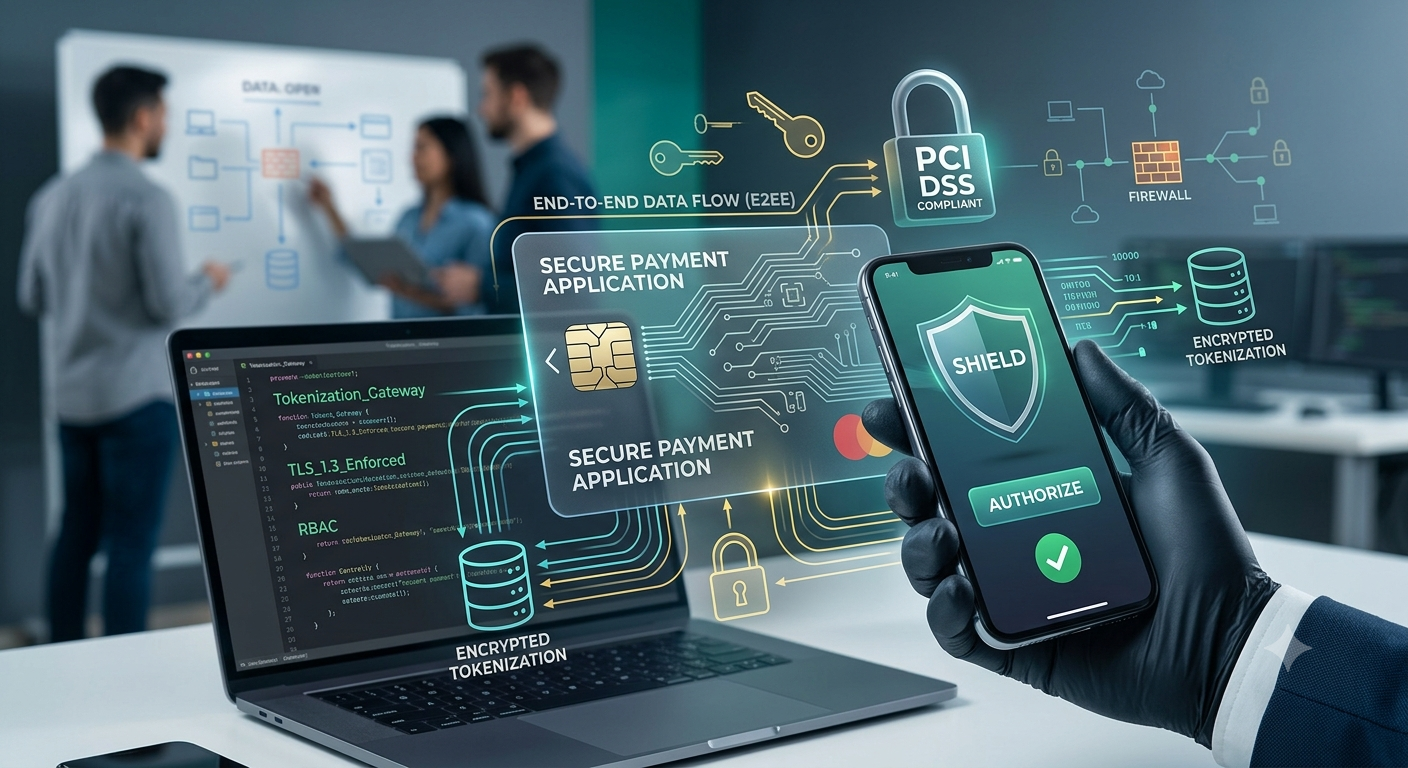
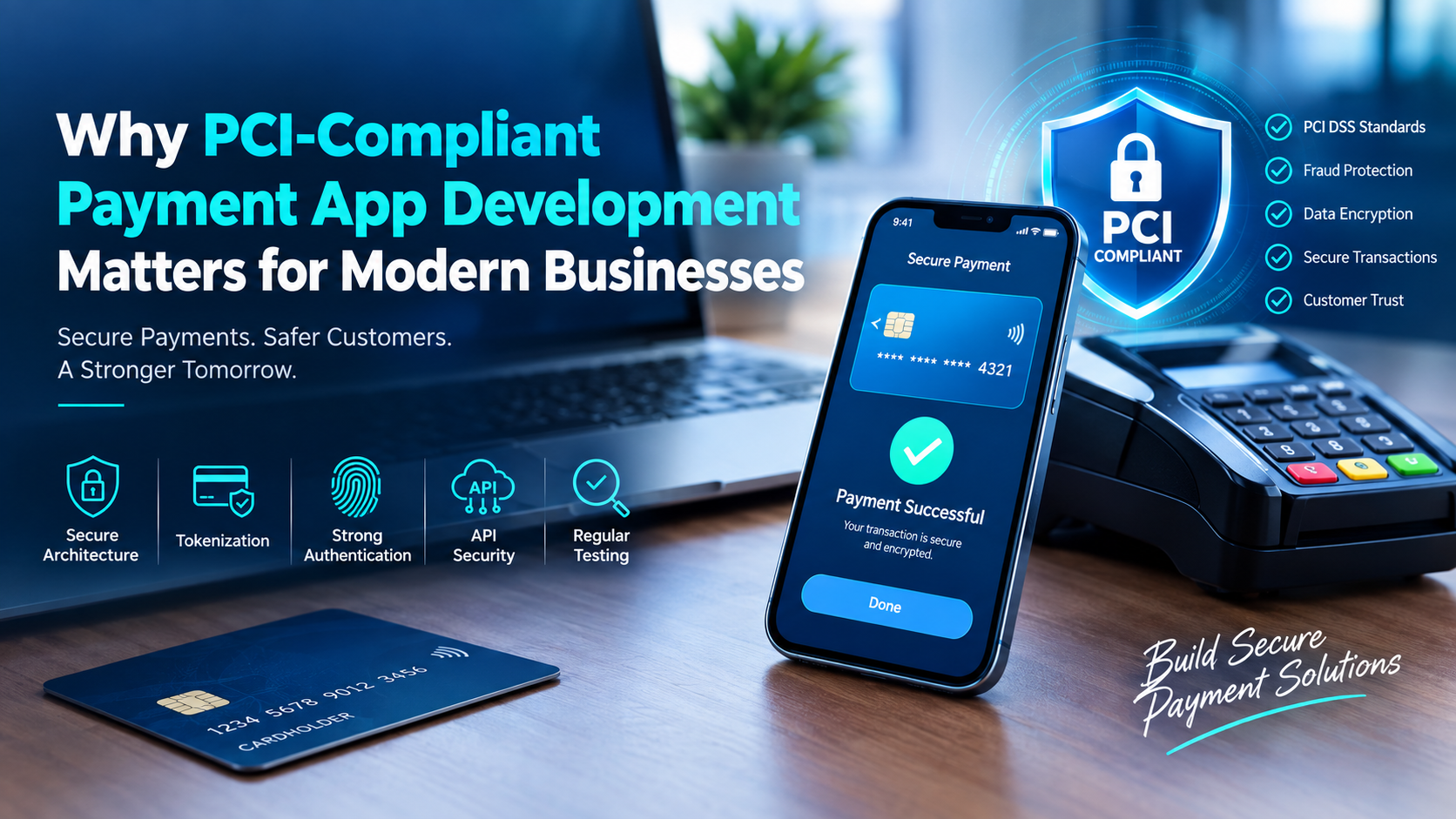
  • PCI Payment App Development in 2026: Build Security Into the Product, Not Around It

    PCI Payment App Development in 2026: Build Security Into the Product, Not Around It

    Payment applications have changed dramatically. Customers now expect fast checkout, mobile payments, digital wallets, subscription billing, contactless experiences, and seamless transactions across multiple devices.

    But behind every convenient payment experience is a much bigger challenge:

    How do you build payment software that remains secure as the product, users, integrations, and attack surface grow?

    For modern payment applications, security cannot be something added immediately before launch. It needs to be part of the architecture, development process, testing strategy, and maintenance lifecycle from day one.

    This is where PCI-focused payment app development becomes different from ordinary application development.


    The Payment App Is No Longer Just a Checkout Screen

    A modern payment application can involve an entire ecosystem:

    Mobile App → Payment SDK → API → Payment Gateway → Tokenization → Backend → Database → Analytics

    There may also be integrations with:

    • Digital wallets
    • POS systems
    • Subscription platforms
    • Fraud detection services
    • CRM platforms
    • Banking APIs
    • Cloud infrastructure
    • Third-party payment processors

    Every additional integration can introduce another security consideration.

    That means developers need to think about the complete payment flow, rather than focusing only on the checkout interface.


    PCI Compliance Starts With Architecture

    One of the biggest mistakes businesses make is asking:

    “How do we make our application PCI compliant?”

    after the application has already been built.

    A better question is:

    “How should we architect the application so that payment security is built into the product from the beginning?”

    PCI DSS provides baseline technical and operational requirements for environments that store, process, or transmit payment account data.

    For developers, this means security decisions need to happen during:

    Planning → Architecture → Development → Testing → Deployment → Maintenance

    The PCI Secure Software Lifecycle standard similarly emphasizes integrating security throughout the software lifecycle rather than treating security as a final-stage activity.


    The Most Important Decision: Reduce Payment Data Exposure

    One of the smartest approaches to payment application architecture is to minimize how much sensitive payment information your own systems actually handle.

    Instead of unnecessarily allowing sensitive card data to travel through multiple application components, businesses can evaluate architectures involving:

    • Hosted payment pages
    • Secure payment fields
    • Tokenization
    • Payment processor integrations
    • End-to-end encryption
    • Carefully scoped APIs

    The goal is simple:

    Collect less sensitive data. Store less sensitive data. Expose less sensitive data.

    Reducing unnecessary exposure can make security architecture and compliance management more manageable.

    However, the exact PCI scope depends on the implementation and environment, so businesses should validate their architecture with the appropriate payment and security professionals.


    Secure Coding Is Part of Payment Development

    A payment application needs more than a secure server.

    The application code itself must be designed to resist common attacks.

    Developers should consider:

    Secure Authentication

    Strong authentication and session-management mechanisms help protect customer and administrative accounts.

    Input Validation

    Every input should be treated as potentially untrusted.

    API Security

    Payment APIs should implement appropriate authentication, authorization, validation, rate limiting, and monitoring.

    Error Handling

    Applications should avoid exposing sensitive implementation details through error messages.

    Secrets Management

    API keys, credentials, certificates, and other secrets should not be hard-coded into application source code.

    Secure Logging

    Logs should provide useful security information without unnecessarily exposing sensitive payment data.


    Code Review Shouldn’t Be an Afterthought

    For payment software, simply writing code and running a few functional tests isn’t enough.

    PCI DSS v4.x includes requirements around secure development, including secure coding and reviewing bespoke/custom software before release to identify and correct potential vulnerabilities.

    A mature development process can include:

    Developer Review → Automated Security Testing → Manual Review → Vulnerability Remediation → Release

    Automated tools can help identify potential issues, but human review remains valuable for understanding business logic and payment flows.


    Mobile Payment Apps Need a Different Security Mindset

    Mobile applications introduce their own challenges.

    Payment applications may operate on devices that businesses don’t fully control.

    Developers therefore need to consider:

    • Secure local storage
    • Certificate validation
    • API authentication
    • Session protection
    • Root/jailbreak considerations
    • Reverse engineering risks
    • Secure SDK integration
    • Encryption
    • Application integrity
    • Secure handling of tokens

    The PCI Security Standards Council notes that software developed for payment acceptance on consumer devices still has development-related security considerations, even when the consumer environment itself may fall outside the organization’s PCI DSS assessment scope.


    Don’t Forget the Third-Party SDK Problem

    Modern payment applications rarely operate alone.

    Developers may integrate:

    • Payment SDKs
    • Analytics SDKs
    • Crash reporting tools
    • Advertising SDKs
    • Authentication providers
    • Cloud services
    • Fraud detection platforms

    Every SDK can potentially expand the application’s attack surface.

    Before integrating a third-party component, development teams should understand:

    What data does it collect?

    Where does that data go?

    Does it store sensitive information?

    How is it authenticated?

    How is it updated?

    What happens if the dependency is compromised?

    This is especially important for applications handling payment-related information.


    Security Doesn’t End When the App Goes Live

    Another common misconception is:

    “The application passed security testing, so we’re finished.”

    Payment security is continuous.

    Applications change.

    Dependencies are updated.

    New vulnerabilities are discovered.

    APIs evolve.

    New integrations are introduced.

    Attack techniques change.

    That’s why secure payment application development should include ongoing:

    • Vulnerability management
    • Dependency monitoring
    • Security testing
    • Patch management
    • Access reviews
    • Logging and monitoring
    • Incident response
    • Secure release processes

    PCI DSS requirements also continue to evolve. PCI SSC’s document library currently lists PCI DSS v4.0.1, and the Council has continued publishing updated guidance around PCI DSS v4.x.


    The Future of Payment Apps Is About Invisible Security

    The best payment experience is one where customers don’t have to think about security.

    They simply:

    Open → Select → Pay → Confirm

    Behind that simple experience, however, there may be:

    Tokenization + Encryption + Authentication + Fraud Detection + Secure APIs + Monitoring

    The customer sees simplicity.

    The engineering team builds complexity underneath it.

    That is the real challenge of modern payment application development.


    Why Businesses Need a PCI-Focused Development Approach

    Choosing a developer solely because they can build a mobile application isn’t enough for a payment product.

    A payment application requires an understanding of:

    • Payment workflows
    • Secure software development
    • API security
    • Mobile security
    • Data protection
    • Payment integrations
    • Cloud architecture
    • Compliance considerations
    • Secure testing
    • Ongoing maintenance

    The objective isn’t simply to create an application that accepts payments.

    The objective is to create a payment ecosystem where security is considered at every stage.


    How PCI App Developer Can Help

    PCI App Developer focuses on the development requirements surrounding secure payment applications, helping businesses turn payment concepts into technically robust digital products.

    From mobile payment applications and secure payment integrations to custom payment platforms and PCI-focused software development, the development process should start with the payment architecture rather than treating compliance as a final checklist.

    For businesses building a new payment product, upgrading an existing payment application, or integrating secure payment functionality into a mobile or web platform, a security-first development strategy can provide a much stronger foundation.


    Final Thoughts

    Payment application development is entering a stage where security, user experience, and technology architecture can no longer be separated.

    A beautiful payment interface is not enough.

    A fast backend is not enough.

    Passing a security test once is not enough.

    The strongest payment applications are designed around a simple principle:

    Security should be part of the product’s DNA—not a feature added before launch.

    For businesses planning a payment application in 2026, the right time to think about PCI, secure architecture, data exposure, and application security is before the first line of production code is written.

  • PCI-Compliant Payment App Development in 2026: What Businesses Need to Know

    PCI-Compliant Payment App Development in 2026: What Businesses Need to Know

    Digital payments have become a critical part of modern business. From mobile wallets and payment gateways to subscription platforms and POS systems, businesses increasingly depend on software that can process payments quickly and securely.

    However, building a payment application is not simply about creating a convenient checkout experience. Businesses must also protect sensitive payment information and follow applicable security requirements.

    This is where PCI-compliant payment app development becomes essential.

    In 2026, companies developing payment applications need to consider security, compliance, encryption, authentication, tokenization, secure APIs, and continuous monitoring from the earliest stages of development.

    What Is PCI Compliance?

    PCI compliance refers to following the security requirements established by the Payment Card Industry Data Security Standard (PCI DSS).

    PCI DSS is designed to protect payment card data and reduce the risk of unauthorized access, fraud, and data breaches.

    For businesses developing payment applications, compliance should be treated as an ongoing security process rather than a one-time certification exercise.

    Why PCI Compliance Matters for Payment Apps

    Payment applications handle highly sensitive information. A security vulnerability can expose businesses and customers to financial losses, fraud, reputational damage, and regulatory problems.

    A PCI-focused development approach helps businesses:

    • Protect sensitive payment information
    • Reduce security vulnerabilities
    • Improve customer trust
    • Minimize payment-related risks
    • Strengthen application security
    • Support secure payment processing
    • Build scalable payment infrastructure

    Security should be incorporated into the architecture instead of being added after development is complete.

    Important Features of a PCI-Compliant Payment Application

    1. Secure Data Encryption

    Sensitive information should be protected during transmission and storage using appropriate encryption technologies.

    Secure communication between mobile applications, servers, payment gateways, and other services is an important component of payment application security.

    2. Tokenization

    Tokenization can replace sensitive payment information with tokens that have limited value outside the intended payment environment.

    This approach can help reduce the amount of sensitive card data directly handled by an application.

    3. Secure Authentication

    Payment applications should implement strong authentication and authorization mechanisms.

    Depending on the application, businesses may use:

    • Multi-factor authentication
    • Secure session management
    • Role-based access control
    • Biometric authentication
    • Device verification
    • Secure password policies

    4. Secure API Architecture

    Modern payment applications often depend on APIs to communicate with payment gateways, banking systems, merchant platforms, and other services.

    APIs should be designed with appropriate authentication, authorization, encryption, rate limiting, logging, and monitoring mechanisms.

    5. Secure Payment Gateway Integration

    Instead of unnecessarily storing sensitive payment information, businesses can integrate trusted payment gateways and use secure payment flows.

    The architecture should clearly define how payment information moves between the customer, application, payment gateway, and backend systems.

    6. Security Logging and Monitoring

    Continuous monitoring can help identify suspicious activity and potential vulnerabilities.

    Payment applications should have appropriate logging mechanisms for important security events while avoiding unnecessary exposure of sensitive information.

    PCI Compliance Challenges in App Development

    Developing a payment application can involve several challenges.

    Handling Sensitive Information

    Developers need to understand exactly what payment information the application collects, processes, transmits, or stores.

    Reducing unnecessary handling of sensitive data can simplify the security architecture.

    Third-Party Integrations

    Payment applications frequently depend on external APIs, SDKs, gateways, analytics tools, and cloud services.

    Every integration should be evaluated carefully because third-party components can introduce additional security risks.

    Mobile Security

    For iOS and Android payment applications, developers need to consider secure storage, application integrity, API security, authentication, and protection against common mobile security threats.

    Continuous Compliance

    Security requirements evolve, applications change, and infrastructure is updated regularly.

    Therefore, PCI compliance should be incorporated into the application’s development, testing, deployment, and maintenance lifecycle.

    PCI-Compliant Payment App Development Process

    A structured development process can make compliance easier to manage.

    Step 1: Define the Payment Architecture

    First, identify how payment information will move through the system.

    This includes the mobile application, backend, payment gateway, APIs, databases, cloud infrastructure, and third-party services.

    Step 2: Minimize Sensitive Data Exposure

    Determine which data the application actually needs to handle.

    Reducing the application’s exposure to sensitive payment information can simplify security requirements.

    Step 3: Implement Security Controls

    Security controls should be incorporated into the application’s architecture and development process.

    These may include encryption, authentication, access control, secure APIs, tokenization, and monitoring.

    Step 4: Secure Development and Testing

    Developers should conduct security-focused testing throughout development.

    Testing may include:

    • Vulnerability assessments
    • API security testing
    • Penetration testing
    • Code reviews
    • Authentication testing
    • Infrastructure security testing

    Step 5: Compliance Assessment

    Before launching the application, businesses should evaluate their environment against the applicable PCI DSS requirements and work with qualified compliance professionals where appropriate.

    Step 6: Continuous Monitoring

    After launch, security monitoring, updates, vulnerability management, and periodic assessments should continue.

    PCI Compliance for Mobile Payment Apps

    Mobile payment applications require additional attention because they operate across different devices, operating systems, networks, and APIs.

    A secure mobile payment application should consider:

    • Secure local data storage
    • Encrypted network communication
    • Strong authentication
    • Secure API communication
    • Session protection
    • Application integrity
    • Secure SDK integrations
    • Regular security updates

    Developers should also avoid unnecessarily storing sensitive payment information on the user’s device.

    How AI Is Changing Payment Security in 2026

    Artificial intelligence is increasingly being used in payment ecosystems for fraud detection, transaction monitoring, anomaly detection, and risk analysis.

    AI-powered systems can analyze transaction patterns and identify unusual activity that may require additional verification.

    However, AI itself must also be implemented securely. Businesses should ensure that sensitive payment information is handled appropriately and that AI integrations do not introduce new privacy or security risks.

    Why Choose PCIAppDeveloper?

    Building a secure payment application requires expertise across mobile development, backend engineering, API integration, payment infrastructure, and security.

    PCIAppDeveloper focuses on payment application development for businesses that need secure and scalable digital payment solutions.

    Development capabilities can include:

    • PCI-focused payment app development
    • iOS payment applications
    • Android payment applications
    • Payment gateway integration
    • Secure API development
    • Mobile wallet development
    • POS application development
    • Payment platform development
    • Backend and cloud development
    • Security-focused application testing

    The goal is to help businesses develop payment applications with security and compliance considerations integrated into the development lifecycle.

    Choosing the Right Payment App Development Partner

    Before selecting a development company, businesses should evaluate its technical experience and understanding of payment ecosystems.

    Important questions include:

    1. Does the development team understand PCI DSS requirements?
    2. Does the company have payment application experience?
    3. How does it protect sensitive payment information?
    4. How are APIs and third-party integrations secured?
    5. What security testing is included?
    6. How is the application monitored after launch?
    7. Can the platform scale as transaction volumes increase?

    The right development partner should understand both the technology and security requirements involved in payment applications.

    Conclusion

    PCI-compliant payment app development is becoming increasingly important as businesses move more payment experiences to mobile and digital platforms.

    A successful payment application needs more than an attractive interface. It requires secure architecture, encrypted communication, appropriate authentication, secure APIs, careful data handling, payment gateway integration, continuous testing, and ongoing security management.

    By integrating security and compliance considerations from the beginning, businesses can build payment applications that are more resilient, scalable, and trustworthy.

    PCIAppDeveloper can help businesses develop secure payment applications tailored to their technical and business requirements.